Damage to the Persepolis Gate
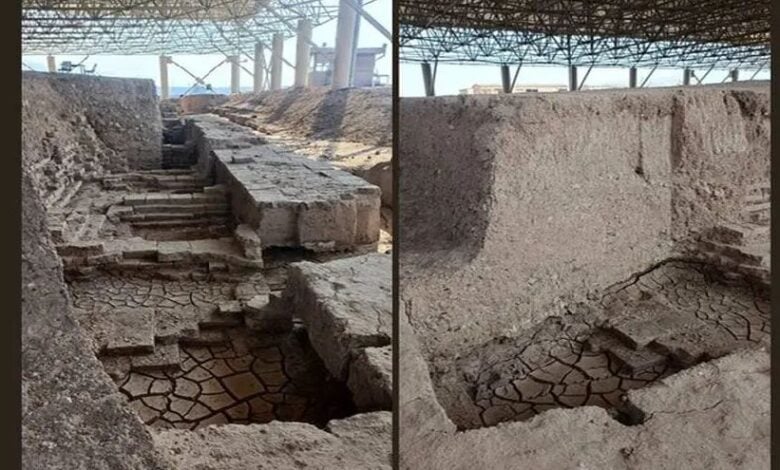
Cultural heritage activist Siavash Arya reported that the gate of Persepolis was damaged.
Cultural heritage activist Siavash Arya published images of the Parse City Gate, also known as Persepolis, located in the Achaemenid area, indicating the damage to the gate. He said: “The brick mound known as the Parse City Gate (Persepolis) is one of the most important sites of the early Achaemenid period in the Marvdasht Plain, which is of great importance in the field of archaeological research and studies and has a special place among experts and archaeologists.
This valuable and important early Achaemenid site was converted into a museum site by the head of its archaeological excavations in the second half of 2017. At the same time, due to the incomplete completion of archaeological and historical excavations and research at the site, as well as the damage caused to its area due to the appearance of the museum site, it was criticized by cultural heritage and archaeology experts, and numerous criticisms were published in the media in this regard.
Now, following light rainfall in Marvdasht County, rainwater has seeped into the "Tel Ajori" museum site, damaging the important and very valuable remains of the Achaemenid architecture of the area, and a solution must be found as soon as possible."
Conservation and restoration experts also reacted to the damage to this ancient site, and while referring to the roof created in this area, which is located on numerous metal and concrete foundations, they announced that this roof is not suitable for protecting the brick mound and the gate bricks protruding from the soil. This roof only covers part of the brick mound area, and due to the numerous foundations and the design method, it is not at all suitable for an ancient site and has not been able to provide much protection against rain.
The ancient site of "Tul-e-Ajori" is located about 5 kilometers northwest of Persepolis in a place known as the Turquoise Garden, where archaeologists have identified the Cyrus Gate or Persepolis. Archaeologists had discovered Babylonian and Elamite cuneiform inscriptions there, and based on the function of the building, they have concluded that the building was a gate from the beginning of the Achaemenid period.
The dimensions of the brick mound area are 30 x 40 meters. An ancient hill that is 3 meters high from the surrounding land in the first-class area of Persepolis. This area was registered on June 17, 2006 with number 15530 in the country's national heritage list.
The report by archaeologists at the Cultural Heritage Research Institute also mentions that this magnificent gate repeats a larger scale of the famous Ishtar Gate design that existed around 580 BC, and was built before the construction of the Persepolis Throne Hall during the reign of one of the first two Persian kings.
They suggested that the purpose of this gate was to mark the conquest of Babylon in 539 BC during the reign of Cyrus the Great. The building is made entirely of brick and adobe, and the entire facade of the walls is decorated with glazed bricks. The lower part of the walls is also decorated with geometric and floral patterns, and numerous glazed bricks discovered in the ruins of the building indicate that the entire surface of the walls was decorated with the motifs of mythical animals, a bull and a hybrid animal.