Germany accepts 121 more refugees from Greek camps
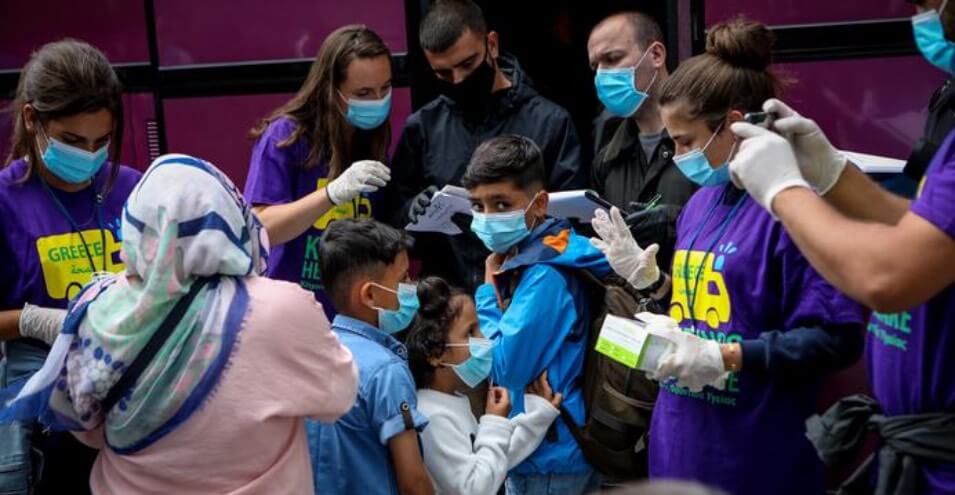
28 sick children from Greek refugee camps arrived in Hanover, Germany, with their immediate family members. The refugees are being accepted from Greek camps as part of the European Union's aid package.
According to a statement from the German Interior Ministry on Wednesday, August 26, 121 refugees, including 28 sick children and their immediate family members, arrived at Hanover Airport in Germany. The refugees will be distributed across various German states.
According to the ministry, 347 people (including 53 unaccompanied minors and 68 sick children) have been airlifted from Greece to Germany this year.
Germany's acceptance of these refugees is based on a March agreement between EU members and is carried out within the framework of the EU's relief aid.
German Interior Minister Horst Seehofer announced that more than 243 sick children and their immediate family members from refugee camps on the Greek islands will be accepted in Germany, following an agreement by the country's cabinet.
The refugees who arrived in Hanover today, Wednesday, were supposed to enter Germany two weeks ago, but because two of them tested positive for the coronavirus, they had to remain in quarantine for two weeks before flying to Germany, and after these two weeks, they have now entered Germany.
The German Interior Ministry wrote in its statement that the refugees in the camps on the Greek islands will be divided into nine states: Bavaria, Berlin, Bremen, Hamburg, Lower Saxony, North Rhine-Westphalia, Rhineland-Palatinate, Schleswig-Holstein and Thuringia.
The choice of where to live for these refugees is based on the decision of state and federal authorities, but other criteria such as family relationships and the specific medical needs of the refugees are also taken into account.
Accepting more refugees and combating the causes of asylum
Peace and civil rights activists in Germany say the government should continue to accept refugees but also tackle the causes of asylum. “Germany has accepted a large number of refugees since 2015, and this is a historic victory,” Jan Gildemeister, head of the campaign “Joint Action for Peace” (AGDF), said in Bonn on Wednesday.
He added that millions of people are currently fleeing violence, fleeing war, persecution, hunger and poverty. "These people must not be forgotten, they need our help and support."
Five years ago, German Chancellor Angela Merkel said with the historic phrase "We can handle it," that Germany was capable of absorbing these refugees and helping them.
Gildemeister said that Merkel was under a lot of pressure during this time and "had to respond to a lot of criticism, not only from right-wing populists, but also from members of her own party (the Christian Democratic Union of Germany), but time has shown that she was right."
The peace activist pointed to refugees who have been integrated into society and have started new jobs and lives. He called immigrants “a new opportunity and possibility for a vibrant and dynamic society.”
Source: DW