8 Qarchak Prison inmates infected with coronavirus; no news on Zeinab Jalalian's condition
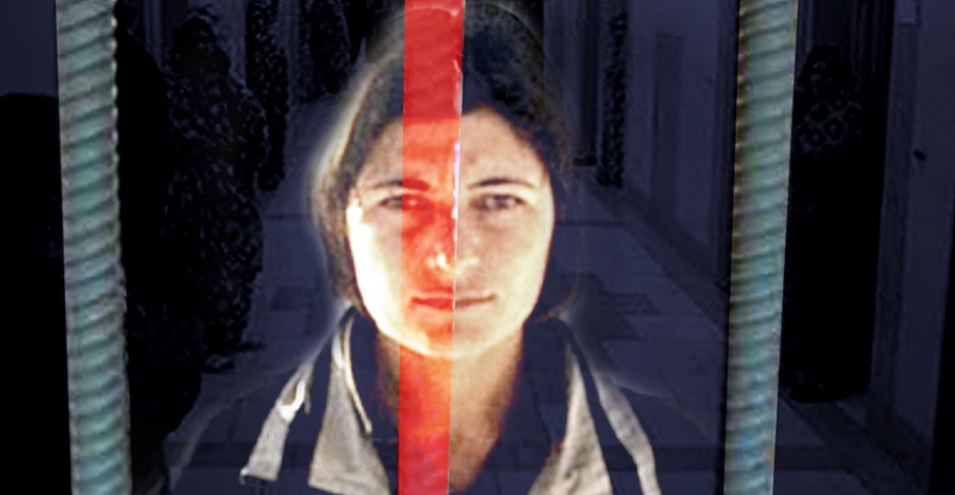
Ali Jalalian, the father of Zeinab Jalalian, a Kurdish political prisoner sentenced to life imprisonment, said in an interview with the Campaign for Human Rights in Iran that he is unaware of the condition of his daughter, who is imprisoned in Qarchak Prison in Varamin, and is extremely concerned about the health of this political prisoner, as news has been published that she has contracted the coronavirus.
At the same time, some reports have reported that a number of prisoners have contracted the coronavirus in Qarchak Prison in Varamin and that they have been transferred to an unsuitable environment without medicine or treatment.
Mr. Jalalian told the campaign that Ms. Jalalian has not had contact with her family since last week and he does not know what condition his daughter is in.
Zeinab Jalalian, a Kurdish political prisoner, was born in 1982 and has the heaviest sentence (life imprisonment) among female political prisoners in Iran. She was arrested in December 2007 and sentenced to one year in prison in 2009 on charges of illegal departure from the country and to death on charges of war through membership in the PJAK. Her death sentence was confirmed by the Court of Appeal and the Supreme Court, but after her lawyers’ appeals, Ms. Jalalian’s sentence was commuted to life imprisonment with a degree of amnesty.
Ali Jalalian, Zeinab Jalalian’s father, said in an interview with the campaign: “Zeinab called her mother last week. Unfortunately, she can’t call me and is only allowed to call her mother. She said she wasn’t feeling well and had symptoms of the coronavirus, and she didn’t call again after that. We are worried, but we don’t know what to do. Zeinab has been taken to Qarchak prison and we don’t have the opportunity to travel and visit her. I just had surgery, and both Zeinab’s mother and I are old and sick, and we can’t travel.”
Zeinab Jalalian was imprisoned in Khoy prison, near her family’s residence, but in May of this year, she was transferred to Qarchak prison in Varamin without her family’s knowledge. According to Iranian law, the Prisons Organization is obligated to transfer prisoners to the prison closest to their family’s residence. Note 1 of Article 234 of the Prisons Organization’s regulations states that the organization “shall make arrangements for convicts to serve their sentences in the prison closest to their family’s residence upon their personal request.”
Concerns about the health of political prisoners and their lack of release on bail in these dangerous conditions and the spread of the coronavirus continue. Although judicial authorities have claimed to have released 100,000 prisoners on parole in the country, the majority of political and religious prisoners remain in prison. On March 10, UN officials, including UN Special Rapporteur Javed Rehman, following up on these concerns, called on the Iranian government to immediately include political and religious prisoners in these releases.
UN human rights experts on April 10 urged Iran to include prisoners of conscience, dual nationals and foreigners who remain at risk of contracting COVID-19 in its guidelines for the temporary release of prisoners. “Iranian prisons have long faced health and medical problems and their prison populations are overcrowded,” they said in a statement. “We urge the Iranian authorities to take the necessary measures, in accordance with their obligations under the International Covenant on Civil and Political Rights, to treat all persons deprived of their liberty with humanity and respect their inherent dignity and right to life,” they said.
Zeinab Jalalian has been denied leave for more than 13 years. This is despite the fact that according to the Prisons Organization’s regulations, those sentenced to more than 15 years and life imprisonment can take leave after serving at least three years of their sentence. Amirsalar Davoudi, Ms. Jalalian’s lawyer, who is also currently in prison, had previously said in an interview with the Campaign that people from the Ministry of Intelligence and the Revolutionary Guard continue to approach his client and demand that she sit in front of the camera and give interviews against herself. According to Mr. Davoudi, “Iran’s security officials view Zeinab Jalalian from a security perspective and that she is dangerous from the perspective of the government, and they consider her to be a terrorist and a member of the PJAK in their own opinion, and they think that her being outside prison could be dangerous for them. That is why they have not given her a single day of leave so far.”
Concerns about the condition of Zeinab Jalalian in Qarchak Varamin Prison come as some reports have reported that a number of prisoners have contracted the coronavirus in Qarchak Varamin Prison and have been transferred to an unsuitable environment without medicine or treatment. Journalist Zhila Bani Yaqoub reported on her personal Twitter that “eight prisoners have tested positive for coronavirus in Qarchak Women’s Prison in the last few days. They have been transferred to the prison club, which is an unsanitary environment with no ventilation, and released without any care, medicine, or treatment. According to a number of prisoners, they contracted the coronavirus from a prisoner who returned from leave.”
According to Ms. Bani Yaqoub, “This prisoner was not quarantined despite showing symptoms of COVID-19 and was transferred to the ward. After his test came back positive, eight other prisoners volunteered to be tested, all of whom were positive. The rest of the prisoners in the ward are refusing to take the test even though they have symptoms. They are not willing to take the COVID-19 test because they are afraid that the same fate will befall them as the COVID-19 positives and that they will be left in an unsuitable environment without treatment or medication. Even today, the quarantined prisoners were not given food until five o’clock because the prison guards are afraid of traffic there.”
Fatemeh Khoshvand, known as Sahar Tabar, who has been in detention since October 2019, is another prisoner in Qarchak Prison in Varamin. Her lawyer had previously announced in an interview with the campaign that she had contracted the coronavirus.
Source: Rights Campaign