Christian believers Behnam Akhlaqi and Babak Hosseinzadeh summoned to Evin District Court

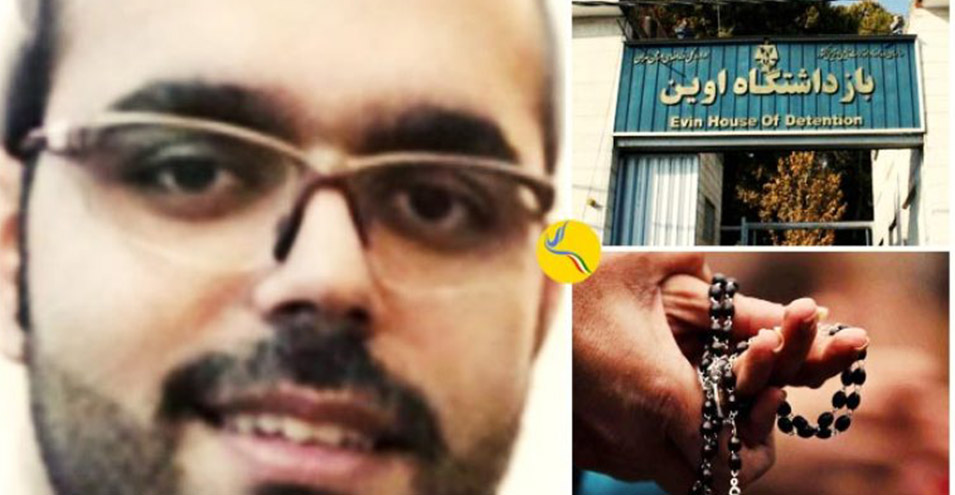
HRANA News Agency – Behnam Akhlaqi and Babak Hosseinzadeh, Christian believers, were summoned to Branch 3 of the Evin Prosecutor’s Office on Wednesday, February 10, 2020, through a notice. These citizens were summoned in connection with a new case opened against them.
According to the HRANA news agency, the news agency of the Human Rights Activists in Iran, Behnam Akhlaqi and Babak Hosseinzadeh were summoned to the Evin Prosecutor's Office through a notification.
According to this notice, which was sent to these citizens on Wednesday, February 10 , they have been asked to appear before Branch 3 of the Evin Prosecutor's Office within 5 days to defend themselves regarding the charges against them .
Babak Hosseinzadeh and Behnam Akhlaqi were arrested on March 24, 2018, during a house church meeting in the city of Rasht. After his arrest, Mr. Akhlaqi’s home was searched by officers, who confiscated some of his personal belongings and took them away. According to an informed source, security forces broke or damaged symbols related to Christianity during the search of Mr. Akhlaqi’s home.
After 12 days in detention, Babak Hosseinzadeh and Behnam Akhlaqi were transferred to prison and held in prison for 11 days without observing the principle of separation of crimes. Finally, on March 17, 2018, they were temporarily released after posting bail of 150 million Tomans, pending the completion of the trial.
On August 2, 2019, the first court session to hear the charges against these citizens was held in Branch 28 of the Tehran Revolutionary Court, presided over by Judge Mohammad Moghiseh. During this session, the bail amount for these citizens was increased to one billion and five hundred million Tomans, and they were arrested and transferred to Ward 4 of Evin Prison due to their financial inability to provide bail.
Ultimately, each of these citizens was sentenced to 5 years in prison for “acting against the security of the country by forming a house church and propagating evangelical and Zionist Christianity.” This sentence was finally confirmed in June 2020 by Branch 36 of the Tehran Provincial Court of Appeal, headed by Judge Seyyed Ahmad Zargar Aina.
In the ruling of the hearing panel in Branch 28 of the Supreme Court, headed by Seyyed Ali Izpanah Shahri, their request for a retrial was deemed valid and it was clarified that the mere domestic propagation of Christianity and the promotion of the Zionist sect, which apparently both mean the propagation and promotion of Christianity through holding family (home) meetings, do not constitute a form of community and collusion to disrupt the security of the country, whether internal or external, and through the formation of a group, group, or branch of a group, are not subject to Articles 498 and 499 of the Islamic Penal Code of 1375 and other criminal laws, and the propagation of Christianity and the formation of a house church are not criminalized in the laws.
Behnam Akhlaqi and Babak Hosseinzadeh, along with a number of other Christian believers, were temporarily released from Evin Prison in January of this year after posting bail.
The Supreme Court, while accepting the retrial, referred their case to the same branch for retrial.
The court hearing to hear the charges against these citizens was held in March of this year at Branch 34 of the Tehran Revolutionary Court.
It is worth noting that despite the fact that Christians are recognized as a religious minority by law, the security services follow the issue of Muslims converting to Christianity with particular sensitivity and deal with activists in this field with force.
The treatment of Christian believers in Iran is taking place despite the fact that, according to Article 18 of the Universal Declaration of Human Rights and Article 18 of the International Covenant on Civil and Political Rights, everyone has the right to freedom of religion and to change their religion with conviction, as well as the freedom to manifest it, individually or in community with others and in public or in private.
Source: HRANA