Islamic Republic officials repeatedly claim that "arbitrary groups" are behind operations on European soil
After Kamal Kharrazi, head of Iran's Strategic Council for Foreign Policy, the former ambassador of the Islamic Republic of Iran to Germany also admitted that Europe has evidence of the Islamic Republic's involvement in sabotage operations that cannot be easily denied.
Ali Majedi, the former ambassador of the Islamic Republic of Iran to Germany, in response to recent statements by European officials about the Islamic Republic's efforts to carry out assassinations, bombings, and attacks on opponents of the Iranian government in various European countries, spoke about the possible role of "arbitrary groups" in this regard, adding that Europe has "documents" that indicate the Islamic Republic's involvement in these events.
Majedi's remarks were met with a response from the Iranian Foreign Ministry, which wrote in a statement that the phrase "so-called arbitrary operations" in Majedi's remarks "does not refer to a specific case and is a general concern about some possibilities."
Majedi's comment is significant because Kamal Kharrazi, Iran's former foreign minister, had previously said in an interview with France 24 television channel, in response to a question about the Iranian government's operations in France and Denmark, that groups may be trying to sabotage relations between Iran and Europe, "even inside Iran."
Kharrazi is currently the head of the Strategic Foreign Policy Council, whose members are selected by Ali Khamenei, the leader of the Islamic Republic.
Majidi's remarks, and those of Kharrazi before him, are a sign that some Islamic Republic officials, while accepting the essence of the accusations about the Ministry of Intelligence's efforts to conduct operations on the soil of European countries, are trying to attribute it to "arbitrary forces."
"Autonomous" in political literature refers to individuals or groups who may not have an official position, title, or mission but who have great power. Officials in the Islamic Republic have attributed various incidents in Iran to these groups, from serial killings and an attack on a Tehran university dormitory to sending a shipment of missiles to Europe in 1975.
These groups have also been involved in other cases, such as attacking political events, preventing some political figures from speaking due to their differences with Ayatollah Khamenei, or attacking embassies.
However, so far, there has been little news about the Iranian judicial or security apparatus' dealings with members of these groups, groups whose common denominator is their emphasis on obedience to the Leader of the Islamic Republic.
The former Iranian ambassador to Germany, who resigned after the implementation of the law banning the employment of retirees, told ISNA that Europe's trust in Iran was lost "with two or three wrong actions," and he blamed people who "believe that the country's national interests can be secured by carrying out certain operations or arbitrariness."
Majedi added that when there are "arbitrary operations" inside Iran, "can we deny that there are examples of these events occurring outside the country as well?"
In the fall of this year, the government-affiliated Iran newspaper, in its editorial, referred to the accusation that the Iranian Ministry of Intelligence was trying to carry out an operation in Denmark, and wrote that if there was a connection, it was "definitely outside the knowledge of the country's authorities" and that "the root of these arbitrary behaviors must be burned." The Iran newspaper also referred to "past experience in the case of serial murders," which, according to the newspaper's editorial writer, demonstrated that "arbitrary forces do things that are seen by the government and authorities."
On January 7, the European Union placed the Deputy for Internal Security of the Iranian Ministry of Intelligence and two of his colleagues on its sanctions list.
The Islamic Republic is accused of being involved in several political assassinations, attempted bombings, and attempted attacks on political opponents in several different European countries over the past few years.
The murder of Ali Motamet (who is said to be the same Mohammad Reza Kolahi, the perpetrator of the 1988 explosion at the office of the Islamic Republic Party) in the fall of 2015, followed by the murder of Ahmad Nisi, a leader of the group known as the "Ahwaz Liberation Movement" in the fall of 2017 in the Netherlands, the attempted bombing of a meeting of the People's Mojahedin Organization in Paris this summer, and finally the attempted assassination of Habib Jabr, a leader of the group known as the "Ahwaz Liberation Movement" in the fall of this year, are among the actions of the Islamic Republic that have led to sanctions on part of the Ministry of Intelligence in Europe.
In recent months, an Iranian diplomat from France and two other diplomats from the Netherlands have been expelled on the same charges.
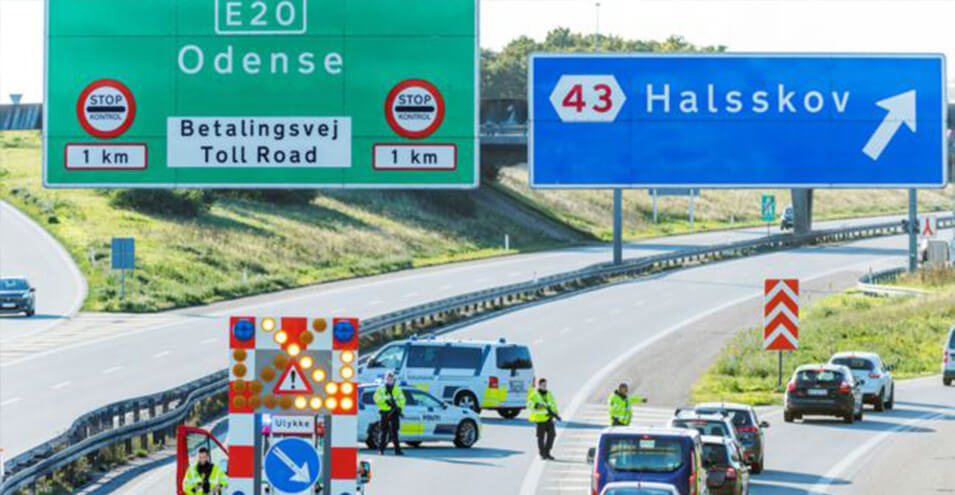
Asadollah Asadi, an employee of the Iranian embassy in Austria, was arrested by the German government on charges of involvement in an attempted bombing of a meeting of the People's Mojahedin Organization (MEK) and then extradited to Belgium.
A court in Germany previously agreed to Asadi's extradition and dismissed the issue of his "diplomatic immunity" because Asadi was "on a several-day vacation outside the host country, Austria," at the time of his arrest.
Shortly after Asadi's arrest, the Austrian government also asked the Iranian government to revoke his diplomatic immunity.
In addition, in recent months, Albania has expelled two Iranian diplomats, and in Germany, a person who is said to have been an Iranian spy in the country's army has been arrested.
Source: Voice of America