Execution of protesters, covering up the government's crimes or revenge on freedom fighters?
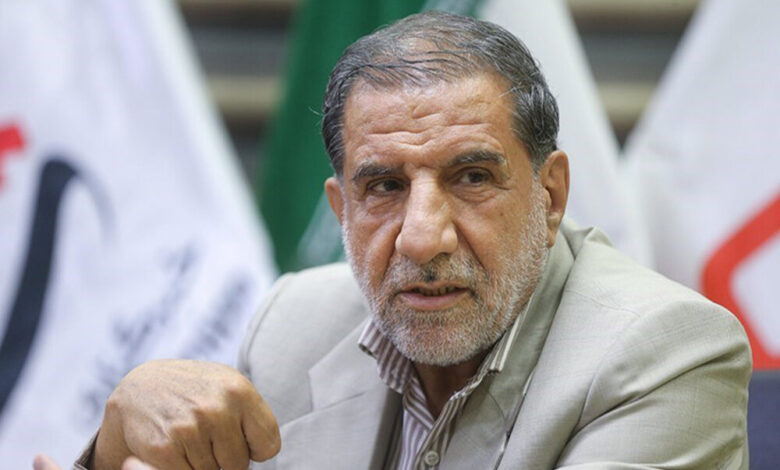
Tehran MP Ismail Kowsari presented the official narrative of the repression, but the shadow of executions and the cover-up of the massacre of protesters continues to exacerbate the Iranian crisis.
While the Islamic Republic of Iran is more than ever engaged in a crisis of legitimacy and social explosion, the official institutions of power are trying to rewrite and justify the narrative of the bloody suppression of the protests to their own advantage. Esmail Kowsari, a representative from Tehran in the Islamic Consultative Assembly and a former commander of the Revolutionary Guard Corps, has tried to justify the state violence against the Iranian people in an interview with state media, attributing it to the “spread of attacks.”
Regarding the suppression of the protests, he said: "Until Friday night, January 8, and even Friday morning, Faraj did not use weapons, but after the attacks spread, the Supreme National Security Council decided that Faraj, Basij, and IRGC forces would take action armed."
To conceal the role of the security forces in the massacre of protesters, Kaushari claimed: "This decision was made to neutralize the issue, and in the end, this mission was successfully carried out."
But this official narrative, which attempts to turn the unprecedented crackdown into a “natural reaction,” is completely contradicted by a wealth of evidence and independent reporting.
While Iranian authorities describe those arrested during nationwide protests as "rioters" and "murderers," credible international reports and human rights organizations show that the repression in Iran has been systematic and brutal, rather than "security-related."
Independent reports suggest that thousands of people were killed and tens of thousands arrested in the recent wave of protests in 2025–2026, with the real toll being far higher than the official figures.
Human rights organizations have also reported the possibility of executions against protest detainees, concerned that the government will use the death penalty as a tool to cover up the massacre of people and blame the protesters themselves for the killings.
Independent media and international organizations have also warned that "speedy" trials are being held without access to independent lawyers, and that defendants are being forced to make "forced confessions" on security charges that have an illegal and political basis.
In this regard, Masoud Khatami, a member of the Parliament's Health Commission, stated very bluntly: "Those arrested who killed people should be executed." He claimed that the people killed were divided into three categories, including passersby or protesters who did not riot, and the government intends to declare these people martyrs.
These claims are made at a time when many executions and death sentences in Iran are not subject to human rights standards and fair trials, and it seems that the death sentence against detainees is a tool to justify government repression, not justice.
Reports from human rights organizations and reputable international media outlets indicate that security forces have used mass killings, live ammunition, live ammunition, and shotgun pellets against protesters during the crackdown. In addition, the internet and communications have been cut off to limit information dissemination, which is seen as a means of concealing the true extent of the crackdown.
These reports indicate that tens of thousands of people are being detained, and there are widespread concerns about torture, forced confessions, and show trials. Iranian judicial authorities are also conducting trials “fast-track” and without legal guarantees, using threats and pressure.
Amnesty International and Human Rights Watch have repeatedly warned against extrajudicial executions and human rights violations in Iran, emphasizing that attempts to use such sentences are intended to conceal the truth of repression.
The reality is that Iran's judicial system falls far short of international standards of justice in political matters, and harsh sentences, especially death sentences, are often issued to intimidate society and crush popular resistance. Such a practice not only fails to administer justice, but also exacerbates the evasion of justice and human rights violations.
As widespread protests against the government continue, official efforts to “exonerate themselves” and “blame the detainees” cannot hide the bitter truth on the ground. The Iranian people stand for freedom, justice, and human dignity, but they face executions, torture, and censorship.