Significant increase in budget for IRGC and IRIB in 2021 budget bill
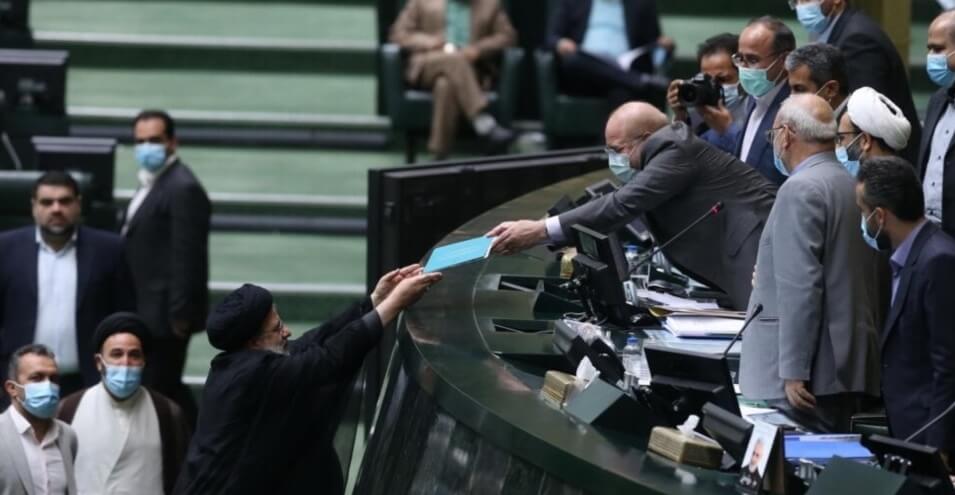
According to the 1401 budget bill, which was submitted to the parliament by the government on Sunday, December 11, in addition to eliminating the 4,200-toman currency, other items have also been included, including a significant increase in the budget of the Revolutionary Guards and the Iranian Radio and Television, a 10% increase in the salaries of government employees, and the collection of taxes on some cars and houses.
The budget of the Revolutionary Guards, which increased by 58 percent last year from 24,335 billion tomans to 38,564 billion tomans, has reached 93,000 billion tomans, according to what is stated in the 1401 budget bill file, which represents an increase of more than 2.4 times.
Another notable item in the 2014 budget bill is the significant increase in the budget of the Iranian Broadcasting Organization, which is administered under the supervision of the Leader of the Islamic Republic.
According to this bill, the budget allocated to the Iranian Broadcasting Organization is 5,289 billion tomans. This organization's budget this year was 3,384 billion tomans, which indicates that its budget for next year has increased by 56 percent.
In this budget, the government has also considered selling 1.2 million barrels of oil at a price of $60, which is $10 more than this year's budget, while the current budget had envisaged a daily export rate of about 2.3 million barrels.
According to the 1401 budget bill, which is the first budget bill of the Ebrahim Raisi administration, for the first time, all cars worth over one billion tomans and residential homes and villas worth over 10 billion tomans will be subject to property tax.
This is despite the fact that, given the high inflation rate over the past year, some experts refer to this tax as an "inflation tax" caused by the government's economic policies.
According to the Statistical Center of Iran, the annual inflation rate in November was 44.4 percent, which has slightly decreased in the last two months after 14 months of continuous growth. However, despite this level of inflation, the bill envisages an average annual increase in government employee salaries of 10 percent.
The "Defense Force Strengthening and Strategic Defense Research Program" is another item in the first budget of the Ebrahim Raisi government, which has been allocated up to four billion and five hundred million euros. This program also includes some research and implementation activities in the military field.
After then-US President Donald Trump withdrew from the JCPOA in 2018 and reimposed oil and banking sanctions against Iran, Iran's oil revenue has declined sharply and Iran's economic growth has been negative in recent years.
According to the internal regulations of the parliament, representatives have 10 days to submit their proposals to specialized committees, and the committees have 15 days to review the proposals. Finally, the Budget Bill 2021 consolidation committee will have 15 days to review the bill, which can be extended for another 15 days if necessary.
On Sunday, Mehrad Ebad, a member of the Tehran Chamber of Commerce delegation, spoke to ILNA news agency about the 26 billion euro financial forecast in the 2022 budget bill, calling it "optimistic."
He interpreted this as "the government counting on the lifting of sanctions," adding that "with the current status of the FATF, sanctions, and the current circumstances, it does not seem that even a single riyal of this projected finance will be realized. Unless good reforms are made in the areas of currency policies, attracting foreign investment, as well as making decisions about the FATF and joining international conventions, the most important of which is the World Trade Organization."
According to Mehrad Ebad, "In this case, everything depends on foreign relations. In the best case, the JCPOA negotiations will proceed quickly, but even in this case, such a figure will not be achieved, because even if the negotiations are concluded, we will have to go through other steps, such as issuing permits for foreign companies to enter the country. Today, even those who are apparently our friends do not invest in Iran due to fear of sanctions."
Source: Radio Farda