The self-immolation of a political prisoner in Iran and the valuelessness of prisoners' lives for the government
Why does the judicial system in the Islamic Republic of Iran, without considering itself accountable, continue to mistreat and pressure political and conscientious prisoners? In what ways do the responsible authorities in prisons and the judicial system apply their discriminatory view to political prisoners? Why do judicial authorities and prison officials, contrary to the duties foreseen in the Criminal Procedure Code, which state that it is necessary to consider the physical and mental health of prisoners in order to execute the sentence, continue to insist on illegal treatment of political and conscientious prisoners?
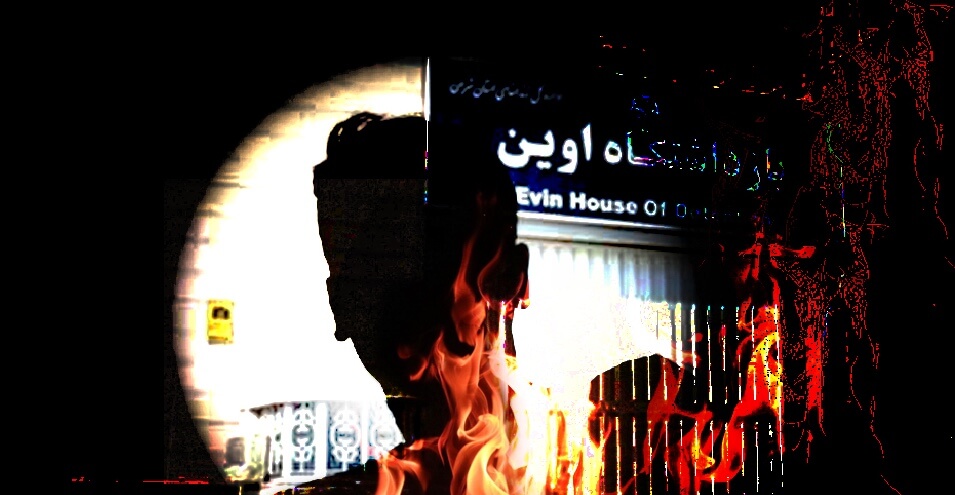
Deprivation of treatment, detention in unsanitary prison conditions, imposition of special medications, and transfer to psychiatric hospitals have been part of the systematic actions of the judiciary in dealing with political and ideological prisoners. On the other hand, the unfair trial process in political and ideological cases and discrimination against the defendants in these cases in the use of legal facilities such as granting leave or conditional release are another aspect of the systematic treatment of political and ideological prisoners. The self-immolation of Mehdi Darini, a political prisoner imprisoned in Evin, after his protests and pursuit of conditional release remained fruitless, is the latest example of the judicial system's illegal and discriminatory behavior towards political and ideological prisoners.
Prisoners' lives becoming worthless to prison guards
On Wednesday, November 25, 2021, imprisoned journalist Keyvan Samimi announced that political prisoner Mehdi Darini, imprisoned in Evin, had committed self-immolation. This action was taken after security and prosecutorial officials prevented Mehdi Darini from being released on parole and his correspondence and protests remained fruitless.
As Keyvan Samimi wrote, a few days before his self-immolation, Mehdi Darini had told the relevant authorities, “If the investigator does not pay attention to his request, he will do this [self-immolation] on November 2nd.” Mehdi Darini was arrested in June 2019 and sentenced to 11 years in prison, but ultimately, citing Article 134 of the Islamic Penal Code, only 5 years of this sentence could be enforced as the most severe punishment, and after serving a third of this sentence, he was eligible for conditional release. However, in the past few months, his repeated requests for conditional release have not been successful. According to Keyvan Samimi, Mehdi Darini’s self-immolation “is a serious warning to the security authorities and the judiciary of the Islamic Republic.”
The publication of this news and some of its details are clear evidence of the prevailing view of the judiciary regarding political prisoners and the disregard of the responsible authorities for the legal demands of the prisoners. A view that has in many cases caused irreparable harm to the prisoners and their families. Although Mehdi Darini's request was to use conditional release, in many cases, the basic and legal rights of political prisoners, such as "granting leave" or "treatment outside of prison", have also been easily ignored by the responsible authorities in prisons, security forces and courts. This is apart from the numerous cases that have directly caused the loss of lives of prisoners or serious harm to their physical or mental health. The consequences of such inhuman and illegal behavior have led to cases such as "Vahid Afkari" and now "Mehdi Darini" witnessing attempts at suicide or self-immolation by this group of political prisoners.
Although specific articles of the Criminal Procedure Code emphasize the need to pay attention to the physical and mental health of prisoners in order to endure punishment, it seems that judicial authorities deliberately refuse to refer to these laws regarding political prisoners, and in the meantime, the only issue that is of no importance to the responsible authorities is the mental and physical health of prisoners. For example, Article 502 of the Criminal Procedure Code states that the execution of a sentence can be postponed due to the “physical or mental illness of the convict” and the possibility of “aggravation of the illness” if the sentence continues. This legal article also orders in some cases to convert the prison sentence to an appropriate punishment or to suspend the execution of the sentence, but judicial authorities in many cases, under the supervision of security authorities, refuse to implement this law.
On the other hand, discrimination against political prisoners in granting some of the obvious rights of prisoners, such as medical leave or cases such as conditional release, also determines the illegal path of the judicial system in dealing with political and ideological convicts. For example, as stated in Article 58 of the Islamic Penal Code, "all those sentenced to imprisonment" can benefit from the benefits of "conditional release" provided that certain conditions are met, but in many political and ideological cases, convicts are still deprived of the right to conditional release even though they meet the conditions set out in the law.
The continuing discriminatory treatment of political and ideological prisoners by the judicial system in Iran has left prisoners with no choice but to risk their lives in the daily struggle to make their voices heard by the authorities.
However, it seems that security officials and the judiciary, regardless of the lives of prisoners, insist on continuing the discriminatory treatment; as Keyvan Samimi writes in describing Mehdi Darini's self-immolation: "Mehdi Darini stated in his recent meeting with the interrogator of his case that he wanted to go on a hunger strike, but the interrogator replied: 'What better, the Islamic Republic will lose one breadwinner.'"
Clear evidence about the deplorable state of prisons and the government's response
The news of the attempted self-immolation of political prisoner Mehdi Darini was published in the days when Mohammad Mehdi Hajmohammadi, head of the Prisons Organization of the Islamic Republic of Iran, spoke of "Islamic prison services" in Iran and accused "dissident" media outlets of "focusing on the prison complex and human rights in order to distort the services of the prison system."
The claim of the head of the country's prisons organization comes at a time when comments about "service provision" should be heard from the prisoners rather than from the "guards." All available accounts and evidence indicate a completely different reality than the claims of Mohammad Mehdi Hajmohammadi, head of the Prisons Organization of the Islamic Republic of Iran.
Although in recent years, and in the narratives of many petitioners and audio files of some political and conscientious prisoners, clear signs and evidence of the reality of discrimination against political and conscientious prisoners have been published, perhaps the most telling evidence of the treatment of prisoners and the prison conditions by prison guards is the disclosure of footage from Evin Prison's CCTV cameras and some footage of the abuse of prisoners, which has attracted the full attention of the public in recent months. After the disclosure of these footage, none of the high-ranking and decision-making officials in the judicial system have been held accountable or tried, and now, after this short period of time, the authorities not only speak of "Islamic prison guard services," but also emphasize "explaining and introducing the true face of the prison and Islamic prison guard."
In fact, the reaction of the country's prison organization, as the main custodian of prisoners' affairs, to the countless revelations and accounts of prisoners about the deplorable conditions in prisons, is to create a narrative to the contrary and present a distorted and false reality. This method, of course, has been followed by the government for years; making documentaries to justify the conditions of prisoners' detention and broadcasting them on television or providing parts of the prison for visits by some officials, are among the measures that the security and judicial apparatuses have used to impose their false narrative.
However, the possibility of widespread information about the conditions of prisoners and prisons has rendered all the government's desperate efforts to present a favorable image of the justice system in the country fruitless.
Source: Human Rights Campaign