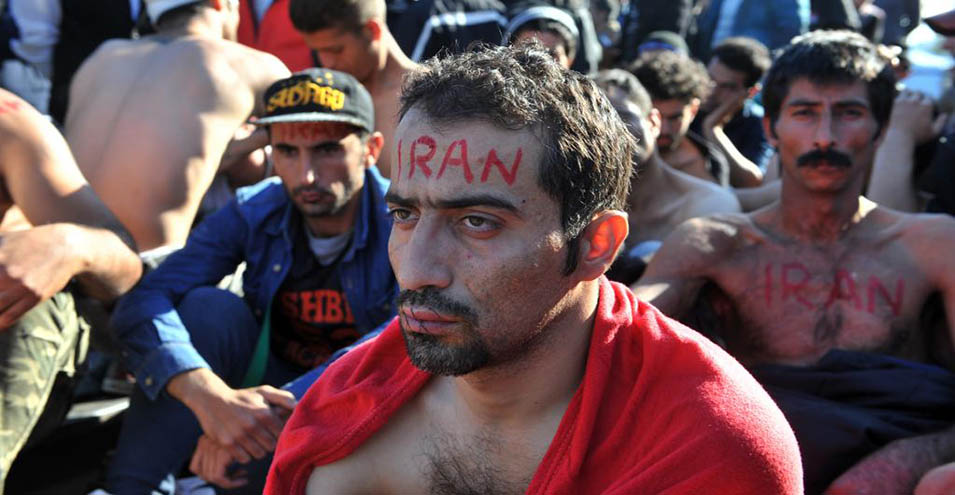
Criticism of the British government over how it processes religious asylum applications
“Can you recite the Ten Commandments from memory?”
Should someone who converted to Christianity and sought asylum in Britain for their life know the answer to this question?
A group of British MPs from different parties working on religious freedom have described the criteria for processing asylum applications from people who have converted to Christianity as unfair in a report.
According to the group, the questions asked of these asylum seekers during the processing of their applications are irrelevant and unfair.
The group of MPs believes that people who process asylum applications often try to ask these asylum seekers trivial questions about the Bible rather than looking into their beliefs.
According to this group, the lack of a proper understanding of religion and beliefs leads to the rejection of asylum applications from people who are at risk of trial and death in their countries due to their conversion to religion.
Mohammad is an Iranian refugee who has converted to Christianity. He is trying to get permission to live in the UK.
His asylum application was rejected following a review of his case.
“One of the questions they asked me was very strange. They asked me what color the cover of the Bible was,” the Iranian refugee says.
Muhammad says he replied, "He knows that the cover of the Bible comes in different colors, my cover is red."
According to the Iranian refugee, he was asked questions that he was unable to answer. For example, he was asked to recite the Ten Commandments, but he was unable to recite them all from memory.
When an individual's asylum application is being processed, the case officer will decide whether to add their statements to the case. The guideline for processing cases of people who have applied for asylum due to religious conversion is that they should be asked about general information.
But why does the Home Office, which processes asylum applications, expect these asylum seekers to know the basic principles of the Bible?
Baroness Bridge, who chairs the parliamentary group, said: “The problem with these kinds of questions is that you may not be a sincere person, but you go and find the answers to these questions, but conversely you may be a sincere person, but you don’t know the answers to these questions.”
“When the system doesn’t ask about people’s true beliefs, it shows that those who decide the fate of these refugees are not properly trained.”
There are no official statistics on the number of people seeking asylum on religious grounds, but evidence suggests that a large proportion of these people are likely to be Muslims who have converted to Christianity.
Members of the Ahmadiyya Islamic sect in Pakistan are another group seeking residency in the UK because their activities are illegal in the country.
Rev Mark Miller, who leads a gathering of Iranian converts to Christianity in Stockton-on-Tees, says those dealing with such asylum seekers need to distinguish between the knowledge that is in the soul and spirit of a person and the knowledge that is learned by rote.
According to Mr. Miller, they need to ask these refugees questions that will help them understand why a person would abandon the beliefs and religion they were born with.
But the question is: Is it possible to game the current system? Can't someone pretend to have discovered the existence of God?
The recent mass conversions in Germany have fueled concerns that such practices may be a major fraud.
The British Home Office is reviewing the parliamentary group's report.
There has been no official comment on the matter yet, other than to emphasize that the guidelines are regularly reviewed regarding the views of religious groups.
There are no plans yet to record statistics on religious asylum applications, as many applications are complex or overlap with other factors.
Mohammed is from Yorkshire. Like many others, he was baptized in Greece on his way to Britain.
“To know if someone is a true believer or not, you have to look at their achievements in life. The achievements of life are love and humanity… When people come here, they are wounded and afraid, what they need most is love,” he says.
Source: BBC