Criticism of ambivalence in dealing with Iranian Christians after government ceremony held in church
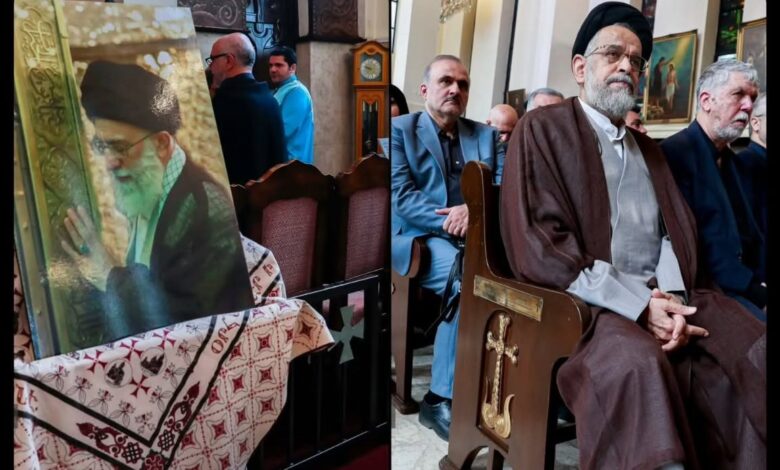
A government ceremony in a Tehran church came under scrutiny, while criticism of the ambivalence in dealing with Iranian Christians and the widespread restrictions against them continues.
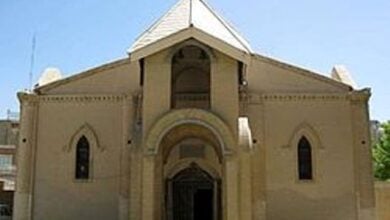
The holding of an official ceremony at the Holy Sarkis Church for the 40th birthday of Ali Khamenei has sparked a wave of reactions and criticism among Christian observers and activists in recent days; an event that, according to critics, further exposes the gap between the official government narrative and the reality of Christian life in Iran.
According to published reports, the ceremony was attended by some government officials and representatives of religious minorities, and religious leaders read prayers and messages praising the Leader of the Islamic Republic. However, as images and details of the ceremony were released, criticism arose about why such a program was held in a Christian religious place, and criticism of the event on social media is growing every day.
Critics say the move is in stark contrast to the government’s record of treating Christians, especially converts. In recent years, there have been numerous reports of arrests, summonses, and security crackdowns on Christians in Iran, a topic that has been repeatedly highlighted by religious freedom advocates. In this context, some analysts believe that the symbolic use of the church for government ceremonies is an attempt to demonstrate “religious coexistence,” while the reality on the ground suggests otherwise.
One of the analyses presented on this subject recently stated: "Holding such a ceremony, while numerous reports have been published in recent years of pressure, restrictions, and arrests of Christian citizens in Iran, presents a contradictory picture of official policies."
This ambivalence has become particularly salient in the context of recent developments in Iran. Following waves of protests in recent years, there have been numerous reports of violent repression, mass arrests of citizens, and severe social restrictions, conditions that have affected not only civil society activists but also religious minorities, including Christians.
On the other hand, some observers believe that holding such ceremonies in a church could put additional pressure on Iran's traditional Christian community, which has always tried to keep its religious identity away from political tensions. According to the group, linking Christian worship spaces with government programs could weaken the church's independent position.
Meanwhile, reactions on social media also indicate the high sensitivity of public opinion to this issue. Many users have considered the move a sign of "double standards" and have asked how a government that has repeatedly restricted Christian activities is now using the church to hold its official ceremonies.
Some other observers and social media users also believe that the choice of a church as the venue for this ceremony was more due to security considerations and concerns about social reactions than a sign of respect for religious diversity, especially in a situation where public discontent and protests have increased in Iran. At the same time, given the tense atmosphere in the region and recent conflicts, this speculation has also been raised: since in some cases the gathering place of government figures has been the target of attacks by Israel or the United States, the authorities have preferred to hold such ceremonies in a church to reduce the risk and attract less attention; an approach that, according to critics, is considered a kind of instrumental exploitation of a religious place rather than a sign of peaceful coexistence.
Overall, this event has once again brought the issue of religious freedom in Iran to the forefront of attention; an issue that continues to pose serious challenges, especially for the Persian-speaking Christian community and converts from Islam, and requires the continued attention and support of the international community and human rights institutions.