The crisis of water resource destruction in Iran; from "the black fate of Bakhtegan" to "the gradual death of Karun"
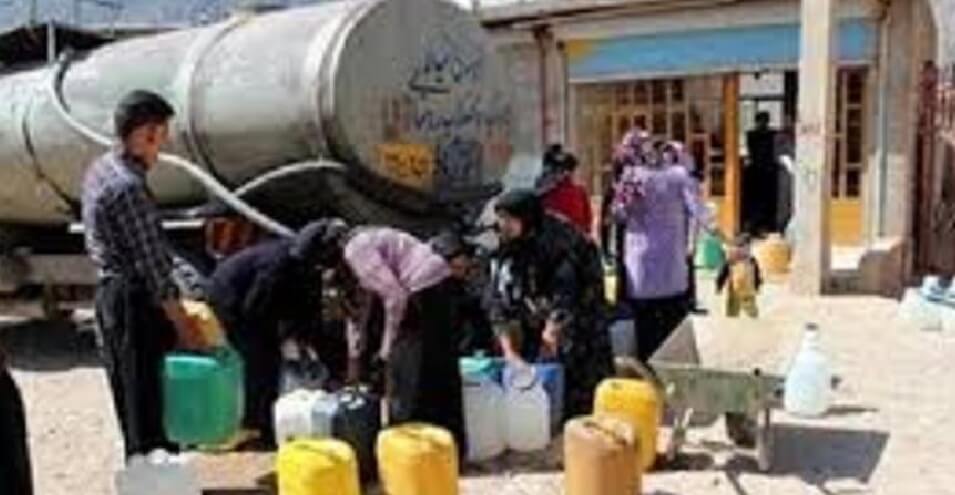
The new round of nationwide protests in Iran, which began with protests against water shortages in Khuzestan, is an issue that water and environmental experts have repeatedly warned about, and statements by officials confirm it. According to the head of the Environmental Protection Organization, water bankruptcy has endangered Iranian civilization.
- Iran's food security is at risk
A senior environmental expert in Iran says that although agriculture accounts for 92 percent of the country's total water consumption, it only provides 66 percent of the food for the Iranian people. The severity of this crisis is such that it has put Iran's food security at risk.
The current environmental crisis and water scarcity are not and have not been a new and unpredictable problem. In an article titled “Iran’s Environmental Crises” in the Economic Monthly Karai, Behnaz Sadat Vaez Madani, an environmental expert, in 2019, citing the World Health Organization, introduced the cities of Ahvaz, Kermanshah, and Sanandaj among the five most polluted cities in the world and, referring to statistics, wrote: “Air pollutants in Tehran alone cause the deaths of more than 5,500 people annually due to cardiovascular, vascular, and respiratory diseases.”
In this article about the water shortage crisis in Iran, he writes: "It is no longer possible to collect and build new dams of water in the country, and to the extent that this was possible, it has been done in the last one or two decades." According to him, the possibility of transferring water from the water-rich areas of the country to the dry and water-scarce areas is also no more possible than the current rate.
- Iran's environment is dying.
Meanwhile, numerous reports in Iranian media report the destruction of the country’s wetlands, rivers, and other water resources. “Sistan and Baluchestan is thirsty and Hamun is dying,” “Bakhtegan Wetland is black,” and “Karun is slowly dying” are just a few examples of tragic headlines in Iranian media about the state of the country’s environment.
Although, in contrast to these reports, there is occasionally promising news about the restoration of water resources in Iran, according to experts, these hopes are "temporary" in the current circumstances.
- There is not much time left to escape the current situation.
Fatima Aman, a senior analyst at the Middle East Institute in Washington, points to a report in Science magazine and says that the improvement in Lake Urmia, which everyone thinks is almost recovering, has been temporary.
According to him, the water crisis in the region is an ecosystem problem, and neighboring countries must cooperate to resolve it, because, for example, due to the ongoing developments in Iran and Afghanistan, there is not much time left to escape the current situation.
- Water bankruptcy has endangered Iranian civilization
The head of the Environmental Protection Organization also confirms this critical situation and says that Iran's water and soil capital is being wasted and water bankruptcy has progressed to the point where it has endangered the country's civilization.
According to Issa Kalantari, in some wetlands, such as the Gavkhoni Wetland, unsustainable development and the lack of a land use plan have made it impossible to provide water.
This official of the Islamic Republic, who was also previously the Minister of Agriculture, considers the reality of water in the country to be "more deplorable" than what officials say, and criticizing the country's macro policies, including "self-sufficiency," he acknowledges that 95 percent production in self-sufficiency means using twice the existing capacity of water resources; and if we do not fight for the environment in the current conditions, it will be destroyed.
- Physical violence caused by water shortages was predicted
Nik Ahang Kowsar, a water analyst and journalist, previously described the water situation in Iran as a "crisis" in an interview with Voice of America, saying that the crisis is so serious that it could lead to physical violence.
According to Mr. Kausar, "The reduction of water resources due to unreasonable consumption in the agricultural sector - that is, excessive consumption due to self-sufficiency and agricultural policies - has led to the current bankrupt situation."
The water journalist attributes Iran's water crisis to "bad management," not a drop in rainfall. "This shows that the Islamic Republic has been doing very badly over the past few decades, and we are now seeing the results of this mismanagement more clearly," he says.
Although, in contrast to these reports, there is occasionally promising news about the restoration of water resources in Iran, according to experts, these hopes are "temporary" in the current circumstances.
- There is not much time left to escape the current situation.
Fatima Aman, a senior analyst at the Middle East Institute in Washington, points to a report in Science magazine and says that the improvement in Lake Urmia, which everyone thinks is almost recovering, has been temporary.
According to him, the water crisis in the region is an ecosystem problem, and neighboring countries must cooperate to resolve it, because, for example, due to the ongoing developments in Iran and Afghanistan, there is not much time left to escape the current situation.
- Water bankruptcy has endangered Iranian civilization
The head of the Environmental Protection Organization also confirms this critical situation and says that Iran's water and soil capital is being wasted and water bankruptcy has progressed to the point where it has endangered the country's civilization.
According to Issa Kalantari, in some wetlands, such as the Gavkhoni Wetland, unsustainable development and the lack of a land use plan have made it impossible to provide water.
This official of the Islamic Republic, who was also previously the Minister of Agriculture, considers the reality of water in the country to be "more deplorable" than what officials say, and criticizing the country's macro policies, including "self-sufficiency," he acknowledges that 95 percent production in self-sufficiency means using twice the existing capacity of water resources; and if we do not fight for the environment in the current conditions, it will be destroyed.
- Physical violence caused by water shortages was predicted
Nik Ahang Kowsar, a water analyst and journalist, previously described the water situation in Iran as a "crisis" in an interview with Voice of America, saying that the crisis is so serious that it could lead to physical violence.
According to Mr. Kausar, "The reduction of water resources due to unreasonable consumption in the agricultural sector - that is, excessive consumption due to self-sufficiency and agricultural policies - has led to the current bankrupt situation."
The water journalist attributes Iran's water crisis to "bad management," not a drop in rainfall. "This shows that the Islamic Republic has been doing very badly over the past few decades, and we are now seeing the results of this mismanagement more clearly," he says.