Relatives of those executed in 1967: Mir Hossein Mousavi should announce his knowledge about the massacre of that year

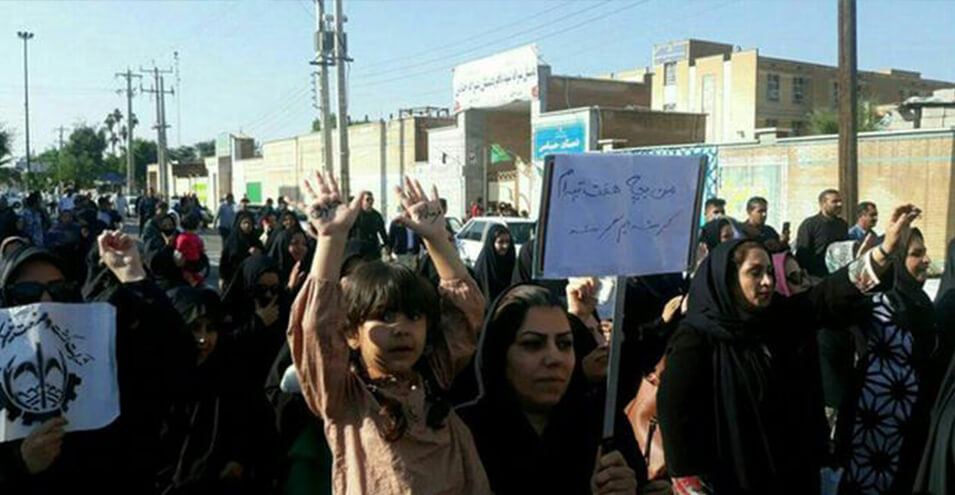
After a number of political and civil activists considered Amnesty International's emphasis on Mir Hossein Mousavi's role in the mass executions of 2018 to be based on "blatant distortions," hundreds of families of those executed that year reacted to these activists.
Hundreds of relatives of those executed in 1967 signed a petition on Sunday, October 3, asking, "Why don't Mir Hossein Mousavi and all those affiliated with the Islamic regime of Iran, who have themselves been harassed and persecuted by the government and have not been immune from the human rights violations in Iran, make all their information and knowledge about the summer 1967 massacre available to their families and society?"
These families have accused then-Prime Minister Mir Hossein Mousavi, “and all those affiliated with the Islamic regime of Iran,” of “constantly distorting and covering up” the issue of the 1967 executions.
The statement reads: "Whether those who directly participated in the crime or those who have remained silent in distorting, covering up, and continuing this horrific crime to preserve the system or their personal interests, must be held accountable for all its aspects to the families and the entire society."
Survivors have also strongly criticized what they call the "distortion of the undeniable reality of these crimes" by supporters of Mir Hossein Mousavi.
This is despite the belief of 60 political and civil activists who issued a statement on this issue on October 25 of this year, that Mir Hossein Mousavi, as Prime Minister at the time, was unaware of the executions.
The statement of these 60 people, which was published on Tuesday, October 1, and was also signed by several survivors of the 1967 executions, while calling the 1967 executions "criminal and horrific," states: "The Iranian section of Amnesty International is promoting the issue in such a way that the perpetrators, perpetrators, and overseers of the crime all remain hidden in the shadows and Mir Hossein Mousavi, against whom no evidence has been discovered so far, is suddenly portrayed as the main person responsible."
According to some estimates, in the summer of 1988, approximately five thousand political prisoners who were supporters of the People's Mojahedin Organization and leftist groups such as the Fedayeen Khalq and the Tudeh Party were executed in Iranian prisons on the orders of Ayatollah Khomeini and by a committee known as the "Death Committee".
On September 10 of this year, Amnesty International issued a public statement that included the text of a question and answer session regarding the possibility that Mir Hossein Mousavi was aware of the mass executions of 2018 during his time as prime minister.
The publication of this statement also occurred about three weeks after Raha Bahreini, a researcher at the organization, posted on Twitter a picture of the organization's statement of August 15, 1988, addressed to Ayatollah Mousavi Ardebili, then head of the Supreme Judicial Council, and Hassan Habibi, then Minister of Justice, and wrote, "However, the policy of the Foreign Ministry of the Mousavi government was denial."
In December 2018, Amnesty International, in a report marking the thirtieth anniversary of the "Summer 2018 Executions," announced that at that time the organization had sent 16 letters to Iran requesting urgent action, but the Iranian government had not responded to any of the letters.
Earlier, during the 2009 election campaign, Mir Hossein Mousavi had said in response to the executions of the summer of 2018: "I had no role in any way, no knowledge."
On the other hand, in 2016, an audio file was released of a meeting and conversation between Ayatollah Hossein Ali Montazeri, the ousted successor of Ayatollah Khomeini, with Hossein Ali Nayiri, the Sharia ruler at the time, Morteza Eshraqi, the then prosecutor of Tehran, and Mostafa Pourmohammadi, the then representative of the Ministry of Intelligence in Evin Prison.
These three people, along with Ebrahim Raisi, the current head of the Islamic Republic's judiciary, who were the main actors in implementing Khomeini's decree at the time, have become known as the "Death Commission."
In this audio file, Ayatollah Montazeri refers to the mass killing of political prisoners as a crime and, strongly criticizing the executors of Ayatollah Khomeini's decree, calls for a halt to the executions.
Hundreds of relatives of those executed in 1967 also mentioned this issue in a text published on Sunday, October 4, and wrote, "We suspect that Hossein Ali Montazeri, the deputy leader, is also responsible."
The text added: "Despite his bold opposition to the killing of political prisoners, he protested with two secret letters on 29 and 30 August addressed to Ruhollah Khomeini and summoned the members of the Tehran death squad to his house on 23 or 24 August and a letter on 24 August to the members of the death squad, asking them not to execute them at least during Muharram. Why didn't he inform the community, especially the families of political prisoners who visited his office at least twice in August and September, after learning about the killing of political prisoners, so that they could perhaps prevent the massacre of their loved ones? And why didn't he go to Tehran to meet Khomeini directly and in person to protest and prevent the killing from continuing?"
The families of the executed continue: "We declare that all current officials of the Islamic Republic of Iran, including Ali Khamenei (Leader), members of the Guardian Council, members of the Expediency Discernment Council, members of the Assembly of Experts, Ebrahim Raisi (Head of the Judiciary), Mohammad Jafar Montazeri (Attorney General), Hassan Rouhani (President), Alireza Avaei (Minister of Justice), Mohammad Javad Zarif (Minister of Foreign Affairs), Mohammad Baqer Qalibaf (Speaker of Parliament), Ahmad Khatami (Friday prayer leader of Tehran), Minister of Interior (Abdol Reza Rahmani Fazli), high-ranking cadres of the Behesht Zahra Organization, and all current and former officials of the regime who have helped distort, cover up, and even perpetuate this crime through the destruction of individual and mass graves and the harassment and persecution of families, are also complicit in this crime, because the summer 2018 massacre is a serial crime."
Ayatollah Ali Khamenei, the leader of the Islamic Republic who was president in 2018, said in a December 2018 issue of the Resalat newspaper about the executions that those who were executed "deserved" the death penalty.
Source: Radio Farda