What use are statements and resolutions about "human rights violations" in Iran?
Amnesty International is a non-profit organization founded 60 years ago to hold governments accountable for the rights of their citizens, based on human rights principles and international law. Protecting human rights, establishing justice in the world, documenting human rights violations, and preventing human rights abuses are among the missions that this international organization has defined for itself.
The Iran section of this human rights organization has published hundreds of statements and reports, especially in the 42 years since the Islamic Republic of Iran was founded. A number of Radio Farda listeners have asked what impact the publication of these statements has on improving the human rights situation in Iran.
To answer this and similar questions, we have conducted a special interview with Raha Bahreini, a lawyer and researcher on Iran affairs at Amnesty International, which you can listen to and read.
Ms. Bahreini, one of the issues that Radio Farda's listeners usually raise, and often come up with criticism, is the impact of the publication of these statements and even UN resolutions that condemn human rights violations in Iran. These Radio Farda listeners say that these statements have been issued for 42 years, but according to them, they have not had any impact on improving the human rights situation in Iran. What is your response to this?
This is a valid question. We are facing a huge human rights crisis in Iran, and the existing global mechanisms are not responding to this human rights crisis. Every year we are faced with a huge volume of human rights violations and international crimes in the country, and the perpetrators and perpetrators of these tragedies remain immune from punishment. One of the main reasons for such a situation is, on the one hand, the ineffective judicial system and its complicity in human rights violations in Iran. Because if you compare the situation in Iran with many countries in the world, the first duty to address human rights violations in the current world system is the governments and their judicial systems. But in Iran, instead of addressing human rights violations, the judicial system is complicit in the perpetrators and perpetrators of human rights violations and has direct responsibility in this regard.
In such an environment, victims of human rights violations and people in general look first to the international community, but the international community has limited means of holding governments accountable, and these means do not include the ability to systematically prosecute all human rights violators in a country. Now, to answer your question about the effectiveness of these resolutions, it is necessary to explain what the mechanisms that exist at the international level to address human rights violations are.
Tell us about the mechanisms for addressing human rights violations. What are these mechanisms like?
Here we can address at least three main mechanisms, two of which have a human rights and political aspect, and one of which has a criminal aspect.
At the international level, there are independent UN human rights institutions, such as the Human Rights Committee, the Committee on the Rights of the Child, and the Committee against Torture, which monitor the conventions that countries have signed. Countries must continuously and annually submit their performance to these institutions. In addition, human rights organizations must submit their parallel reports, and during this review, governments must be held accountable in various areas.
But this accountability comes in the form of asking questions of governments, demanding answers from them, and then giving them recommendations that then oblige them to act on those recommendations. If they don't act, they actually face more condemnation. But beyond that, there is no mechanism in the international community to hold them accountable.
What are the legal solutions, or rather, criminal solutions, in the international community to address those human rights violations that are considered crimes, such as torture?
One mechanism is the International Criminal Court, which is a mechanism that goes beyond human rights complaints and deals with those types of human rights violations that, due to their seriousness and widespread nature, constitute international crimes, such as torture, which is considered an international crime, or war crimes and genocide.
In the case of these types of human rights violations that take on an international criminal aspect, countries may be referred to the International Criminal Court. But in that case, unfortunately, there are still many limitations in today's world.
On the one hand, countries must normally accept the Statute of the International Criminal Court, that is, recognize the jurisdiction of this court, in order for their case to be examined. Only in exceptional cases can the Security Council, which is again a political body, decide to refer a country to the International Criminal Court if its members collectively consider the situation in a country to be serious and amount to international crimes.
Ms. Bahreini, in the case of Iran, is it possible that the case of some human rights violations, such as the executions of 1988 or the November 2019 massacre, could be referred to the International Criminal Court?
Given that China and Russia are on the UN Security Council and, as we saw in the case of Syria, prevented Syria from being referred to the International Criminal Court, it is unfortunately possible to assume that the same serious obstacle exists in the case of Iran. We are facing serious political obstacles at the international level to holding the biggest perpetrators and masters of international crimes accountable.
Another criminal mechanism that can be helpful in these limited circumstances is the principle of universal jurisdiction. Many countries have now passed laws that allow the prosecution of individuals against whom there is evidence of their involvement in international crimes such as torture or crimes against humanity to enter the geographical area of those countries, even if the crime was committed in another country, such as Iran, even if the crime occurred in another country.
Yes, like what happened with Hamid Nouri, who is being detained in Sweden because of allegations of his involvement in the 1988 executions, right?
Exactly. And that's why one aspect of human rights work is to identify the perpetrators and instigators of human rights violations and to document human rights violations so that if these individuals ever set foot in the geographical areas of countries that believe in universal jurisdiction, they can be immediately prosecuted.
What is the way to hold officials responsible for human rights violations, such as those in the Islamic Republic, accountable in the short term?
One mechanism is the UN intergovernmental human rights mechanisms. That is, the UN Human Rights Council and the UN General Assembly. These institutions are fundamentally political institutions because their members are the governments of the world. Therefore, unfortunately, governments also consider their economic-political relations. However, in these institutions, over the years, with the efforts of human rights institutions in all corners of the world and international human rights institutions, specific meetings and conferences and specific mechanisms have been defined to address human rights violations. And when these intergovernmental institutions, that is, political institutions with member states, issue resolutions, they actually show that there is collective concern at the global level about a country's record of human rights violations, and this is politically costly for governments. That is, they never want to face these continuous condemnations at the international level. However, this depends on how indifferent or how brazen the government wants to be regarding human rights violations.
Some governments, including the government of the Islamic Republic of Iran, despite being condemned and questioned year after year by the majority of countries in the world, still do not take any steps to improve the human rights situation. In fact, we are faced with a continuous disregard for the voice of global protest by the government of the Islamic Republic of Iran.
The international community and Amnesty International have on numerous occasions accused the Islamic Republic of violating its international obligations under the international conventions it has signed. Ms. Bahreini, is there a way for victims to sue the Iranian government for violating these conventions?
There are treaties at the international level that, if the Iranian government had signed them, would have given victims of human rights violations the opportunity to turn to these international bodies if their legal recourse was unsuccessful within the country.
For example, if the Optional Protocol to the International Covenant on Civil and Political Rights is signed by governments, victims can bring individual complaints to the Human Rights Committee, which oversees the International Covenant on Civil and Political Rights and its observance by states. Unfortunately, the Iranian government has not signed this protocol, and therefore individual complaints cannot be submitted to the Human Rights Committee, which can only examine Iran's overall performance in implementing the articles of the International Covenant on Civil and Political Rights in its periodic reviews.
Similarly, the Convention against Torture and the International Covenant on Economic, Social and Cultural Rights also have protocols that, if signed by governments, recognize the jurisdiction of the committees monitoring these treaties to receive individual complaints. Again, the Iranian government has not signed any of these, nor has it signed the Statute of the International Criminal Court.
Therefore, for all these reasons, there remain limited mechanisms to hold Iranian officials accountable at the international level, mainly on the one hand, independent UN human rights institutions that condemn human rights violations and encourage Iranian officials to change their practices in the form of periodic reviews or issuing statements, and [or] resolutions that governments issue in the UN Human Rights Council or the General Assembly.
According to international law, can the November 2019 massacre be classified as a crime against humanity?
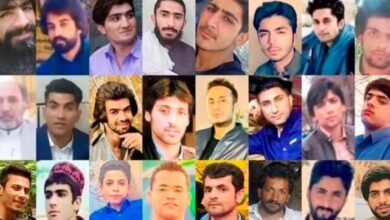
This is an investigation that Amnesty International is currently conducting, and we are organizing all the documentation that has been collected over the past year and a half into the framework of international law related to crimes against humanity so that we can continue the path of justice and, by preparing a report, show the international community what international crimes were committed in connection with the Aban massacre and why it is important that the officials of the Islamic Republic of Iran are held accountable at the international level. Because it is clear within the country that the judicial system is not responsible for the suffering of the families; on the contrary, it is the protector of those who killed the protesters and bystanders.
Ms. Bahraini, with all the explanations you have given, tell us what is the significance of these documentaries and statements that Amnesty International publishes?
Documenting human rights violations and continuously reporting on them is important in several ways. First and foremost, it is about supporting and empathizing with the families of the victims of human rights violations and civil society, which is struggling to improve the situation under the pressure of repression, and it is important to support this at the international level.
In terms of documentation, Amnesty International's reports are highly respected internationally due to their meticulous research and documentation methods. These reports are also used by UN bodies, namely the UN Secretary-General and UN Special Rapporteurs, as well as by governments engaged in bilateral and multilateral dialogue with Iranian authorities, and serve as the basis for diplomatic protests by governments in various cases of human rights violations.
These documentaries are also important from another perspective, and that is the future of human rights monitoring. One day, if courts are held for the perpetrators and commanders of human rights violations or truth-finding commissions are formed, the reports prepared by organizations such as Amnesty International over the years will be very important in providing a clear and accurate picture of what has happened in the past and what steps need to be taken to prevent those tragedies from happening again.
What impact do these statements have in the short term on improving the situation of people and victims of human rights violations?
In a short period of time, in various areas, these efforts have led to reform of the law and improvement of the situation of people in dangerous situations. These statements have saved lives, and we must not forget that although we are facing a huge and structural human rights crisis, every step that makes a family feel less hot, a person's suffering in detention is less, access to medical services is less, or torture is stopped is of great value. Every step by any person and any institution that reduces this suffering and stands with the victims is of great importance.
Source: Radio Farda