Tehran urges parties to revive JCPOA talks not to "give in to Israeli pressure"
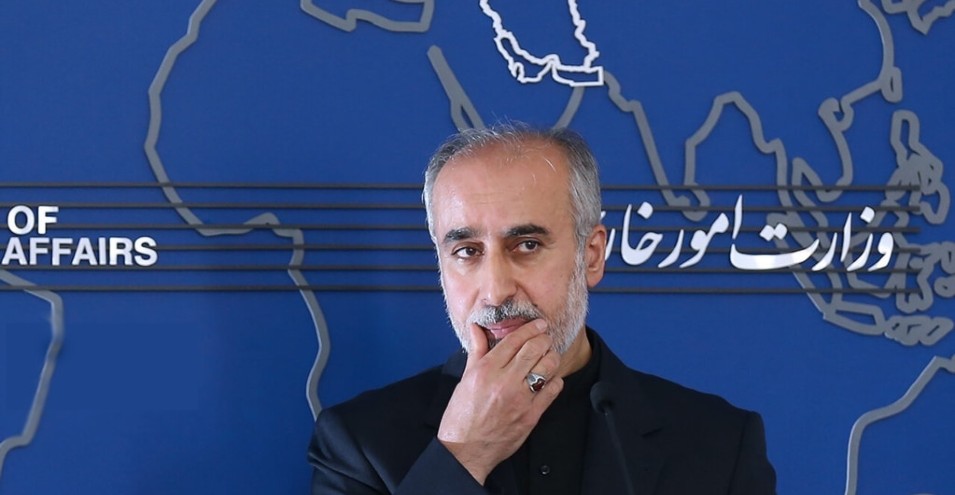
On Monday, September 11, the spokesman for the Islamic Republic's Foreign Ministry said that Tehran is ready to continue "constructive cooperation" with the International Nuclear Agency and continue negotiations to lift sanctions, while at the same time urging the negotiating parties not to "give in to Israeli pressure."
In his weekly press conference, Nasser Kanaani also said about the process of negotiations that the Islamic Republic is still "waiting to receive an official response from the other side."
The Foreign Ministry spokesman also called on the negotiating parties not to be "influenced by Israel's unconstructive behavior," in response to Israel's recent claim that it had "provided new documents on Iran's nuclear activities to European countries and the IAEA."
Two days ago, Mr. Kanani described the joint statement by Britain, France, and Germany on the Islamic Republic's nuclear programs as being influenced by the Israeli government with the aim of "failing negotiations," and said that if "such an approach continues, they must accept responsibility for its results."
Following the Iranian government's insistence on closing the case of uranium particle disclosure at its undeclared sites, the three European members of the JCPOA on Saturday called for the Islamic Republic to cooperate without delay and in good faith with the International Atomic Energy Agency on this issue.
In today's meeting, the Foreign Ministry spokesman once again called the statement "incorrect and ill-considered," describing it as "the result of miscalculations on the European side," and urged them to "try to pave the way for an agreement."
This is while Britain, France, and Germany, in their statement, have warned that Iran's failure to reach an agreement to revive the JCPOA cannot in any way be an excuse for Iran to shirk its legally binding obligations regarding the non-proliferation of nuclear weapons.
The three countries have also emphasized that the Islamic Republic must provide the Agency with a credible technical explanation about the origin of the uranium found at its sites.
In recent months, and most recently in his quarterly report to the IAEA Board of Governors on September 6, the IAEA Director General warned that Tehran was not cooperating on the origin of uranium discovered at its undeclared sites.
In this report, the agency also warned that Iran's stockpile of 60 percent enriched uranium was approaching the amount needed to build a nuclear bomb.
The JCPOA revival talks became entangled in this issue after the European Union presented a final proposal last month to break the deadlock in these talks, following the failure of 16 months of multilateral talks between the Islamic Republic and the JCPOA member states and indirect negotiations with the United States to revive the JCPOA.
Iran and the United States submitted their responses to this "final" proposal by the European Union, but in its final response, Iran demanded guarantees from the United States to close the safeguards file at the International Atomic Energy Agency; a request that diminished the hopes of the European members of the JCPOA and the United States for the revival of the agreement.
The Foreign Ministry spokesman also said in his press conference about the possibility of postponing the continuation of negotiations to lift sanctions until after the US Congressional midterm elections: "We have not received such a request so far."
Previously, on September 8, the Jerusalem Post reported, citing a European diplomatic source, that the likelihood of Iran and the United States returning to the nuclear deal before the November US congressional elections was low.
This news has not yet been confirmed, but a White House National Security Council spokesman said on September 8 that US President Joe Biden wants to make sure that there are "other options available" to ensure that Iran does not obtain a nuclear bomb if the JCPOA negotiations fail.
John Kirby also reiterated that Washington will remain active in revitalizing the nuclear deal, but its patience will not last forever.
Source: Radio Farda