Is there any hope for the Vienna talks to be fruitful? How far might the Islamic Republic and the United States concede in the dispute over the Revolutionary Guard Corps? What is the Islamic Republic's main demand? Political analyst Ali Afshari's opinion on these issues:
The Vienna talks have been on hold since the Ukraine war. It is not yet clear whether the eighth round of talks should be considered over and the ninth round will be restarted, or whether the eighth round of talks will resume from where it was stopped. Initially, the Russian government’s change of position hindered the final agreement that was considered to be within reach. But even then, it was clear that the Iranian and American governments had not yet reached an understanding on several key positions. Despite the fact that after the meeting of Hossein Amir Abdollahian, the Foreign Minister of the Islamic Republic, with Sergei Lavrov, the Foreign Minister of Russia, in Moscow, it was announced that Russia would not have any preconditions different from the provisions of the JCPOA if an agreement was reached in Vienna, the 4+1 bloc has not actually met so far. However, during the last round of talks, Enrique Moura, the Deputy Head of the European Union for Foreign Policy, announced that the talks had reached their end and that a return to the JCPOA would require political decisions in Tehran and Washington, DC.
Josep Borrell, the head of the European Union's foreign policy, also announced that an agreement is still far from being reached despite the reduction in differences. Representatives of the US government expressed the most pessimistic assessment, stating that they are not optimistic about an agreement on the restoration of the JCPOA. Officials of the Islamic Republic of Iran also consider the US government to be an obstacle to reaching agreements. Amir Abdollahian claims that an understanding has been reached on the terms of returning to the JCPOA between the governments of Iran, the European Troika, Russia and China. He claimed that the US government has made additional demands, which he believes are unacceptable. He once again announced that the condition for direct negotiations with the US is to prove the government's good faith by releasing some of Iran's frozen financial resources before restoring the JCPOA; a demand that has not received a positive response since the beginning of the 13th government.
Of course, there have been claims about an agreement between the Iranian and American governments on a prisoner exchange, in which some of the frozen financial resources in foreign banks, which is not a large amount, are to be released. However, sources close to the American government denied this claim. President Ebrahim Raisi has also announced that the Iranian government “will not give up its nuclear rights and nuclear activities, and at the same time, it does not want to stop the negotiations.” He also stated that the government’s nuclear policy is Mr. Khamenei’s declared strategy and that he considers the nuclear negotiations to be one of the foreign policy issues.
In a written letter, 250 members of parliament, while supporting the positions of the 13th government’s nuclear negotiating team, have also called for demands such as “ensuring the legal guarantee of the US government for the actual lifting of sanctions and the non-exit of the JCPOA and its ratification by the US Congress,” “using all blocked resources without restrictions,” “free trade with the world and attracting foreign capital without restrictions,” “not imposing new sanctions by the US government after the JCPOA is revived,” and “ensuring that the trigger mechanism will not be activated in the future.” Mohammad Baqer Qalibaf, the speaker of the parliament, also defended the 11th parliament’s resolution on the “Strategic Action to Protect Nuclear Rights” law, claiming that this law “unlocked the nuclear industry.” He called for an agreement that would have “economic benefits” for the people. Amir Abdollahian and Ali Bagheri, the head of the Iranian negotiating team, also met with the Parliament's National Security and Foreign Policy Commission, and according to Mahmoud Abbaszadeh Meshkini, the commission's spokesman, "the members were convinced that no red lines or national interests were violated in the Vienna negotiations."
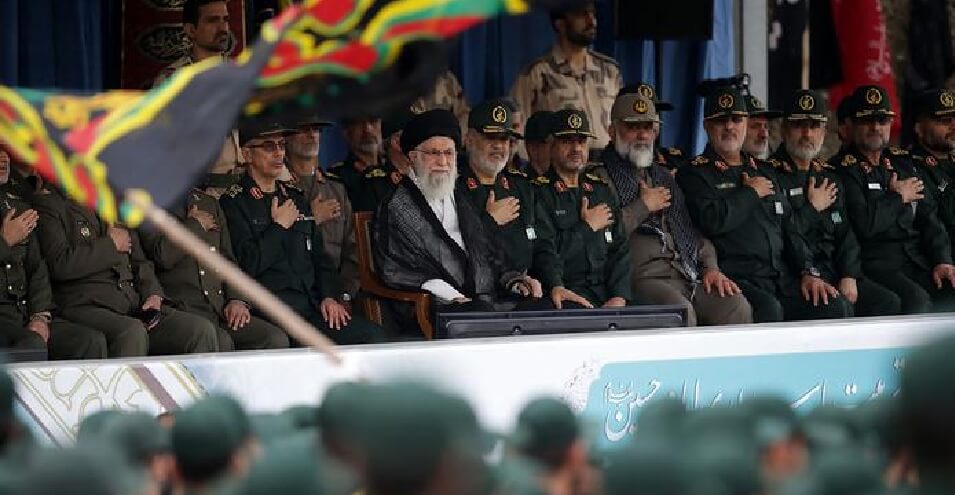
Although the parliament does not have a specific and decisive role in the decision-making structure in indirect negotiations with the US government, and a number of demands are also slogans and unrealistic, this statement is a window to understanding the existing obstacles. The interesting point is that despite the position of US government and military officials on the necessity of keeping the Quds Force on the list of terrorist organizations in this country, the letter from the parliamentarians does not specifically and explicitly mention this issue. This statement, along with Amir Abdollahian’s controversial positions regarding the fact that IRGC officials have said that they do not want to be an obstacle to the JCPOA reconstruction agreement, confirms the hypothesis that although the Islamic Republic of Iran is making every effort to completely remove the IRGC from sanctions, it does not link the fate of the JCPOA reconstruction and the exit from the current severe economic crisis to it. The regime’s support in this regard is the lack of effective deterrence of US unilateral sanctions against regional interventions and IRGC extraterritorial activities.
On the other hand, the Biden administration has taken a firm stance against being too flexible with the IRGC. The Trump administration’s 2019 sanctions on the IRGC were a controversial decision that drew opposition from within the administration and Republicans. Despite threats from former IRGC commander Mohammad Ali Jafari, the Islamic Republic did not react harshly, nor did it yield to pressure on the IRGC.
Continuing the trend of the past decade, the IRGC has relatively grown its position based on field equations in the Middle East, while at the same time facing new challenges in Lebanon and Iraq. Also, its demands in Yemen, which is actually the executive tool of the Velayat al-Faqih institution, have not been implemented in negotiations with Saudi Arabia, and as a result, the level of tension has increased. The regime's deterrence policy against the aggressive approach of the Israeli government has also changed and has evolved from a non-urgent and defensive mode to more harassing and almost direct confrontations.
In these circumstances, the priority of the regime is the normalization of the IRGC after the revival of the JCPOA, but the seventh and eighth rounds of the Vienna talks have made it clear to the Raisi administration and, at a higher level, Khamenei that this demand is not possible. In addition, the Biden administration also has demands beyond the JCPOA regarding changing the IRGC's behavior in the region, so that the JCPOA becomes a prelude to an agreement on other areas of disagreement, taking into account the considerations of Israel and the bloc aligned with Saudi Arabia in the Arab countries. The Islamic Republic has not yet accepted this demand, which in fact constitutes the main obstacle to returning to the JCPOA.
What seems inviolable for the red line regime is a negative response to the demands beyond the JCPOA, especially in the area of restrictions on the IRGC’s extraterritorial operations, but standing up to them is also a function of the conditions, such as the extent to which the Biden administration insists on its demands and the extent to which the Islamic Republic will be resilient to the risks of continuing heavy sanctions. The war in Ukraine has weakened Russia’s position as an ally of the Islamic Republic in global relations. The hope that Russia can contain the crisis in its foreign policy is a long-term thing that does not serve the current needs of the Islamic Republic of Iran.
The US government has made a distinction between the IRGC itself and the Quds Force and has sent the message that under certain conditions (modification and change of the IRGC's behavior in the region) it is willing to keep the IRGC on the list of terrorist organizations, but to remove the IRGC itself from it. Also, a maximum of part of the sanctions on the IRGC will be lifted, not all of them. The immutability of the US government's policy and the passage of time are detrimental to the Islamic Republic, and the concern that the Biden administration and its European allies will activate "Plan B" by abandoning the JCPOA has limited the regime's playing cards and bargaining power. Of course, the Biden administration may also show flexibility regarding the demands beyond the JCPOA, given the changing international scene and the change in priorities after Russia's military attack on Ukraine, in order to reduce Russia's influence on the global economy by injecting Iranian oil into the market as soon as possible.
In this situation, it seems that the main demand of the Islamic Republic is still to insist on returning to the JCPOA as the ceiling of demands, to maintain the nuclear infrastructure and continue to use advanced generations of centrifuges in production, and to work hard to maintain the US government's JCPOA commitments and ensure the lifting of sanctions. It will also demonstrate its determination to maintain the immutability of regional policy and the behavior of the IRGC through tactical and operational measures. In this context, another round of strength testing between the two sides has begun, which has postponed the time for the reconstruction of the JCPOA until further notice and has relatively increased its complexity. Although the Vienna negotiations have reached a deadlock in the last uphill stage and their movement has stopped for the time being, what has prevented the thread of hope from being completely broken is the fact that the two sides in the conflict do not have another significant option with calculated risks.
The content published on the "Opinion" page does not necessarily reflect the views of Deutsche Welle Persian.
Source: DW