Iranian society in the 2011s; greater inequality alongside a smaller table
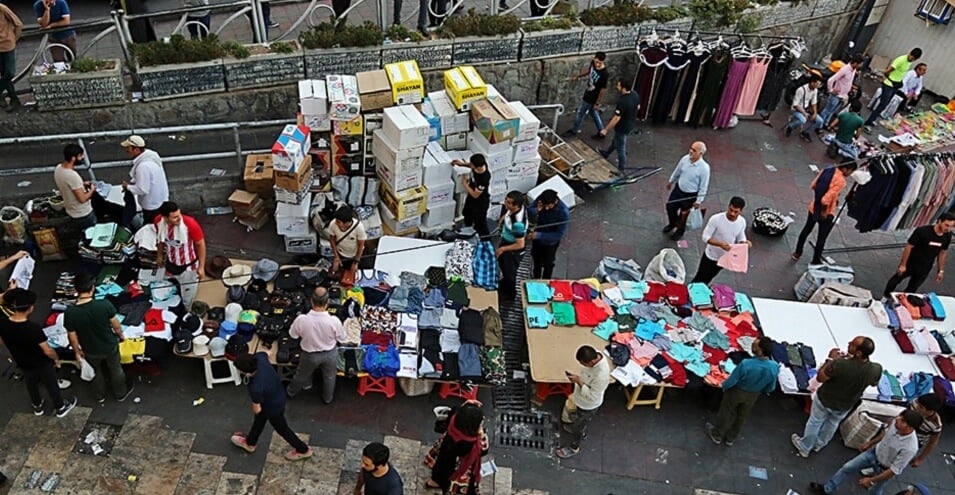
In all countries, class divisions lead to social, economic, and political disorders. However, there is a big difference between societies that experience an intensification of social inequalities in the context of economic growth and significant growth in national wealth, and other societies that simultaneously lose their productive capacities and fall into polarization in terms of wealth distribution.
For example, China currently has a society that is much more unequal than it was under Mao Zedong, who ruled his country for nearly three decades after the victory of the Communist Revolution in 1949.
Instead, the Chinese, thanks to their legendary growth over the past 40 years, have risen from the hell of poverty to relative prosperity, and in this situation, the class divide and the increase in the number of billionaires are much more bearable for them than the severe deprivations that oppressed almost all of Chinese society, with the exception of a small group of communist privileged people, during the presidency of Chairman Mao.
Instead, there are other countries whose national wealth is collapsing due to the decline of the productive system, but at the same time, this same collapsed wealth is being distributed more unequally among their citizens than in the past.
Iran is among these countries, and especially in 2011, the last decade of the 14th century, an increasing portion of its population is struggling in abject poverty, which stems both from the falling growth rate and soaring inflation, and from the greed of the tyrants who are demanding a greater share from the shrinking national production table, to the detriment of the most deprived segments of the country.
Millionaires' chatter
In a report titled "Income Distribution in Iran in 2020," published last August, the Statistics Center of Iran discusses the increasing class gap in the country.
In examining the distribution of income in Iran, the Islamic Republic's expert centers, including the Statistical Center of Iran, mainly use the famous "Gini" coefficient. This coefficient was created in the first half of the 20th century by Kuroda Gini, an Italian statistician and demographer, to measure social inequalities, and is currently the most important indicator used in this field by countries and international organizations.
The Gini coefficient fluctuates between zero and one. Zero indicates a perfectly equal society and one indicates a perfectly unequal society. In other words, the closer the Gini coefficient is to one, the more unequal that society is.
The Statistical Center of Iran says in its August report that between 2011 and 2020, the Gini coefficient in Iran increased from 37 percent to 40 percent. In the same report, we read that last solar year, the poorest 20 percent of society's total income accounted for only 5.8 percent, while the top 20 percent of society's highest-income earners had 47 percent of total income.
The United Nations Development Program (UNDP) in its latest report estimates the average Gini coefficient in Iran between 2010 and 2018 at 40.8. If we take this statistic as a benchmark, Iran has been one of the most unequal societies in the Middle East, which is itself one of the most unequal regions in the world, during the years in question. The same report states that during the same years, on average, the richest one percent of the Iranian population had 16.3 percent of total income, equivalent to a share that reached 40 percent of the poorest.
As mentioned, the Statistical Center of Iran estimated the country’s Gini coefficient at 40 percent last year. In contrast, the Parliamentary Research Center, in a report titled “Review of Supportive Policies,” published in September of this year, estimates Iran’s Gini coefficient at 45 percent (page 21). If we accept this assessment, the Islamic Republic has created the most unequal society in the Middle East during its 43 years of rule.
Whether we accept the data from the Statistical Center of Iran or what has been published by the Parliamentary Research Center, there is no doubt that the gap between the rich and the poor in Iranian society is increasing dramatically.
Capgemini, in its latest annual report on global wealth, says that Iran rose three places in 2020 in terms of the number of its millionaires, ranking 14th in the world. According to the report, the Islamic Republic increased its number of millionaires last year by 22 percent compared to the previous year (the highest growth rate of millionaires among countries in the world), to 250,000, surpassing Spain, the Russian Federation, Brazil, Saudi Arabia, and several other wealthy countries.
"Philippine rule"
The increase in the number of millionaires in Silicon Valley in the United States or in China is a normal and understandable phenomenon. The former is the largest center of new technologies that are shaping the future of the world, and the latter is the world's most important exporter with a very high growth rate. What real economic levers does the 22% growth in the number of millionaires in Iran rely on?
While the country is under the pressure of the toughest international sanctions, the average economic growth in the past 10 years has fluctuated around zero, there is no news of foreign investment or tourism, and people are falling to the ground like autumn leaves under the onslaught of Corona, from where do all these millionaires get their water?
This is a very bitter question for the Iranian public, who see the number of "garbage collectors" increasing day by day as the number of millionaires in the country rises. It is not difficult to find a direct connection between these two phenomena.
In fact, since the wealth of the millionaires of the Islamic Republic is neither derived from invention and production, nor from exporting goods and attracting foreign tourists, we have no choice but to search for the root of this wealth, for the vast majority of them, in "kleptocracy" or "kleptocracy." In other words, they have achieved their bread and butter by relying on political or religious power by depriving their fellow countrymen. In a situation where the collapse of national production is making Iranians' tables smaller, the "kleptocracy" is not allowing these same smaller tables to be shared with their fellow countrymen, and is pushing an increasing number of them below the poverty line.
Determining the poverty line in the Islamic Republic has become a confusing mess. Despite legal requirements, the statistical institutions of the Islamic Republic, especially the Statistical Center of Iran, which is the official custodian of the country's economic and social data, refuse to publish a very important indicator such as the poverty line, the identification of which is indispensable for determining the affected and vulnerable groups and supporting them.
The refusal of these institutions to publish the criteria determining the poverty line and the population below this line is understandable, because fighting poverty, along with confronting social inequalities, was one of the fundamental slogans of the Islamic Revolution, and the system that emerged from the revolution can hardly accept that it has failed miserably in these two very sensitive areas.
In these circumstances, to find the characteristics of the poverty line in Iran, there is no choice but to refer to publications by think tanks associated with governmental and non-governmental institutions of the Islamic Republic, the positions of trade unions, especially authorized labor organizations, or academic research in the form of books, articles, and academic theses.
Here are some examples of recently published data on identifying the poverty line in Iran:
1) Late last year, during the tripartite talks to determine the minimum wage for 1400, labor organizations calculated the poverty line for a household (composed of 3.3 people) to be between 9 and 10 million tomans per month. Due to the role of these organizations in bargaining over the minimum wage, this assessment was naturally met with questions and arguments, and the organizations in question were accused of exaggeration.
According to international standards, the figure provided by labor organizations to determine the household poverty line in Iran is not unrealistic. According to World Bank calculations, for the income group of countries in which Iran is located, the poverty line is equivalent to $3.20 per day.
If we consider this criterion for a household of 3.3 people, the poverty line reaches $317 per month, which, if calculated based on the dollar price in Iran's free currency market, is approximately equivalent to the estimate of the poverty line by labor organizations in Iran (between 9 and 1 million Tomans per month).
2) Morteza Bakhtiari, head of the Imam Khomeini Relief Committee, also said in late August last year: “The poverty line (for a household) has increased from 950,000 tomans in 2011 to 10 million tomans in 2020.” According to him, between 2001 and 2019, 33 percent of the country’s population fell below the multidimensional poverty line.
Despite the ambiguities and confusions in Morteza Bakhtiari's discourse on the poverty line, his words cannot be taken lightly, because the very powerful organization under his supervision (the Imam Relief Committee) is almost certainly forced to use specific criteria in identifying those under its protection, of which the poverty line is naturally one.
Third) Per capita consumption of at least 2,100 calories per day is one of the most important criteria in assessing the poverty line. In a 52-page report titled “Proposed Program for Economic Reforms,” prepared on the occasion of the inauguration of the Ebrahim Raisi government by the “Research Center of the Chamber of Commerce, Industries, Mines and Agriculture of Iran,” we read the following in reference to the fall in calorie consumption in Iran: “In 2017 and onwards, more than 50 percent of people have consumed less than the required amount (2,100 calories per day).”
In fact, the Iran Chamber Research Center, relying on “official reports,” says that 50 percent of Iranians are below the poverty line. In the center’s view, half of Iranians cannot meet their daily calorie needs because their country has not grown in the past 10 years, has the highest inflation rate in the world after Venezuela, Zimbabwe, and Sudan, its investment rate has often been negative over the past 10 years, and its share of the global economy has halved over the past 40 years.
4) Finally, Iranian media recently reported parts of a report by the Tehran Chamber of Commerce, quoting Kaveh Zargaran, a member of the Board of Representatives and head of the Agriculture and Processing Industries Commission of this institution. The report has not been published for some reason, but what Kaveh Zargaran has said shows what is on people’s tables. According to him, between 2011 and 2020, household consumption of seafood has halved and red meat consumption has also decreased by 46 percent. During the same period, consumption of sugar, rice, and dairy products has also decreased by 33, 25, and 17 percent, respectively.
A sinister picture emerges from this collection of information: a dance of newly minted millionaires around looted tables.
Source: Radio Farda