The possibility of an "electricity crisis" in the summer is becoming serious; Minister of Energy: People should manage their consumption
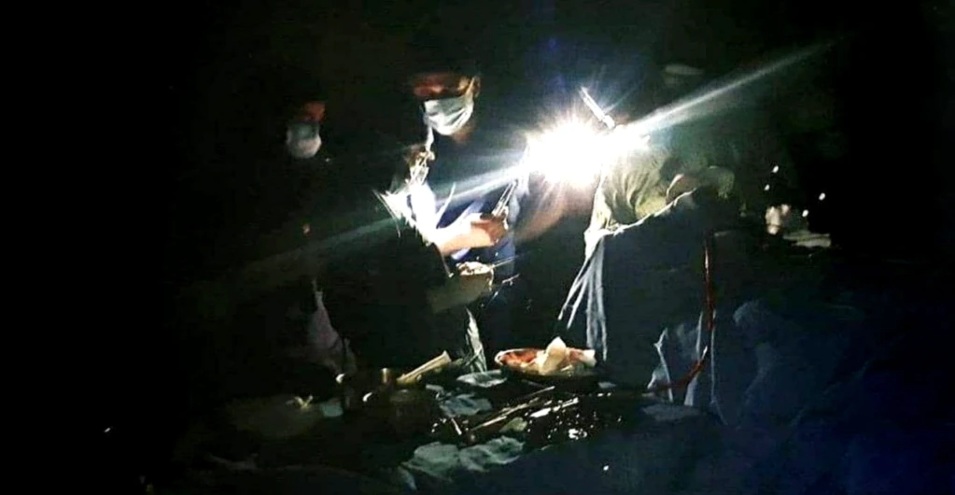
Iran's Minister of Energy has advised the Iranian people to "save" their electricity consumption, saying that if there is no "good economy" in electricity use, "power outages" are likely.
In an interview with the "Tasnim" news agency, which is close to the Revolutionary Guards, Ali Akbar Mehrabian stated about "how power outages will be this summer" that if people "manage" their electricity consumption to save a lot in "the amount of electricity used," there is no need for "power outages."
In recent years, along with the long and widespread power outages in Tehran and various cities in Iran, unofficial and unconfirmed news has been published in some media and social networks regarding the "entry of military and government institutions of the Islamic Republic into the field of cryptocurrency mining," especially "Bitcoin."
Abdul Amir Yaqoti, General Manager of the Energy Management Office of Tavanir Company, said on April 15 that "10,000 megawatts" of savings in consumption are needed to "overcome the blackout and power outage crisis" during the four hot months of the year, from May 5 to September 5.
Mohammad Allahdad, Deputy Coordinator of Distribution at Tavanir, also promised on the sidelines of the "Strategic Headquarters for Peak Electricity Consumption" meeting on April 19 that "there are conditions for imbalanced electricity supply this year as well and the accumulation of imbalance cannot be resolved in a short period of time," and that "power outage schedules" would be published.
State Energy Minister Ebrahim Raisi has stated that if people are "good at saving" on electricity consumption, "electricity problems" will be "minimized" this summer, adding that power outages depend on the behavior of subscribers.
Ali Akbar Mehrabian, referring to the "reduction in water input to the country's dams," also said that if electricity use is not conserved, "power outages are likely."
The Islamic Republic's authorities have repeatedly emphasized the need for subscribers to "save" electricity and prepare for "frequent outages," while Iran continues to "export electricity" to neighboring countries, including Iraq and Afghanistan, and the Islamic Republic has even offered assistance in this area to some other countries.
Hashem Safi al-Din, head of the executive council of Hezbollah, a terrorist group supported by the Islamic Republic in Lebanon, announced on April 27 that the Islamic Republic had offered to "supply Lebanon with electricity with excellent facilities" "without Iran asking for anything in return for this offer."
A member of the Iranian Chamber of Commerce delegation said on May 13 that "gas and electricity cuts" in the winter of 2020 and "repeated blackouts" in 2019 were signs of "compromising energy security" in Iran.
Reza Padidar, a member of the Energy Commission of the Iranian Chamber of Commerce, stated that the "decrease in investments" in the water and electricity industry, "especially after the sanctions," has caused the "vulnerability of the process of reliable energy supply" in the country.
On the eve of the summer of 1401 and the possibility of "widespread outages in the national electricity grid," in addition to Iranian households, concerns have also arisen among economic activists and business owners that these outages, along with a "multiple increase in production costs" compared to before, could cause a "serious blow" to their activities and consumers.
A member of the presidium of the Islamic Consultative Assembly on June 28, announcing that power outages in "production and industrial units" would "create double costs" in society, told ISNA news agency: "The power outage procedure" in industries must be "revised" and "other solutions" must be thought of for it.
Referring to the "necessity of planning" to increase production and prevent power outages, Hossein Ali Hajideligani warned of the disruption of various parts of the entire production and supply system as a result of power outages in "industries such as steel and cement," and of the "damage it will cause to the entire country's economy."
Source: Voice of America