The Middle East is on the verge of exploding, with the largest US military buildup since 2003.
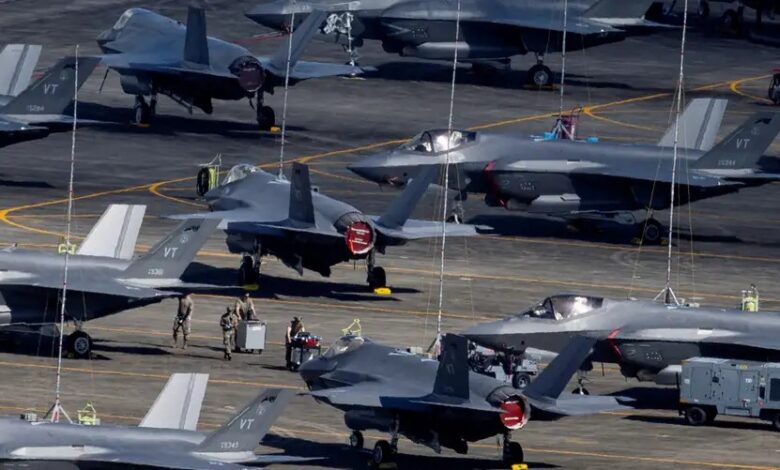
The largest US military buildup since 2003, focusing on aircraft carriers, bases, and a "ring of fire" around Iran, suggests a massive military operation against Iran.
The recent movements of the US military in the Middle East paint a worrying and unprecedented picture of Washington's military preparedness; a deployment that, in terms of force size, variety of weapons, and synchronism of offensive and defensive systems, surpasses all crises of the past two decades, and many analysts consider it the heaviest US military deployment in the region since the invasion of Iraq in 2003.
The arrival of the aircraft carrier USS Abraham Lincoln into the CENTCOM operational orbit, along with the extensive deployment of strike squadrons in Jordan, Qatar, and the UAE, has effectively brought the United States to a stage that can be described as “full combat readiness.” This deployment is not merely a show of force, but rather the creation of a mobile infrastructure for conducting rapid, precise, and devastating operations near Iran’s borders.
The aircraft carrier Abraham Lincoln, with dozens of fourth- and fifth-generation fighters, electronic warfare aircraft, and anti-submarine helicopters, acts as a single floating air base. The combination of stealth fighters, jamming aircraft, and cruise missile-carrying destroyers makes this fleet a tool capable of crippling air defenses and sensitive military facilities in the early hours of any conflict.
Below the surface, the presence of nuclear submarines capable of launching massive amounts of cruise missiles is the hidden but decisive dimension of this arrangement; weapons that can target strategic targets deep inside Iran without prior warning.
What makes this arrangement unprecedented is not simply the concentration of warships, but rather a network of air and logistical bases that have effectively placed Iran in an "arc of fire" from the west, south, and southeast.
In Jordan, attack aircraft capable of carrying heavy bombs have been deployed; in Qatar, strategic bombers and tanker aircraft have enabled long-range operations; and in the UAE, air superiority fighters are tasked with clearing the skies of the region in the first minutes of any conflict. This arrangement allows the United States to attack from multiple axes simultaneously, without being tied to a specific route or base.
In addition to its offensive capabilities, Washington has also strengthened its defenses in an unprecedented manner. The deployment of advanced anti-missile systems, from Patriot to high-altitude interceptor systems, shows that the United States is not only thinking about a possible attack, but is also preparing itself to contain Iran's missile response.
US and allied bases in the region are now equipped with point defense, anti-drone, and anti-missile systems, a move that clearly indicates Washington's concern about asymmetric attacks and chain reactions.
Military estimates suggest that tens of thousands of American troops are on full alert in countries surrounding Iran. These forces are not just deployed for air or naval operations, but also include ground, logistics, and rapid-response units; the deployment is a sign that the Pentagon is not relying solely on a limited scenario and that a range of options, from a strike to a wider conflict, are on the table.
The second aircraft carrier's move to the region and the steady increase in the number of fighter jets, tankers, and attack drones sends the message that the current configuration is moving from a "deterrence" phase to a readiness for a full-scale offensive. Historical experience shows that such a concentration of military power rarely remains without an ultimate goal.
The sum of these developments has brought the Middle East into a phase that bears a disturbing resemblance to the days before the Iraq War in 2003. Either this unprecedented pressure will lead to a major political retreat and agreement, or the region is on the verge of one of the costliest military conflicts of the 21st century.
What is certain is that the current US arrangement sends a clear message: "Washington is preparing itself for the worst-case scenario."