Khatibzadeh: Part of Iran's blocked funds will be released
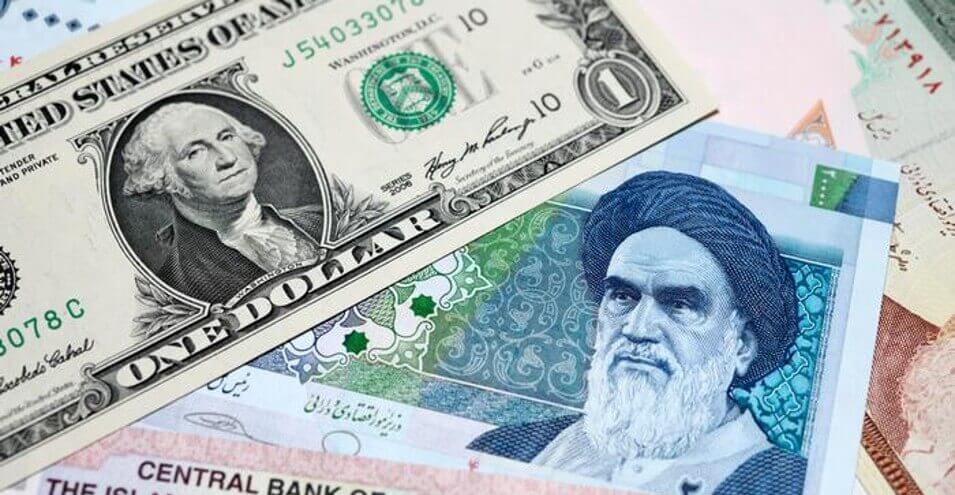
According to Saeed Khatibzadeh, spokesman for the Iranian Foreign Ministry, "a senior delegation will travel to Tehran by the end of the week" to release some of Iran's frozen funds, and the principle of release will be carried out in the "near future."
Saeed Khatibzadeh, spokesman for the Islamic Republic's Ministry of Foreign Affairs, announced the release of some of Iran's frozen funds in the "near future."
Khatibzadeh, who was answering questions from domestic and foreign journalists at a press conference on Monday morning, April 11, stated that "a senior delegation will travel to Tehran for this purpose by the end of the week" and that "the principle of liberalization" will be implemented.
He refused to name the country or the amount of money that is to be released.
Some Iranian media outlets have speculated that South Korean officials are scheduled to visit Iran soon to discuss the release of Iranian funds frozen in the country. However, South Korean Foreign Ministry officials have not confirmed this news.
On the sidelines of the talks to return to the nuclear agreement (JCPOA) in Vienna, Austria, South Korean Deputy Foreign Minister Choi Jang-kan met and discussed with Ali Bagheri, Deputy Foreign Minister for Political Affairs of the Islamic Republic of Iran. During the meeting, the South Korean Deputy Foreign Minister said that his country is working to repay its debt to Iran.
South Korea's Yonhap News Agency also wrote on January 29, citing an informed source, that South Korea and Iran will hold consultations in Seoul in February to resolve a long-standing dispute over Tehran's frozen assets in South Korean banks.
Some domestic Iranian media outlets reported in recent days that negotiations had been held to release 7 billion Iranian rials in exchange for the release of Siamak Namazi, Mohammad Bagher Namazi, and Morad Tahbaz, three dual Iranian-American prisoners.
"It's very difficult for us to imagine returning to the nuclear deal while four innocent Americans are being held hostage in Iran," Robert Malley, the US special representative for Iran, said in an interview with Reuters on January 23.
According to him, the United States is negotiating indirectly with Iran about the nuclear deal and also "to ensure the release of its hostages."
JCPOA “in the recovery room”
Some of Iran's assets have been frozen in countries such as South Korea, China, India, Japan, Iraq and Oman. It is said that India's debt to Iran is about seven billion dollars. Iraq has also frozen about two billion dollars of the Islamic Republic's assets. There is no precise information about the exact amount of Iran's assets in other countries.
In another part of his speech, Saeed Khatibzadeh, in response to reporters' questions about the negotiations to return to the JCPOA, said that the United States has not yet shown its "definite will" to return to the commitments included in the JCPOA and the UN Security Council resolution.
The Iranian Foreign Ministry spokesman, while stating that “the JCPOA is alive and in the emergency and resuscitation room,” emphasized: “The window of opportunity is not open forever.”
Source: DW