Gorgan Bay is at risk of drying up and turning into a wetland.
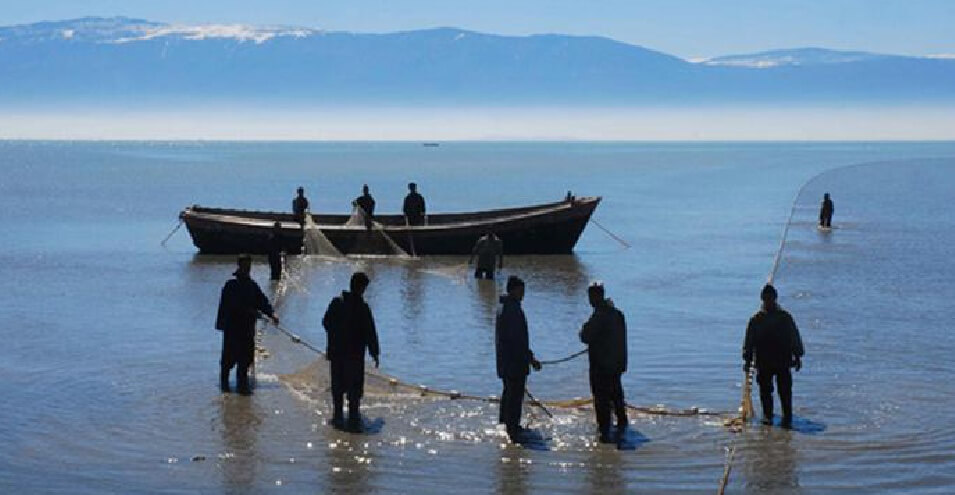
Gorgan Bay, the largest bay in the Caspian Sea, is drying up and turning into a humid inland wetland, experts say. The region's biodiversity has been destroyed, leaving the bay vulnerable to food and energy shortages.
The Deputy Director of Research and Technology at the National Institute of Oceanography and Atmospheric Sciences says that in the absence of measures based on precise scientific solutions to improve the ecological conditions of Gorgan Bay in the southern Caspian Sea, this bay is at risk of becoming an inland wetland.
Gorgan Bay is the only bay of the Caspian Sea within the geographical limits of Iran and is located between the two provinces of Mazandaran, Behshahr County, and Golestan Province, Bandargaz County.
In 1975, Gorgan Bay, along with Miankaleh Wetland and Lapu Zaghammarz (in Golestan and Mazandaran provinces), was registered as the world's first international wetland complex on the Ramsar Convention Wetlands List, proving that not only this bay, but also the surrounding areas, including the Miankaleh Peninsula (a wildlife sanctuary) and the Gumishan International Wetland, are a valuable ecological complex. Gorgan Bay is part of the Miankaleh Wildlife Sanctuary.
Previously, Ismail Mohajer, the Director General of Environmental Protection, had said in 2017 that an area that naturally had several hundred hectares of water and was the habitat of some very rare and endangered aquatic species, such as sturgeon, has now become a heap of pollution due to the decrease in water inflow and the entry of urban sewage.
The Director General of Environmental Protection added that the government has not allocated a single rial to save Gorgan Bay. He said that the type of pollution from Iran is different from neighboring countries.
The deputy head of the Environmental Protection Agency said that most of the pollution from oil extraction, exploration, and transportation enters the Caspian Sea from Russia and Azerbaijan, but in the south of the Caspian Sea and towards Iran, oil pollution is not significant, but rather pollution from sewage and agricultural effluents is the main cause.
Hamid Alizadeh Lahijani, Deputy Director of Research and Technology at the National Institute of Oceanography and Atmospheric Sciences, told IRNA: "Given the changes observed in the depth and area of Gorgan Bay during studies in previous seasons, as well as the observations of the current study, which could be due to factors such as the decrease in the water level of the Caspian Sea, the closure of the communication channels between Gorgan Bay and the Caspian Sea, such as the Khazini Channel, the high rate of sedimentation in Gorgan Bay, and the high rate of nutrient inflow that causes the growth and density of seagrass, especially in the first half of the year, it is feared that in the absence of measures based on precise scientific solutions to improve the conditions of this valuable ecosystem in the south of the Caspian Sea, this bay will turn into an inland wetland."
According to surveys, about 27 percent of Gorgan Bay has dried up, which accounts for more than 80 percent of the habitat value of the entire bay. In fact, the most sensitive ecological unit of Gorgan Bay, which is the breeding ground for biodiversity, has been destroyed, and accordingly, the bay is exposed to food and energy poverty.
Various reasons have been put forward for the drying up of Gorgan Bay, including climate change and global warming, excessive extraction of aquifers around the bay, decreased rainfall, and increased evaporation. According to Alizadeh, the cause of all this is simply the insatiable nature of man, who wants to take possession of everything that exists in nature.
Alizadeh Lahijani added that this bay and its surrounding areas are a valuable environmental complex, even on a global scale, which, in addition to preserving the life cycle of the Caspian Sea, has a direct impact on the livelihoods of local communities, but it has been struggling with drought for several years.
Source: DW