In search of a common language for the realization of citizenship rights

There is an undeniable anger among parts of Iran’s ethnic minority community that is occasionally stirred up. Anger that has built up over the years and is largely justified. Socially, they have endured years of disrespect, derogatory jokes, and the commodification of their culture. On the civic front, they have faced other problems, including disproportionate rates of poverty, unemployment, arrests, and executions.
Social and cultural dissatisfaction on the one hand, and the lack of fair participation in the government structure and disregard for their needs, have led some ethnic community activists to seek separation from Iran in the hope of better conditions. This demand for separation has often been expressed either in the form of joining neighboring countries or as an independent country.
However, apart from the lack of a realistic and pragmatic political path to achieve such a goal, the separatist political program is not even in the interest of the communities of ethnic groups and the region.
When we talk about ethnic activists, we must keep in mind that ethnic communities are not a single entity, and we must distinguish between people who are activists for cultural and identity rights or who want autonomy within the borders of Iran, and separatist or secessionist activists.
It seems that most of those who push ethnic discussions towards militancy and radicalism happen to be from this same separatist spectrum. These individuals claim to speak for all of the sub-communities in Iran, even though there is no significant statistical data indicating the superiority of this spectrum's social base.
Some ethnic activists focus more on ethnic/nationalist grievances, such as issues related to “mother tongue education,” rather than on the larger issues that are essential for the survival of these communities. Of course, demands for the preservation of mother tongue and culture are very important, and it is up to individual Iranian citizens to be diligent in preserving the languages and dialects existing in Iran’s political geography.
But apart from its political consequences, this issue is not implemented even in countries such as the United States, Canada, England, and Australia, let alone in a developing country like Iran, due to its interference in teaching methods and its huge costs, as well as disrupting the educational cohesion of a country's children.
But the realization of the issue of "mother tongue education" is possible with a not-so-complicated planning. One of these ways in the current situation is to adopt new educational policies. For example, if the Islamic Republic had created working groups in the Ministry of Education to make language education accessible to the public through language and cultural institutions or virtual platforms, this desire could have been realized. Nevertheless, the issue of local languages is still a problem ignored by the government, which is sometimes exploited by radicals for political purposes.
The right to “mother tongue education” is a subset of the broader right to “freedom of expression” that is generally denied to all Iranians, regardless of ethnicity or religion. However, instead of focusing on the broader violation of the denial of freedom of expression to ethnic communities, some activists and self-proclaimed leaders choose to focus on the more specific and potentially divisive issue of “mother tongue education.” As we know, Iran’s ethnic minorities also suffer from many problems, such as employment, infrastructure, resource allocation, political participation, inclusion, and decriminalization, in addition to the efforts to preserve cultural identity, which is of much greater importance to these communities.
There is a strong tendency among ethnic activists to direct their anger and frustration at other Iranians who are also struggling with dire conditions and have not been spared the government's sting and flag. Some even go so far as to consider the same victims as accomplices in their own plight.
Although there may be no statistics on what percentage of activists in this field have such a tendency, this trend is at least loud on social networks such as Twitter, Clubhouse, and other platforms. Opinions that are often belligerent, anti-other, and incompatible with a healthy dialogue and creating a sense of empathy.
Sometimes, these individuals are seen to attack or ridicule celebrities, cultures, occasions, and national affiliations of other groups in society to express their dissatisfaction and anger. Such behaviors not only close the space for dialogue but also, by destroying the sense of solidarity and empathy, strengthen the most radical sides of each part of the dialogue and lead to extremist othering.
In addition to jeopardizing the peaceful coexistence of Iranian citizens, this belligerence is also a waste of time, as such attention and energy could be spent defending the vital rights to save the lives of citizens of these communities who live under the shadow of oppression and poverty and are forced to work as street vendors and street vendors. Even better, they could build broader and more united fronts against the regime's tyranny; but alas, division and separation have become the policy of their leadership.
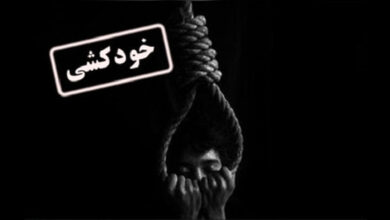
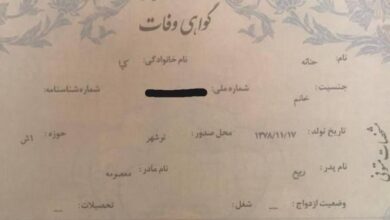
Ethnic community activists and their allies must promote a model of leadership within their communities that is inclusive of all members of society, especially women. Women in ethnic communities have the highest rates of suicide, child marriage, and honor killings. Any system of governance has a duty to earn the trust of all its members and to ensure their dignity and security. Such inclusiveness is a step that begins at home and extends to communities and beyond. Ethnic separatists have yet to secure a safe and less oppressive alternative for women and girls in their communities that protects them from second-class status and threats of death by their relatives. Unfortunately, the separatist movement has not only failed to provide effective and objective solutions to these problems and obstacles, but has also created divisions within the opposition by prioritizing divisive issues.
On the other hand, some ethnic communities also have their own concerns from the traditional Iranian opposition. These people complain that their demands are not given much attention and that the government's crackdowns are sometimes met with silence and lackluster attention from other regions of Iran. They complain that even if they join this united front, their demands will still be ignored on the day of freedom.
The task of the mainstream opposition is to present cultural, economic, and development programs that are inclusive, considering the demands of all citizens in Iran’s political geography, so that every Iranian, regardless of ethnic background, can feel a sense of belonging to this united front. In particular, the people living in Iran’s geography must protest the repressive approach of a government that denies any demands of ethnic communities with the label of separatism.
Mainstream opposition activists must also abandon the top-down, self-centered, and callous stance that creates an “us” and “them” divide, and listen with an open mind to the demands and lived experiences of activists from ethnic communities.
Iranian citizens living in the geography of Iran should discuss with each other their cultural demands, shortcomings, and lived experiences. The door to discussion about a centralized or decentralized government system can be open despite differences, but an Iranian citizen cannot sit at the negotiating table with a separatist or racist individual due to an irresolvable conflict of interests.
Inclusivity and empathy, recognizing differences while remaining united, acknowledging shortcomings and neglecting some regions, and demanding the collective good instead of regional and ethnic good, are a clear roadmap for a united and proud Iranian nation.
Source: Radio Farda