Iranians' income has decreased by "one-third" over the past eight years
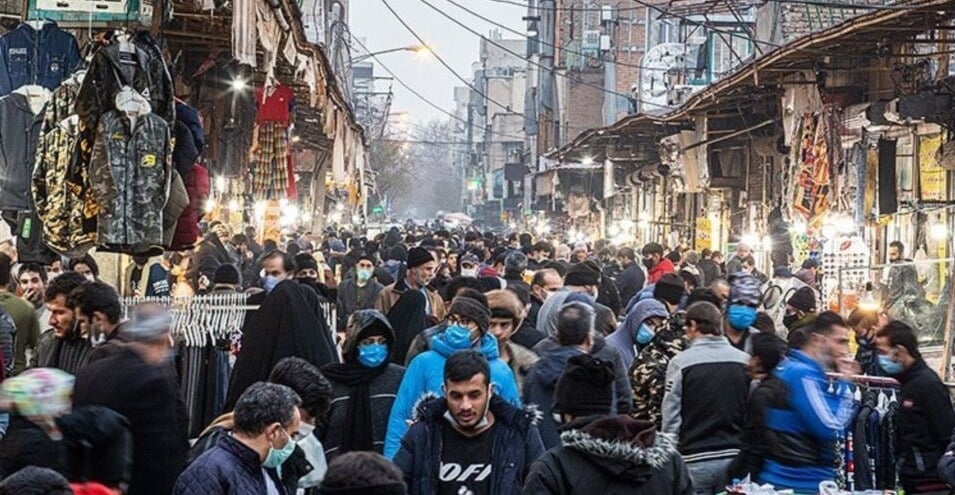
A group of economic experts announced at a conference of the "Higher Institute for Research, Planning and Management" held on Thursday, January 1, that Iranians' income has decreased by "one-third" over the past eight years.
Mehran Behnia, head of studies and planning at Kharazmi Investment Company, said in the meeting, which was held under the title "Coronavirus-induced recession and inflation in Iran," that the income of rural residents has now returned to 1989 and the income of urban residents to 1990, and the per capita income of Iranians has decreased by "34 percent" from 2011 to 2019.
According to him, in the past three years, Iran has experienced economic growth of less than minus five percent and inflation of over 30 percent, which is "the deepest and longest inflationary stagnation in the country's economic history."
Economic expert Musa Shahbazi Ghiyasi also said at the conference that the country's per capita income decreased by 34 percent from 2011 to 2019: "In fact, despite the increase in nominal household income, the purchasing power of each Iranian has decreased by about a third compared to 2010. If economic growth of eight percent is achieved from 2019 onwards, it will take at least six years to return to the per capita income level of 2010."
The value of the dollar in Iran's free market was around 1,200 Tomans in 2011, but now it has soared to over 25,000 Tomans.
Also, according to statistics from the International Monetary Fund, Iran's economic growth will be minus 5.4 percent in 2018, minus 6.5 percent in 2019, and minus 5 percent this year.
Mr. Behnia said that due to the outbreak of the coronavirus, about 1.5 million people were unemployed in the country in the spring of 2020 and 1.2 million in the summer.
According to him, almost half of the employment that was created over the last five years has been lost in two seasons.
A report by the Parliamentary Research Center in December also shows that the unemployment rate in the country has increased to 24 percent, which is 2.5 times the unemployment rate announced by the government.
Mohammad Hadi Mahdaviyan, one of the Iranian economic experts, also said at this conference that apart from sanctions and Corona, Iran's economy is facing mismanagement in the field of macro policies.
He pointed out the government budget's dependence on oil revenues and said that with the increase in oil prices and the improvement in the global economic cycle, the government budget expands, but with the global recession cycle and the drop in oil prices, it does not contract, and its effect is discharged in the budget deficit and then in inflation.
His statements are also reflected in the budget for the years 1397 to 1400; with the decline in oil revenues, the government budget not only did not decrease, but it also increased sharply.
For example, next year's government budget has increased by 47 percent compared to this year, while according to the assessment of the Parliamentary Research Center, one-third of the budget for 2018 and 2019, as well as the first eight months of the current solar year, was financed through borrowing.
The government has also estimated oil exports in next year's budget much higher than actual exports, and the research center says that it is likely that a third of the budget, equivalent to 320 trillion tomans, will not be realized again.
The government has forecast daily oil exports of 2.3 million barrels for next year, while Iran's actual oil exports are currently around 300,000 barrels.
Source: Radio Farda