Two Iranian nuclear and judicial officials accused Grossi of "politicizing"
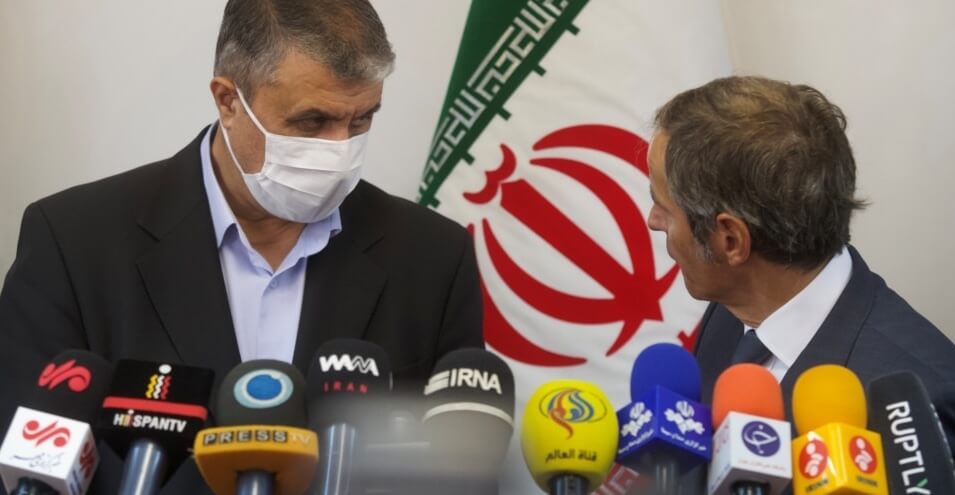
Senior nuclear and human rights officials in the Islamic Republic accused Rafael Grossi, the Director General of the International Atomic Energy Agency, of "politicizing."
The head of Iran's Atomic Energy Organization says the Islamic Republic has given "accurate answers" to the International Atomic Energy Agency's questions, but the agency's reports are based on information provided to it by Tehran's "enemies."
In an interview with Al Jazeera on Monday, Mohammad Eslami accused Rafael Grossi, Director General of the International Atomic Energy Agency, of not having "a serious will to describe Iran's responses convincingly."
Mr. Eslami said: "The International Atomic Energy Agency is relying on intelligence reports from our enemies, most notably Israel."
Israeli Defense Minister Benny Gantz said on June 6 that Prime Minister Naftali Bennett "did a good job" in meeting with the Director General of the International Atomic Energy Agency, "giving him the information that Israel has about Iran."
On the eve of a meeting of the International Atomic Energy Agency's Board of Governors, Rafael Grossi said that Iran continues to enrich uranium steadily and that its acquisition of significant resources that would cross the red line is "very close, not more than a few weeks away."
According to him, “Iran has not provided any technically credible explanations regarding the Agency’s findings at the three undeclared sites. Iran has also not informed the Agency of the current location(s) of nuclear material or equipment contaminated with nuclear material that was transferred from Turqoozabad in 2018.”
In another part of his interview, Mr. Eslami mentioned the possibility of adopting a resolution against Iran at the current meeting of the International Atomic Energy Agency's Board of Governors, saying: "Even if this resolution is approved, no new situation will be created."
France, Britain, Germany and the United States have prepared a draft resolution to ask the IAEA Board of Governors to hold the Islamic Republic accountable for failing to answer questions about uranium traces at undeclared nuclear facilities.
In response, the Islamic Republic has warned that any political action against Iran's nuclear program at the International Atomic Energy Agency will be met with "an immediate response from the Islamic Republic."
Mr. Eslami called on the agency to "stop political influence within itself and abide by the laws."
The head of the Atomic Energy Organization of Iran also called the Agency's failure to "criticize" the attack on Iran's nuclear sites a "big question" and warned: "The Agency's access to films and video recordings depends on the fate of the [JCPOA] agreement."
In recent years, there have been several attacks on the Islamic Republic's nuclear facilities or assassinations of individuals identified as nuclear scientists.
Kazem Gharibabadi, Secretary of the Iranian Human Rights Headquarters, also claimed on Monday, June 6, that the approach of Rafael Grossi, Director General of the International Atomic Energy Agency, is "political."
He added: "Mr. Grossi has strong political leanings and that cannot be denied. The reports of all the agency's directors-general have been influenced by political pressures, but part of the agency's positions are also due to the political approaches of the agency's directors-general."
The Deputy for International Affairs of the Judiciary stated that "the Westerners have made their own decision regarding this political action [issuing a resolution], and the United States has also supported it," warning that this action "will cause serious damage to the initiatives on the table."
"If the issuance of such a resolution cannot be prevented, the cost of issuing it should be made more costly for its authors," he added, without providing details.
Source: Radio Farda