Growth of Christian Converts Stems from Regime’s Harsh Treatment in Iran
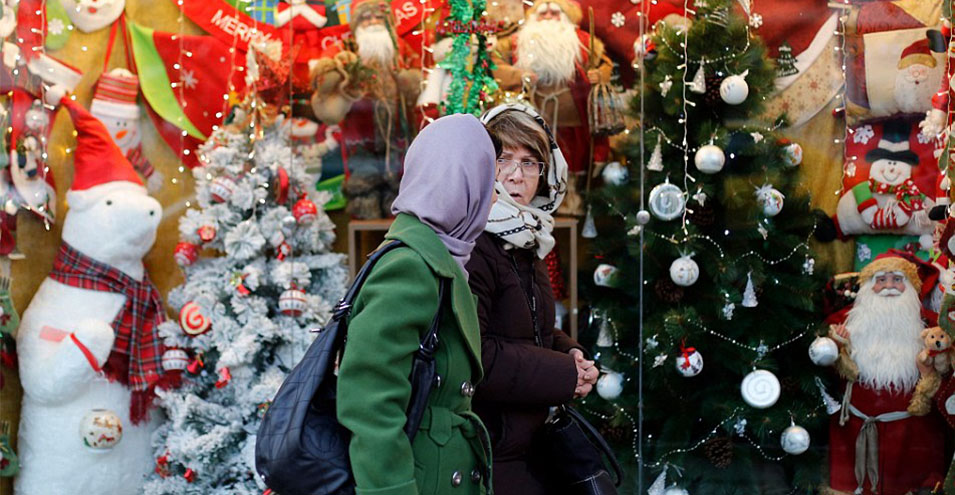
Sara.Kh. FCN News Agency: As December 25 approaches and Christians prepare to celebrate the birth of Jesus Christ, government crackdowns on Iran’s Christians and new converts have intensified.
According to FCN News Agency, wiretapping conversations and surveilling Christian converts are among the measures that have recently caused anxiety for these fellow citizens and confined them to their homes.
However, according to Sepehr, one of the Christian converts residing in Turkey, even this confinement does not satisfy government leaders, because the fragrance of Christianity spreading in Iran knows no boundaries.
The Regime’s Crackdowns on Christianity Are Bearing Fruit
Sepehr, in an interview with FCN News Agency, discusses the Islamic Republic regime’s new concerns and how the promotion of Christianity through social networks has frightened them, resulting in Christian converts and Muslims interested in Christianity remaining confined to their homes.
According to this fellow citizen, the effort to nationalize the internet in Iran is a reaction to prevent such circumstances, and it shows that regime leaders have not yet taken the global village phenomenon seriously.
From Sepehr’s perspective, the strengthening of home churches is another example of the consequences of government crackdowns in Iran.
He, citing news he receives from various parts of the country, says: “My friends gather in groups of five or six in cozy corners away from public places and read Scripture and worship God. Sometimes they gather periodically in homes and engage in silent prayer. What is interesting is that through these methods, at each meeting they can invite one or two Muslim friends to participate.”
In Sepehr’s view, the regime’s forceful and harsh treatment of Christians has led to their dispersal into homes and more intimate gatherings with Muslims, which itself becomes a means of spreading the message and the fragrance of Scripture among all Iranians—something that bringing all Christians together in enclosed church buildings could not achieve to such an extent.
Worship in Persian Language Prohibited
Actions against the system and national security have long served as a pretext for applying forceful measures against Christian converts, and Islamic Republic officials, under this seemingly legal justification, prevent these minorities from holding worship and religious ceremonies.
According to FCN News Agency, in the continuation of these regime measures, over the past year or two, dealing with Christian worship ceremonies in the Persian language has become the main target of attacks. Authorities, through various legal and illegal measures, have focused on restricting Christians and diminishing the impact of their worship ceremonies.
However, in recent months, a significant portion of these unjust reactions from the regime has been directed at Protestants.
One Christian convert, in an interview with FCN News Agency, attributes the government’s confrontation against converts and Protestant Christians to the growth of Iranian Muslims’ inclination toward this denomination.
Mehta emphasized in this interview that the severity of measures against holding Persian-language worship services is such that even the rights of Protestants as an officially recognized minority in Iran are being overlooked.
According to this Christian convert, the regime’s reason for this treatment is the impact of this denomination’s worship and religious ceremonies on Muslims.
Blatant Violation of Human Rights in Iran
He, having experienced the presence of interested Muslims in several house churches in Iran multiple times, believes that this Muslim reaction has created terror in regime leaders and driven them to any inhumane measure.
This includes wiretapping individuals, surveilling their daily movements, and spying on their most private relationships.
Mehta emphasizes that the leaders of the Islamic Republic regime, to compensate for their failure in controlling the spread of Christianity in Iran, openly violate human rights and show no fear of public pressure.
Mehta continues: “These hostile measures by the Islamic Republic regime leaders against Christianity have intensified under circumstances where Christians do not oppose the promotion of Islam in their countries, and Muslims throughout the world worship God freely and build mosques.”
A Catholic priest’s initiative to designate a special prayer room for Muslims in the “Good Shepherd” Church in Australia, according to this Christian convert, is an example of his claim.
Ahmad Shahid’s Report
Ahmad Shahid, the UN’s Special Rapporteur, in his report examining the state of human rights in Iran in 2015, has referenced instances of injustices against the Christian minority in the country.
The restriction and prohibition of church construction, prevention of Persian-language worship ceremonies in Christian churches, targeting leaders of house churches, most of whom have converted from Islam to Christianity, are among these cases.
The report states that Christian converts continue to face limitations in observing the special days of their religious practices.
Ahmad Shahid, in a section of this report, has also referred to widespread arrests of Christians during Christmas celebrations.
The report further states: “According to reports from April 2014, authorities have increasingly closed churches that had official licenses, and have arrested priests of these churches for conducting worship in the Persian language and providing religious services to Iranians with Muslim backgrounds. Authorities regularly block Christian websites. Christian converts report that they sometimes experience severe psychological and physical harassment during detention, including death threats.”