Pope Leo's visit to Lebanon strengthens hope for Middle Eastern Christians and reaffirms two-state solution
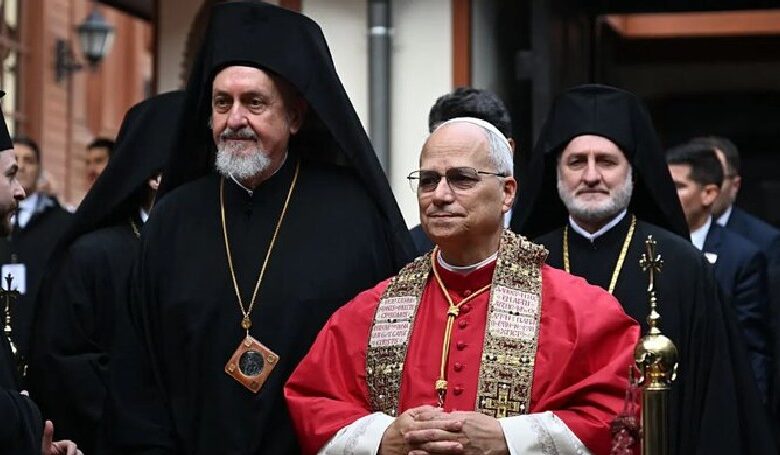
Pope Leo's historic visit to Lebanon delivered a clear message about peace, coexistence, and the necessity of implementing a two-state solution in the Middle East.
Pope Leo XIV's visit to Lebanon was not just a diplomatic mission; it came at a time when much of the Middle East is grappling with war, Christian migration, economic crisis, and sectarian strife. For many Christians in the region, the presence of the world's Catholic leader was a reminder that their voices are still at the center of the global church's attention.
The trip also marks the Vatican's entry into a new phase of mediation in the Israeli-Palestinian conflict, especially when the Pope explicitly stated: "We all know that Israel does not accept this solution at the moment, but we consider it the only possible solution."
He also added: “We are also friends with Israel and we are trying to be a mediating voice that helps both sides move closer to a just solution for all.” This level of transparency is usually rare in the speeches of popes and indicates the Vatican’s serious intention to become more active in resolving the crises in the Middle East.
One reason the Pope's visit is so important to Lebanese Christians is that Lebanon is the last major Christian population base in the Middle East. While countries like Iraq, Syria, and Palestine have historically been strongholds for Christianity, wars and migration have severely reduced the Christian population in these countries, with Lebanon being the exception.
The Pope knows this fact well, which is why in his speech to the people of Lebanon (despite economic pressure and war) he told them not to leave their country but to stay and build for the future of the country.
The message carries special meaning and weight for Lebanon’s Christian community, which has been facing waves of migration over the past decade. As tensions between Hezbollah and Israel rise, some Lebanese Christians are concerned that the country could be drawn into another full-scale war. The Pope’s presence and his emphasis on peace and avoiding conflict are a direct response to this concern.
According to Vatican experts, there are three reasons for Pope Leo's bold statement about Palestine in Lebanon:
- Lebanon hosts a large number of Palestinian refugees. Any decision regarding Palestine, whether security or social, directly affects Lebanon.
- The recent wars in Gaza and southern Lebanon are deeply linked, which is why the Pope is trying not to separate the international view of the two crises.
- The Vatican believes that the only way to protect Palestinian Christians is a "two-state solution," because internal Palestinian Christians are among the most severely pressured and without a stable political structure, their security will always be threatened.
In a direct reference to the wars of the past year, Pope Leo said, “Lebanese leaders must not abandon the pursuit of peace.” This statement is not just a recommendation, but a warning and a plea.
Lebanon today is home to daily Israeli attacks, a heavy Hezbollah military presence, an estimated one million Syrian refugees, and a decade of economic collapse. In such circumstances, a lack of political will could completely tear apart a country with a sensitive religious structure.
The Pope's visit means for the global church that: "The Church has found a new place in the geopolitical politics of the Middle East. With the war in Ukraine, the war in Gaza, the attacks on Lebanon and the crisis in Syria, the Vatican is positioning itself as a 'moral mediator' in this arena."
"It is also a message of hope for displaced Christians. Christians in Iraq, Syria and Palestine have been subjected to discrimination, violence and forced migration for years. The Pope's presence in the region is not only a sign of solidarity but also a call to rebuild Christian communities."
Pope Leo's trip from Turkey to Lebanon is to strengthen interfaith dialogue. He said in a speech: "Turkey is an example of religious coexistence. People with different religions have been able to live in peace. This is what I think we are all looking for around the world." This message could be a model for the entire Middle East.
The Pope's visit to Lebanon was not a "symbolic event," but rather carried several key messages: "The Vatican has entered a more active phase in Middle East politics," "Lebanese Christians are not alone," "The two-state solution must be implemented, even if Israel does not accept it for now," "Lebanon must avoid war and return to dialogue," "Christians in the region must stay and maintain their hope."
However, the success of these messages depends on domestic and international political will. The Pope is a voice, but to change the course of the region, that voice must be accompanied by action from world leaders.