The collapse of the national currency; Iran after Venezuela
Iran's ambassador to the UK, Hamid Baeidinejad, has said that Iran has performed better than many other countries in the world in maintaining the value of its national currency over the past year. Factbox has examined the truth and falsity of this statement.
Iran's ambassador to the UK, Hamid Baeidinejad, has said that Iran has performed better than many other countries in the world in maintaining the value of its national currency over the past year. Factbox has examined the truth and falsity of this statement.
The Iranian ambassador to the UK retweeted a tweet from The Spectator Index and claimed: "In the list of countries that have faced the most difficulties in maintaining the value of their national currency against the dollar, Iran has performed better than Venezuela, Argentina, Turkey, Pakistan, Brazil, Russia, Sri Lanka, Kazakhstan, South Africa, and Sweden, despite economic pressure and sanctions."
Referring to the reactions to The Spectator Index's tweet, he added the following explanation: "They say the specialized institute made a mistake because it based the calculation on the dollar at 4,200 Tomans. This is definitely not the case. Because everyone knows that in Iran, the free exchange rate of the dollar is, for example, 11,000 Tomans, but at the same time, there is also an allocation of 4,200 Tomans for basic goods. Therefore, the basis for the calculation is to take into account all available factors."
In the list of countries that have faced the most difficulties in maintaining the value of their national currency against the dollar, Iran has performed better than Venezuela, Argentina, Turkey, Pakistan, Brazil, Russia, Sri Lanka, Kazakhstan, South Africa, and Sweden, despite economic pressures and sanctions. https://t.co/HJwr90p9cb
— Hamid Baeidinejad (@baeidinejad) January 23, 2019
Baeidinejad also responded to Alireza Salavati, an economic expert, who wrote, "In any calculation, 4,200 tomans for a dollar is neither realistic nor useful," and said, "In a precise assessment, it would not necessarily be scientific to base it on a single exchange rate, but rather an average rate from a basket of different exchange rates should be used, considering the relative value of each rate in the foreign exchange consumption basket."
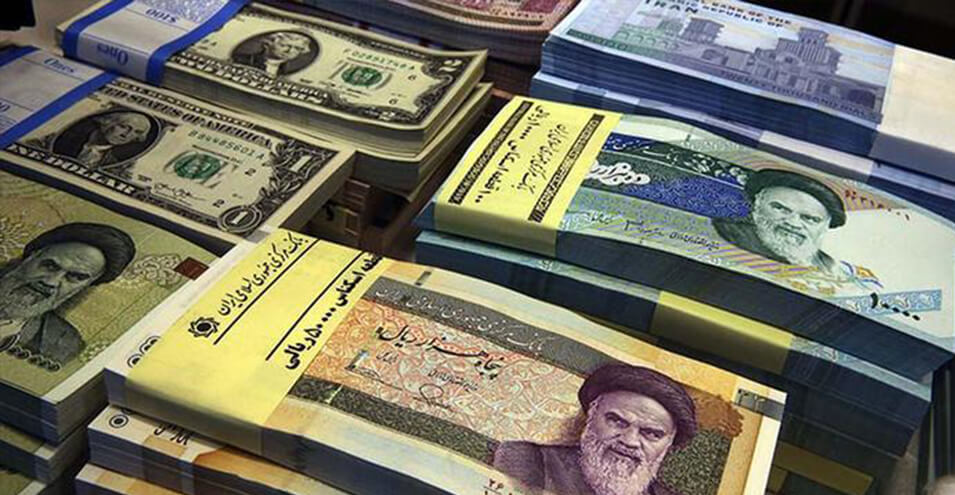
How much has the dollar price changed in the official Iranian market?
14% is nothing more than the result of dividing the official exchange rate between this winter and last year. According to statistics from the Central Bank of Iran website, the average official exchange rate in January 2017 was around 3,680 tomans, and since last summer the official price has remained constant at 4,200 tomans.
Dividing these two numbers shows that the price of the official currency has increased by 14% over the past year. But the dollar at 4,200 tomans is not the only currency in use in Iran, nor are all official transactions conducted at this rate.
How much has the dollar price increased in the unofficial market?
Over the past year, there have been at least two exchange rates in Iran. According to Central Bank statistics, the average exchange rate in December 2017 was 4,306 Tomans.
According to information published by the Central Bank under the title "Weighted Average of the Senate", the average buying and selling price of the currency in the month ending February 2, 2018 was 10,940 Tomans. Accordingly, the increase in the price of the dollar between December 2017 and December 2018 was more than 2.5 times.
Estimated share of the dollar at 4,200 Tomans in Iran's total foreign exchange transactions
According to the Iranian Customs report, the total volume of legal imports in the first 9 months of 2018 was approximately $32.6 billion. At the same time, the report of the Majlis Research Center titled "Evaluation of the Results of the Preferential Rate of Foreign Exchange" shows that during this period, $11.1 billion of the 9-month imports were allocated to basic goods, which were imported at a price of 4,200 Tomans.
In fact, one-third of the country's official imports are imported at the government dollar rate of 4,200 Tomans, and the rest at other rates. With this calculation, the share of basic goods is only one-third of the country's total imports.
At the same time, the country's need for foreign exchange is not limited to legal imports. Apart from official importers, the dollar has other applicants in Iran. They inevitably have to obtain their dollars from the open and informal market.
But what is the country's total foreign exchange requirement? There is no accurate and reliable information on this, but it is said that the country's foreign exchange requirement during a year is $70 billion. If we take this number as a basis, the foreign exchange requirement for 9 months is about $52 billion, of which 32 billion is spent on legal imports and the rest is allocated to illegal imports or other matters.
With this calculation, it can be roughly said that the share of imports of basic goods, which is carried out with 4200 Tomans per dollar, is about one-fifth of the country's foreign exchange needs. 40 percent of the legal import share is non-essential goods, and the remaining 40 percent is obtained from the open market for unofficial imports, foreign travel, or individuals' foreign exchange savings.
Estimated weighted increase in exchange rate
The results of this study show that over the past year, the official dollar rate, with a weight of 20 percent of foreign exchange transactions, has been around 14 percent. On the other hand, the price of the free dollar, with a weight of 80 percent, has increased more than 1.5 times over the past year.
With this calculation, even if the weighted average is used as the basis for the calculation, the dollar parity price in Iran is estimated to have fallen by more than 122% between January 2017 and January 2018. Considering this number in The Spectator Index ranking, Iran is not the eleventh, but the second country after Venezuela that has experienced the greatest fall in the value of its national currency over the course of a year.
Source: DW