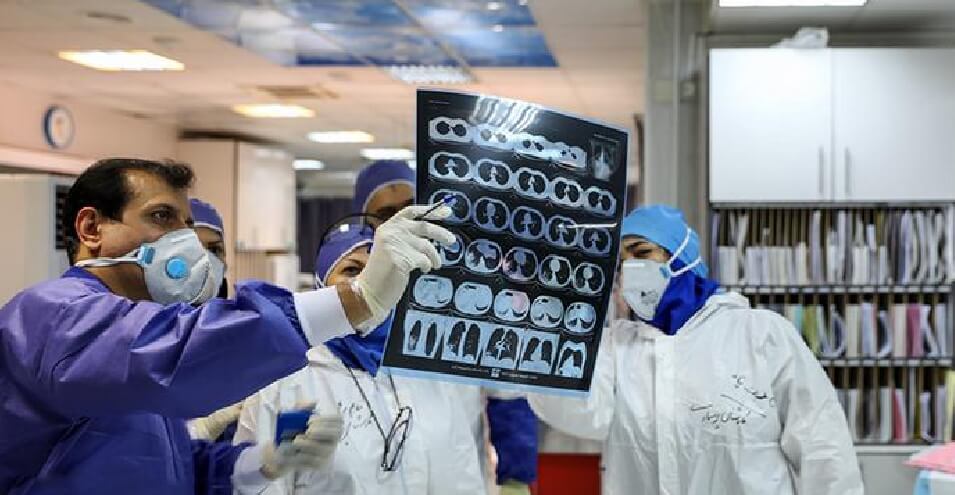
Sheds full of forensic bodies and an unwanted confession to the Islamic Republic's secret killings
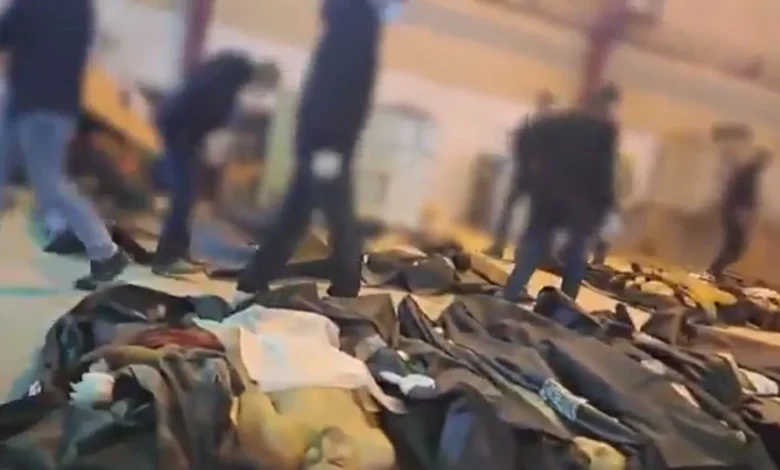
The unintended confessions of an Iranian Broadcasting Corporation reporter revealed the silos full of bodies and the Islamic Republic's organized crime against the people of Iran.
Sometimes the truth comes out not from the victims, but from the mouths of the media servants of power; not with the intention of exposing, but in the form of a slip that can no longer be collected. The recent statements of "Mohammad Neginipour", a government-affiliated journalist, are a clear example of these unwanted confessions; a confession that reveals the hidden dimensions of the largest contemporary massacre in Iran.
In a program broadcast by the Islamic Republic Radio and Television, Neginipour said, referring to the state of the forensic medicine after the suppression of the protests: "All the silos were full. Since the forensic medicine has four large silos and three small silos, due to the high number of dead, everyone who was there was surprised and did not expect this number. Some of the covers were open so that families could come to identify them. They had to go around and check the covers one by one to find the bodies of their family members. Sometimes they could not find them, and when the next series of dead came, the families would come for another check. Some of them could not be identified due to severe facial injuries."
If this statement had come from an independent official or a freelance journalist, it would have been quickly censored or denied. But when such a description is broadcast from the official platform of the government, it can no longer be called a “rumor” or “exaggeration by hostile media.” The simple and terrifying question is: “Whose bodies are the cesspools?”
The editorial board of Iran International announced in a statement about the video: "In the largest massacre in Iran's contemporary history, the Islamic Republic's repressive forces killed at least 12,000 people, mainly on two consecutive nights, Thursday and Friday, January 8 and 9; a massacre that took place not on the battlefield, but in the streets, alleys, and even around medical centers."
The images and videos released of this massive massacre paint a picture that goes beyond “repression” and resembles a military operation against unarmed people. Reports indicate live ammunition and direct shooting, even from places that should be shelters for people. Some citizens have also recorded videos, changing their voices, in which they declare that in some cases they are shooting at wounded people in the street.
Many videos released by nurses and some doctors indicate that the bullets were mostly fired towards the upper body (heart, neck, face, and head).
A citizen from Shahrood said in a shocking message that in this city, government agents fired at protesters from the rooftop of the Bahar Maternity and Gynecological Hospital. This account, while horrifying, is not an exception; rather, it is part of a recurring pattern in recent crackdowns.
Semnan province has also been the scene of widespread protests by marketers, academics, and the public, in which the slogan "Pahlavi is returning" was heard. At the same time, a person in Tehran reported that wartime bullets were fired at people, saying that the marks of these bullets still remain on the metal doors of buildings; physical signs that cannot be erased by any statement.
Meanwhile, the Islamic Republic's judicial and law enforcement officials have repeatedly emphasized a harsh and swift response to the people, without the slightest mention of human casualties. This is the language of a government that is neither accountable nor remorseful.
But the repercussions of these crimes have gone beyond Iran’s borders. The Munich Security Conference announced that it had canceled invitations to government representatives from the Islamic Republic and that no Iranian officials would attend the conference in the coming period. A conference spokesperson confirmed that although invitations had been sent, these invitations were no longer valid in light of recent developments.
On another level, the government's attempt to silence the truth by shutting down the internet has also faced serious challenges. Reuters reported that the crackdown on dissent in Iran has become one of the toughest security tests for Starlink, a service that has become a vital tool for communication and documentation in the face of internet shutdowns.
Despite the ban on Starlink in Iran, reports indicate that tens of thousands of terminals have been smuggled in; terminals that have now become the eyes of the world in the midst of repression, preventing the silos full of bodies from being buried in silence.
Today, the Islamic Republic not only kills people, but also tries to hide the statistics, location, and memory of the massacre; but confessions like the one broadcast by the state-run Iranian Broadcasting Corporation show that the scale of the crime is so vast that even the government's propaganda machine is no longer able to contain the truth.
The silos are filled not only with bodies, but also with documents that will one day testify against this government.
#Cemeteries_Full_of_Body #Unwanted_Confession #Murder_of_Protesters #Government_Crime #Official_Lies #Justice #Human_Rights #Journalist
#IranMassacre #JusticeForIran