Prince Reza Pahlavi: The Islamic Republic is at war with the Iranian people's assets and their beliefs
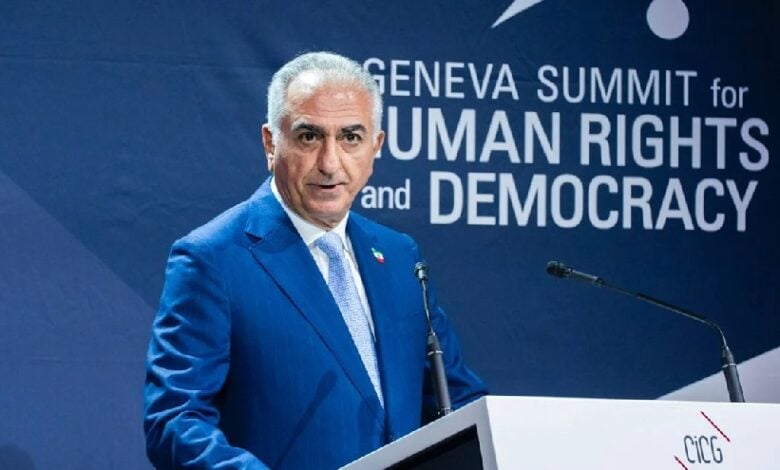
In his speech at the Geneva conference, Prince Reza Pahlavi spoke of the Islamic Republic's war on the cultural heritage of the Iranian people and their beliefs.
Yesterday, a human rights conference was held in Geneva with the presence of Prince Reza Pahlavi. At the Geneva conference, Prince Reza Pahlavi delivered a speech in support of the Iranian people and the freedom of Iran. While appreciating the presence of thousands of Iranians who had gathered to support the "Iranian freedom movement", he said: "The Islamic Republic is at war with the assets of the Iranian nation on several fronts, and the war with Iran's cultural heritage, especially pre-Islamic history, is one of the goals of the Islamic Republic.
The situation is such that the symbols of Iran's ancient civilization, including Persepolis and Pasargadae, are being destroyed due to neglect, and the Islamic Republic often does not allow people to access these places, as it seeks to erase and destroy symbols of national identity and rewrite Iranian history to deprive Iranians of their rich heritage.
Regarding the repression of people for having free beliefs and choosing their religion, he said: "The Islamic Republic has targeted all ideologies, religions, and beliefs. Baha'is have been systematically persecuted. Their leaders have been imprisoned. Their cemeteries have been desecrated, and their youth have been deprived of the right to education. Christians, especially Iranian converts, live in constant fear. Sunni Muslims, Jews, Sufis, and Zoroastrians face widespread restrictions and discrimination. The Islamic Republic's institutionalized hostility to any diversity, including religious diversity, has threatened centuries of Iranian coexistence, with even other creative and artistic citizens, including artists and musicians, facing the death penalty."
Prince Pahlavi referred to the crimes committed by the Islamic Republic after coming to power and during these four decades, adding: "The history of the Islamic Republic is full of lies and deceit. They introduced their revolution as a revolution of justice and freedom, but what happened to the people when the Islamic Republic came to power was nothing but hell on earth. Even before the victory of the Islamic Republic, the terrorist attack on the Cinema Rex in Abadan, in which Khomeini supporters burned 400 innocent people, was a sign of what was to happen to the people under this regime."
When this regime came to power, its first goals were to eliminate the most capable and patriotic citizens of Iran. Generals and military officers, business leaders, intellectuals, professionals and civil servants who had modernized Iran were murdered by the regime. I knew many of them. Their killings were praised and applauded in revolutionary newspapers and ignored in Western newspapers because many of them had no political lobbyists or supporters. They were buried in unmarked graves and their families were not even allowed to mourn at their graves.
Referring to the imposition of compulsory hijab on women and girls and Ruhollah Khomeini's order on this matter, he continued: "The laws for the defense of the family were the first laws to be abolished by Khomeini, and compulsory hijab became a tool for suppressing women and a symbol of the Islamic Republic's pathological desire to control women's bodies. Despite this, from the first days of repression until now, women have fought and resisted. The struggle of Iranian women is not limited to the compulsory hijab and putting a piece of cloth on their heads, but rather their struggle to gain their rights and their country."
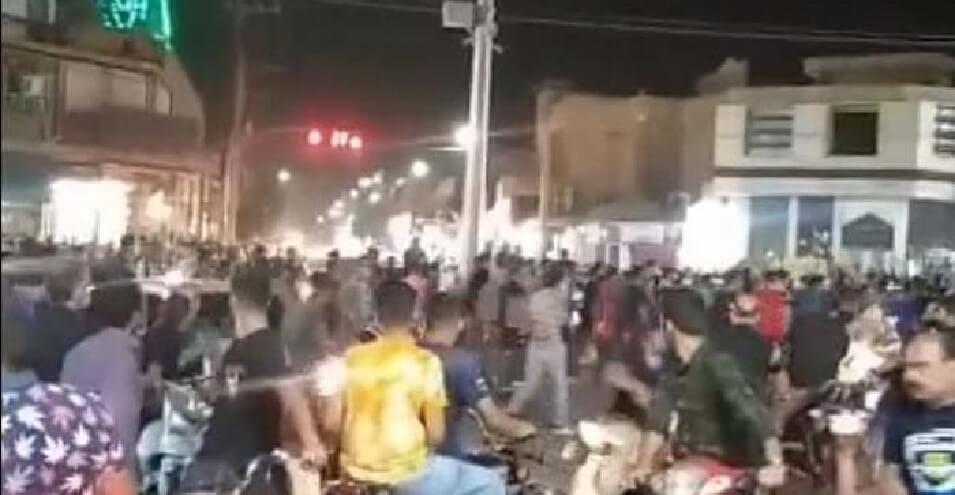
Emphasizing that "our war is not just with the Islamic Republic, but we are fighting for Iran," he noted: "The Islamic Republic has launched a war against all segments of Iranian society, including linguistic, tribal, and regional, but despite all its efforts, it has not been able to divide the Iranian nation into pieces. We will never allow our nation to be divided and fragmented. We have witnessed national unity in the streets across Iran, during which in 2017 and 2019, the protests no longer called for reforms and no one chanted slogans of reforms, but rather the people demanded the end of the Islamic Republic. These protests took place a decade after the Green Movement, during which protesters sought to reclaim stolen votes. "The generation that took to the streets in 2017 and 2019 sought to reclaim their stolen country, and they paid a heavy price, as the Islamic Republic massacred more than 1,500 protesters in November 2019 and arrested, tortured, or disappeared thousands more."
Reza Pahlavi also referred to the murder of "Mahsa Amini" and the protests that followed, saying: "When Mahsa's mother called her a daughter of Iran and the protesters chanted the slogan "From Zahedan to Kurdistan, I will sacrifice my life for Iran," their behavior showed that the Islamic Republic's efforts to ethnicize these protests would not go anywhere."
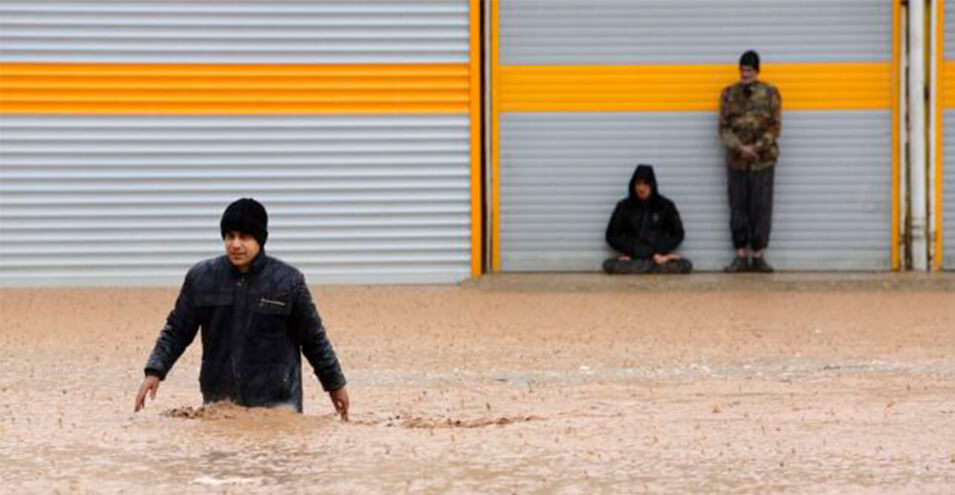
In his speech, the prince referred to the destruction of the environment and the Islamic Republic's neglect of environmental problems, saying: "Decades of corruption and mismanagement in the Islamic Republic have caused environmental disasters that threaten the lives of millions of people. Lake Urmia, once the largest saltwater lake in the Middle East, has almost disappeared, leading to salt storms that have destroyed agricultural lands and caused respiratory diseases."
"Currently, rivers like the Zayandeh River have dried up and farmers have no water to irrigate their fields. In Khuzestan, where water flowed for centuries, water shortages have led to repeated protests, each time brutally suppressed. Tehran and Ahvaz have become some of the world's worst polluted cities, with pollution levels often reaching toxic levels, forcing schools and businesses to close. In such circumstances, environmental activists who dare to criticize the situation, like Kavous Seyyed Emami, are imprisoned or killed."
He pointed to Iran's natural wealth, which has the largest oil and gas reserves in the world, and added: "Despite having the world's second largest gas reserves, Iran is witnessing frequent blackouts, the situation is such that patients are dying in hospitals, businesses have gone bankrupt. Even the most basic needs, including some food items, have become luxury goods that can only be found on the tables of a few people."
"In Iran, which should be one of the richest countries in the world, many of my compatriots can barely put bread on their tables, let alone meat. The situation that has arisen today is the result of the presence of a regime that plunders our country instead of governing it, and all these problems can only be solved by destroying this regime."
In concluding his speech, he emphasized the Islamic Republic's war with the world, adding: "As we saw last week, from terrorist attacks to hostage-taking, the Islamic Republic, despite its rhetoric in Davos and calls for a new agreement, is still at war with the free world, and its crimes will not stop until this regime is overthrown."
The Islamic Republic does not limit its crimes to Iran's borders. The regime uses its embassies and so-called cultural centers as bases for espionage and terrorism throughout Europe, and when it cannot reach its opponents abroad, it takes foreign citizens hostage inside Iran for political blackmail.