Israel's Channel 12: Iran and world powers likely to reach agreement in one to two weeks
Israeli Channel 12 TV announced on Wednesday evening, March 1, that the chances of reaching a new nuclear agreement between world powers and Iran have increased significantly, and that this agreement may be reached in one to two weeks.
The news network reported, citing informed sources, that the American delegation has responded positively to many of Iran's requests for sanctions relief, including the lifting of sanctions on a large number of individuals close to the Leader of the Islamic Republic of Iran and financial institutions under his supervision.
Among those who will be exempted from sanctions, according to the news network, are Hossein Dehghan, former defense minister and former commander of the IRGC Quds Force, Ali Akbar Velayati, advisor to the Islamic Republic's leader on international affairs and former foreign minister, and Mohsen Rezaei, former commander of the IRGC. Sanctions will also be lifted from institutions such as the Mostazafan Foundation.
According to this network, the Islamic Republic of Iran's request to lift direct sanctions against the Revolutionary Guard Corps has also been approved in principle.
The report also mentioned an agreement to release American prisoners from Iran's Evin Prison.
Israeli Channel 12 TV then added, citing sources close to the American delegation and Mikhail Ulyanov, head of the Russian delegation in the Vienna talks, that Washington is prepared in principle to sign a new agreement with Iran very soon, and even next week.
The media outlet described the details of the agreements reached by the American delegation in the Vienna talks as "American surrender" from Israel's perspective.
The Israeli and American governments have not responded to the report, but Israel has stated explicitly that it “has always opposed the JCPOA and is even more opposed to its revival.”
The Israeli network's report was published at a time when statements by Rafael Grossi, Director General of the International Atomic Energy Agency, on March 11, have dampened some of the optimism of recent days about the imminence of reaching an agreement to revive the JCPOA.
Mr. Grossi emphasized that not only he, but no other agency official will ever be able to permanently close the files opened regarding uranium traces found at several old Iranian nuclear sites without fully investigating them and reaching the truth.
Closing the aforementioned cases was one of three strong requests from Iran last week to pave the way for the revival of the JCPOA.
According to reports, during the visit of the Islamic President of Iran to Doha two weeks ago, the Emir of Qatar tried to encourage Iran to back down from this demand, but failed.
The Israeli government played a significant role in exposing Iran's suspicious nuclear activities in recent years, and the discovery of traces of uranium at several sites in Iran. The IAEA later confirmed the Israeli reports and stated that these sites in Iran were suspect and that the Islamic Republic must provide a convincing explanation for its activities.
Despite Mr. Grossi’s insistence that the cases against Iran remain open, he said on Wednesday that he still hoped the Vienna talks would continue. There are also reports of Grossi’s imminent trip to Tehran. According to a Wall Street Journal reporter, the trip will begin on Friday.
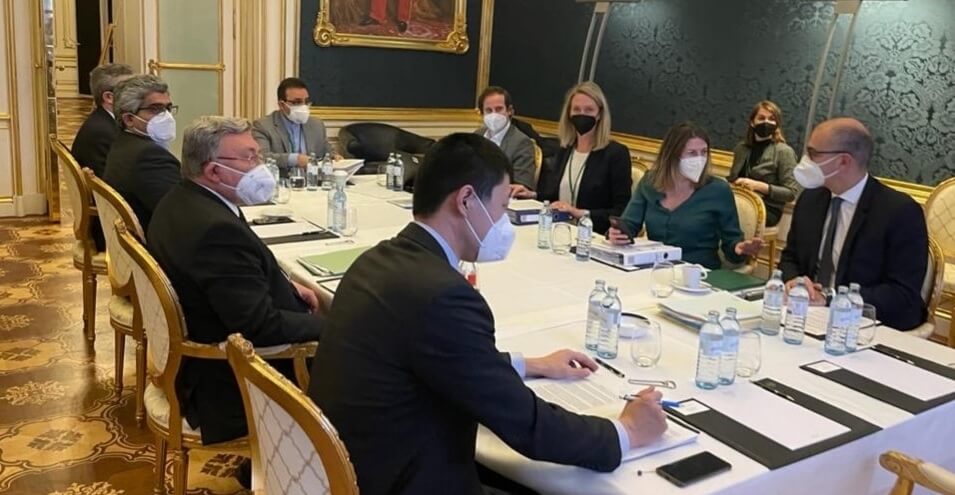
The Iranian delegation, headed by Ali Bagheri Kani, is said to have returned to Austria with a "tougher" stance after consultations with senior officials of the Islamic Republic in Tehran last weekend regarding the results of the Vienna talks.
However, very intensive negotiations between Mr. Bagheri Kani and the Iranian delegation with the delegations present in Vienna have been ongoing since Monday of this week and are still ongoing.
German Chancellor Olaf Scholz, whose country is actively participating in the Vienna talks, said during a visit to Israel on March 1 that reaching an agreement to revive the JCPOA could not be delayed any longer.
Mr. Schultz said in a joint press conference with the Israeli Prime Minister that critical moments of decision-making have arrived for Iran.
On the other hand, as the end of the Vienna talks approached, the Israeli Prime Minister emphasized in various meetings on Tuesday and Wednesday that even if the US returns to the JCPOA, Israel will not be bound by any agreement.
Naftali Bennett told Mossad forces this week that whatever the outcome of the Vienna talks, it is the duty of the Mossad and the IDF to “prevent Iran from achieving nuclear capability.” He did not elaborate on this duty.
Republican US Senator Lindsey Graham said during a trip to Israel two weeks ago that a large number of Iranian scientists have encountered incidents and that we expect these incidents to increase.
Source: Radio Farda