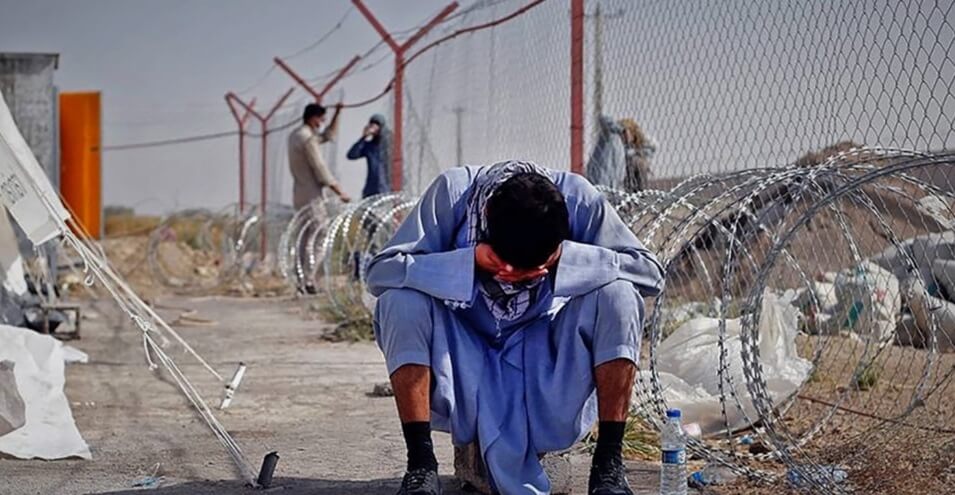
Islamic Republic Refuses to Accept Deported Asylum Seekers

Hassan Qashqavi stated on March 6 in a television program that “according to international law, the government cannot provide assistance to asylum seekers without a request from their country’s embassy.” However, he simultaneously stated that Islamic Republic embassies can issue return travel documents for asylum seekers, “but we do not make any financial commitments regarding return expenses.”
According to Qashqavi, Iran’s deputy foreign minister, approximately “2,000 Iranian asylum seekers” have returned from Germany to Iran over the “past two to three months.” It is worth noting that Germany has been the primary destination for an unprecedented wave of asylum seekers who have reached European countries by sea and land in recent months.
The European Union has also emphasized that priority regarding asylum seekers applies to war refugees and displaced persons from Syria, Iraq, and Afghanistan. Recently, Donald Tusk, president of the union, has asked illegal economic migrants not to come to Europe, as this “only endangers their lives and property” and “will not be beneficial.”
There are no precise statistics indicating what kind of requests Iranian citizens who have recently reached Europe are submitting for migration or residence. Although Qashqavi stated that this matter “is more political than legal, and many asylum seekers are seeking asylum from other countries due to their political positions.”
Hassan Qashqavi, referring to a group of Iranians who stitched their lips in France during a protest, said “they have no willingness to return to Iran and want to reach England.” Iranians who stitched their lips were living in a place called “Jungle” in Calais, France. Police are demolishing this location.
Six Iranians stitched their lips from March 2 in protest of the evacuation and demolition of a migrant settlement in northern France.
Qashqavi once again emphasized the Islamic Republic’s Foreign Ministry’s previous position that Tehran will not accept forced deportation of asylum seekers.
The European Union will hold a meeting with Turkey on Monday regarding the issue of migrants and asylum seekers. The union is set to provide Turkey with 3 billion dollars in aid, but how this aid will be used remains unclear. The president of the European Union recently stated that for many of its member countries, the best current approach is widespread and immediate deportation of asylum seekers from Greece and their return to Turkey.