Araqchi announces deadlock in agreement with US and full readiness for new attack
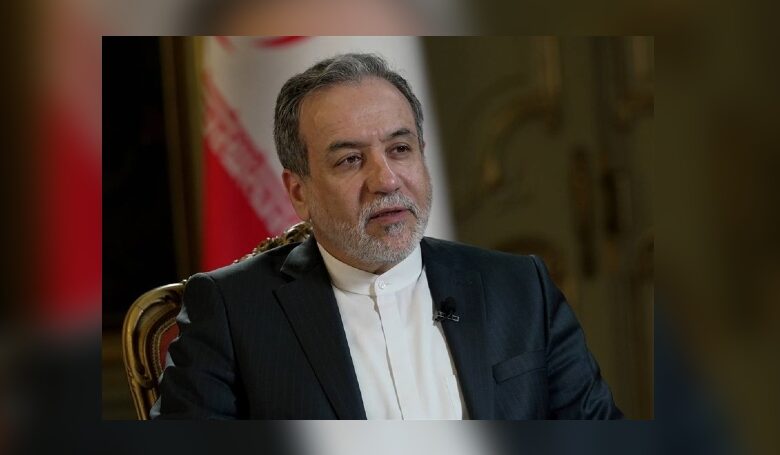
Referring to the lack of agreement with the United States, Araqchi announced preparations for a new attack and declared readiness, without retreating from the terms of the agreement.
Amid rising regional tensions and at the same time as diplomatic moves by Israel and the United States, the Islamic Republic's Foreign Minister announced that Tehran does not rule out the possibility of a new military attack and considers itself fully prepared for such a scenario; a readiness that, according to him, has increased even more than in the past.
Abbas Araghchi, who spoke with the Russian network "Russia Today" during an official visit to Moscow, emphasized: "Although the Islamic Republic is not seeking war, it sees the principle of deterrence in being fully prepared for defense." He clarified in this interview: "The best way to prevent war is to be prepared for it."
In another part of his remarks, the Iranian Foreign Minister referred to the consequences of the 12-day war and added: "The damage done to infrastructure has been compensated." This comment can be seen as an attempt to send a message of reassurance to domestic public opinion and at the same time an indirect warning to foreign parties; a message that previous attacks have not disabled Iran's operational capacity.
Continuing his conversation, Araqchi once again emphasized Tehran's position on negotiations with the United States, saying: "Iran will only enter into negotiations if its framework is fair and balanced." He added: "We are ready for a fair and balanced agreement that is reached through negotiations, but we are not ready to accept dictates."
He also announced that if the US comes with a proposal based on “mutual benefits,” Tehran will consider it, but in the current circumstances, he does not see such readiness in Washington. According to Araqchi: “They are not ready for a fair agreement, so we have to wait until they reach that point.”
This stance was previously repeated in his joint press conference with Sergei Lavrov in Moscow, where Araqchi stated that Iran is not yet convinced that the United States has revised its approach.
These statements are made in a situation where five rounds of negotiations were held between Iran and the United States in the first half of 2025, but these talks were halted without results after the start of Israeli military operations and US attacks on Iranian nuclear facilities.
On a larger scale, Ali Khamenei has effectively limited the path to any compromise by explicitly rejecting negotiations with the United States and describing the two countries’ differences as “inherent.” Given his position, this stance is seen as official policy of the regime, further tying the government’s hands in diplomatic maneuvering.
Meanwhile, the American network NBC has reported that Israeli officials believe the Islamic Republic is expanding its ballistic missile program. According to informed sources, Tel Aviv sees this as a more immediate threat than the reconstruction of nuclear sites and is preparing options for a second strike.
According to the report, Israel is concerned about rebuilding air defense systems and missile production centers, facilities damaged in previous attacks. These concerns are set to be raised during the upcoming meeting between Benjamin Netanyahu and Donald Trump at Mar-a-Lago.
Donald Trump, in a double-edged statement, has not implicitly ruled out the possibility of returning to the negotiating track while warning Tehran. He has said that Iran may try to rebuild its missile program, but that the process will take time, and warned: "If they try to come back without a deal, we will destroy that one too."
According to US sources, four military options were on Trump's table before the June attacks, with a joint US-Israeli operation ultimately being chosen. Netanyahu is now expected to present a similar set of options again.
All these developments show that the region is in a fragile state; where Tehran speaks of “full readiness”, Washington oscillates between threats and negotiations, and Israel seeks to keep the military option on the table. In such an environment, any miscalculation could turn the deterrence equation into a new conflict.