The Judiciary in the Haft Tappeh Case Predicament
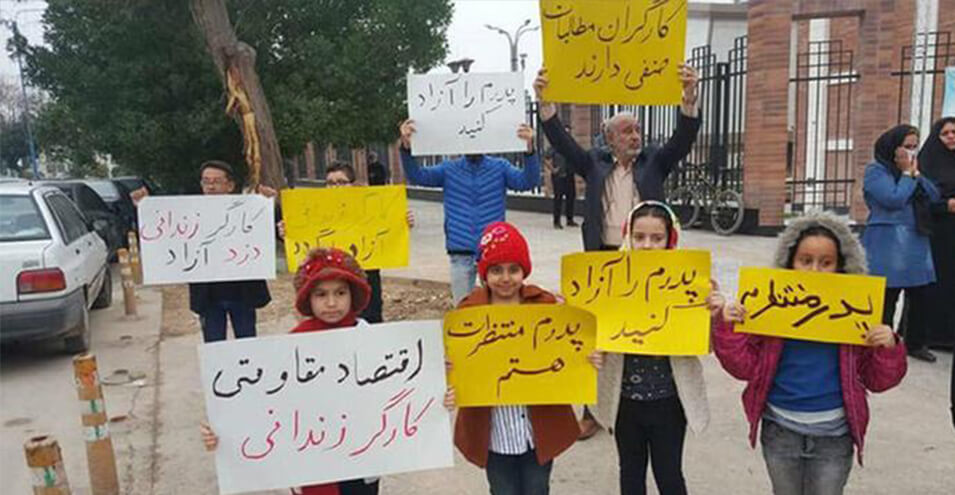
Dozens of political and civil activists have condemned the sentences of the defendants in the Haft Tappeh case and challenged Ebrahim Raisi. The Iranian Writers' Association points to the hatred of the perpetrators and those who ordered such sentences for women, freedom of expression, and the labor movement.
In a letter to the head of the judiciary, the Minister of Labor called the heavy sentences against Haft Tappeh sugarcane workers shocking and called the workers' right to protest. In the letter, Mohammad Shariatmadari announced that a committee consisting of the Minister of Justice, the Vice President for Legal Affairs, and himself had been appointed to follow up on the issue during a cabinet meeting.
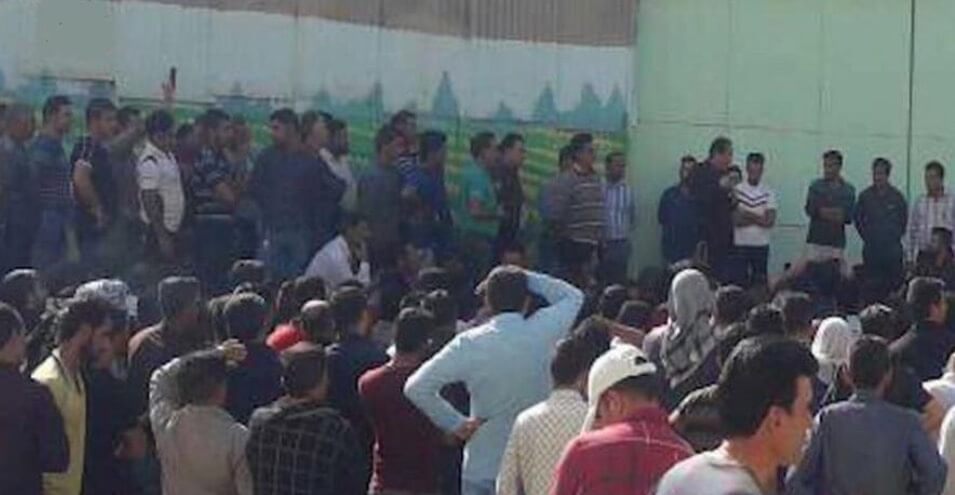
The judiciary has sentenced seven defendants in the Haft Tappeh case to more than a century in prison. Two of them are Haft Tappeh workers, and the remaining five, three of whom are young girls, are defenders of labor rights, and reporters for the online magazine "Gam."
In a letter to Ebrahim Raisi, the Minister of Labor referred to the "indescribable pressures of ill-wishers from Iran and the regime of domination," and called for a fair and compassionate approach to labor issues and protests to be placed on the agenda of all officials.
At the same time, a group of reformist political activists, pointing to the lack of a fair trial in issuing the heaviest penalties for labor, student, civil, and media activists, wrote in a statement: "No details of these cases, the indictments issued, the documents and reasons for the accusations, and the defenses of the defendants have been published. It is unclear to what extent the accusations were substantiated and whether the defendants and their lawyers had sufficient opportunity to defend themselves."
The statement states that recent rulings have hurt public opinion and that the judiciary must provide appropriate conditions for review and appeal "so that, while restoring the neglected rights of these citizens, the public conscience will judge the fairness of the judicial process."
The statement was signed by a number of former and current ministers and representatives, lawyers, sociologists, journalists, and political activists. Faezeh Hashemi, Abbas Abdi, Abdullah Ramezanzadeh, Mostafa Tajzadeh, Ehsan Shariati, Keyvan Samimi, Shahindokht Molaverdi, Parvaneh Salahshouri, Fatemeh Saeedi, Fatemeh Zolghadr, Zahra Chamzar Nouri, Farideh Ghairat, Habibollah Peyman, and Mohsen Safai Farahani are among its signatories.
“Cross-partisan protest letter”
Another group of "principled, reformist, and justice-seeking activists" also wrote a letter to Ebrahim Raisi, calling the heavy sentences of the defendants in the Haft Tappeh case a cause of astonishment and astonishment, saying: "This is while the respected institution has never brought a case to fruition and has never issued a verdict with such severity and severity during the auction of national property that has been given to anyone and everyone under the guise of "privatization" for more than a decade."
Part of the letter states: "It seems that parts of the apparatus under your command are trying to use these decrees, in full coordination with the executors of the devastating transfers of recent years, to draw a line for those protesting the sale of Arak Hepco, Moghan Agriculture and Industry, Tabriz Machine Building, Al-Mahdi Aluminum, and other factories and production complexes in the country."
Analytical statement of the Writers' Association
Meanwhile, the Iranian Writers' Association, condemning the sentences issued, has considered the issue to be the result of the "hatred of the perpetrators and perpetrators" of these sentences towards "women, the labor movement, and freedom of expression."
The statement from the association states that three of the seven defendants in the Haft Tappeh case are women and that 55 out of 106 years of prison sentences are for them: “Although intensifying repression and creating fear and terror in the hearts of protesting people is the motivation for issuing such sentences, the sentences are also fed by sources, one of which is oppression and hatred of gender and being a woman. Another source is class… The Haft Tappeh case is also a kind of description of a class-based workers’ protest, and for the defenders of the existing order, there is nothing more terrible and intolerable than for such protests to take on a class aspect.”
The Writers' Association says that five of the defendants have no crime other than covering news of workers' protests: "Freedom of expression is a hindrance to gender oppression and class oppression and renders ineffective one of the important tools for its implementation, namely ignorance and superstition, and it is not without reason that rulers are extremely averse to it."
At the end of the statement, the Iranian Writers' Association stated that although most of the people who ordered and executed such sentences came from the 1960s and probably remember the "golden" results of the repression of that period, they should not forget that if they are the same, the world has changed: "By issuing heavy and terrible sentences, they will certainly impose pressure and suffering on activists in various fields and their families and create obstacles in the way of people's protests; but they cannot overcome silence and stillness."
Source: DW