Injured Leader Mojtaba Khamenei in Hospital, Pledge of Allegiance Ceremony Held with Cardboard Image of Him
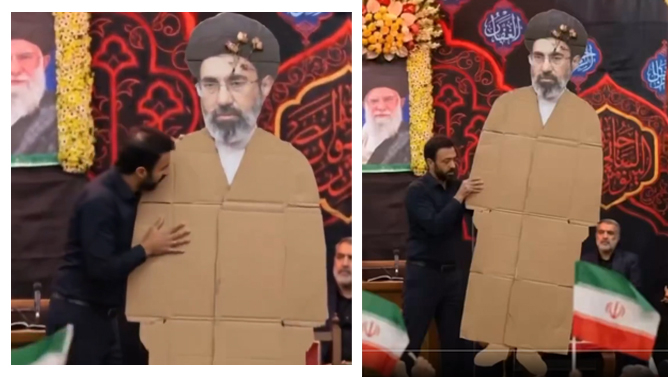
While reports indicate that Mojtaba Khamenei was injured in the US and Israeli attacks, he was appointed as the new leader of Iran; but the oath-taking ceremony with his picture and cardboard replica was reportedly held in his absence.
There have been multiple reports of injuries to Ali Khamenei's son, Mojtaba Khamenei, following the massive US and Israeli military strikes on Iran in late February. The attacks, which targeted the Islamic Republic's command centers, resulted in the deaths of Ali Khamenei and a number of senior government officials, and ushered in a new era for Iran's leadership structure.
Following these developments, the Assembly of Experts elected Mojtaba Khamenei as the new leader of the Islamic Republic; an appointment that some analysts have viewed as a sign of greater concentration of power in the circle close to the Revolutionary Guards.
According to international media reports, Mojtaba Khamenei suffered serious injuries during the first wave of airstrikes carried out on February 28. Various sources have said that he suffered injuries to his leg, abdomen, and face, and even suffered a broken leg and superficial injuries to his face.
Some reports also indicate that he was wounded in the same attack that killed his father and several family members.
Despite the fact that he has been elected as Iran's new leader for several days, no new images, speeches or video messages have been released from him. This long absence from public space has led to much speculation about the true state of his health.
While some Iranian officials have said he was lightly wounded but still active, other sources have reported more serious injuries and that he is continuing to receive treatment in a secure location.
Ali Khamenei, the former leader of the Islamic Republic, was killed in a joint US-Israeli attack on Tehran on February 28, part of a broader operation against Iran's command structure.
After his death, senior clerics and members of the Assembly of Experts quickly decided on a successor, naming Mojtaba Khamenei as the new leader. Reports indicate that some clerics were initially hesitant about a family succession, but eventually urged him to accept the responsibility.
This choice quickly sparked reactions inside and outside Iran, as critics saw it as a sign of the transformation of the Islamic Republic's structure into a kind of "hereditary government."
While Iran's new leader was expected to appear in public in the first days after his election, reports indicate that he did not attend the official oath-taking ceremony.
According to media sources, only a large picture of Mojtaba Khamenei was installed at the event, and some reports even reported the use of a replica or cardboard image of him to display a symbolic presence.
The leader's absence from such events, which are usually accompanied by a speech or official message, has raised doubts about his health, with media reports suggesting he may still be receiving medical treatment.
The release of images of the oath-taking ceremony and the symbolic presence of a picture or replica of the new leader sparked widespread reactions on social media. Some users described the scenes as a sign of the “real absence of the leader” and ridiculed images of him kissing a cardboard picture or symbol. In contrast, supporters of the government tried to present the ceremony as a sign of loyalty to the new leadership, considering it part of the political culture of the Islamic Republic.
Online, some analysts and political activists even raised the question of whether the new leader is truly capable of governing the country in a state of war or whether Iran's power structure is actually guided by powerful institutions such as the Revolutionary Guards.
Several days after the official announcement of the leadership of Mojtaba Khamenei, limited information has been released about his actual status.
The lack of a direct image or message from the new leader, along with reports of his injury, has led many political observers to question his influence and ability to manage the current crisis.
Meanwhile, the war in the region continues and Iran faces increasing military and political pressure, a situation that could put the future of the country's new leadership even more in the spotlight.