Aradkooh Waste Disposal and Processing Complex is the Source of Tehran's Bad Smell
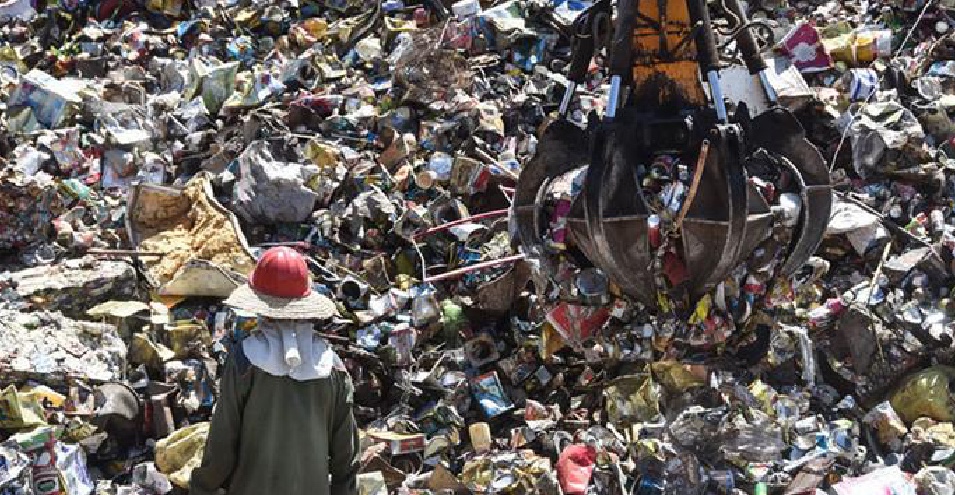
According to Issa Kalantari, half of the bad smell in the south of the capital is related to the Aradkooh waste disposal and processing complex. The leachate from this waste contains dangerous chemicals such as sulfur, and no effective steps have been taken to combat it so far.
Issa Kalantari, Vice President and Secretary of the Supreme Council for Environmental Protection, told reporters on Tuesday, February 27, that the foul smell in southern Tehran is caused by the Aradkooh waste disposal and processing complex, and that the plan is to "reduce the intensity of the unpleasant odor and hold negotiations with the municipality to make a final decision about Aradkooh."
According to him, it was approved in the meeting of the Supreme Council for the Environment to clarify the "tasks of waste and investments" in coordination with the Environmental Protection Organization and the ministries of oil, power, interior, agricultural jihad, and semat.
The scent trail was clear from the beginning, but no information was provided.
For several years, people in Tehran have been complaining about a disturbing smell in some areas of the city. There have been all sorts of speculations about the origin of this smell, including a broken sewer pipe, a gas leak at the Tehran refinery, and the activation of the Damavand volcano, etc.
On December 16, 2019, the newspaper Shahrvand wrote about this issue, saying that it had previously been said that this smell “should be investigated as a new phenomenon.” But were the authorities unaware of the existence of the Arad complex until just last fall?
The citizen further wrote that on December 11, this smell would resurface in Tehran, and this time a committee would be formed to track the smell. But “wind and rain came and the officials said the smell had disappeared.” But the smell wouldn’t let up, and “it came and went on December 19, and came again on December 23, and it lingered until yesterday. Yesterday, they again made up reasons for it; some said it was the waste from southern Tehran, and some said it was due to the use of heavy fuels and diesel.”
But now the head of the Environmental Protection Organization officially announces: "Studies conducted by the municipality show that 22 percent of the unpleasant odor in southern Tehran is related to Aradkooh. However, studies by the Environmental Protection Organization show that more than 45 percent of the unpleasant odor in southern Tehran is related to Aradkooh."
He also announced that the Aradkooh Waste Disposal and Processing Complex will be finalized by the end of the 12th government. According to him, Hassan Rouhani has ordered that "this issue be finalized in the remaining six months of the 12th government."
Is the source of pollution sanctions or lack of concern for people's lives and health?
The Citizen's report states that the reason this smell was not present in Tehran in the past was that "the site had never been filled to this capacity." It also mentions the efforts of the Environmental Organization, stating: "The Environmental Organization is looking for a new location for the landfill. The method of landfilling waste in Iran is traditional, and Environmental Organization officials say that they cannot import new equipment for the industrial landfill due to sanctions. According to them, before the sanctions, the organization had contracts with countries such as South Korea to import equipment, but these contracts were canceled, and therefore the new location for the landfill will also be traditional."
Rather than blaming sanctions for water pollution, forest destruction, air pollution, and the bad smell of Tehran, environmental activists in Iran point to the power mafia, which neither cares about environmental destruction nor plays with human lives; and whenever the fight against pollution is involved, it becomes a security issue.
Faramarz Moatar, a faculty member of the Faculty of Environment and Energy at the University of Science and Research, pointed out, in addition to unsanitary waste disposal, "the increase in population and the expansion of the city's outskirts," and told the Citizen: "We have now reached such a critical situation that, in addition to air pollution, the odor crisis has also become an everyday problem in Tehran. This is while we have not witnessed such a case in other countries. Advanced countries have long been using new methods for waste disposal, and for this reason, they have not witnessed such cases, or at least we have not heard of them."
He says that the leachate from this waste contains dangerous chemicals such as sulfur, which is very smelly. According to this expert, a plan was presented nine years ago at the Faculty of Environment of the University of Tehran to treat the leachate, but "this plan was operational for a short time and then it was no longer considered."