State Media Under Fire; Damages to Iran’s Media Center in 12-Day War and Recent Attack
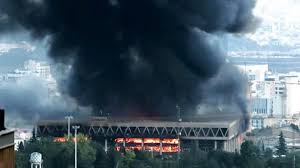
Iran’s Islamic Republic Broadcasting (IRIB), after sustaining damages during the 12-day war, was targeted again by Israel and American attacks.
In recent years, tensions between the Islamic Republic of Iran and the Israeli regime have become one of the most serious security crises in the Middle East. In the summer of 2025, a 12-day war broke out between the two sides, and only two months into 2026 (Esfand 1404), with escalating military attacks and air operations, the clashes reached an unprecedented level. Iran’s state media, particularly the Islamic Republic Broadcasting, have been at the center of these conflicts not only as a news source but also as a symbolic institution.
During the 12-day Iran-Israel war in June 2025 (Khordad 1404), Israeli forces conducted airstrikes against IRIB’s media center (the glass building) in Tehran. The attack occurred during a live broadcast, causing the transmission to be cut off and the studios to be taken offline for several moments.
Reports and published videos show that dust and debris penetrated the studios, forcing broadcasters to evacuate the scene, although broadcasting continued from other studios.
Although this attack could not suspend IRIB’s broadcasting for extended hours, it caused serious disruptions to direct news coverage and prevented journalists from being deployed to areas based in the capital. Additionally, some technical equipment and infrastructure were damaged, requiring subsequent reconstruction.
On March 1, 2026, corresponding to Esfand 10, 1404, an Israeli airstrike on the IRIB building in central Tehran was reported, causing fires and damages to parts of the building.
Some news sources also reported human casualties near the IRIB broadcast site, including several killed as a result of the attack on areas surrounding the media building. Despite this attack, Iranian officials announced that IRIB continues broadcasting, although technical disruptions and infrastructure damage have affected the quality and scope of coverage.
The attack on IRIB’s glass building during the 12-day war and yesterday’s attack against this national media outlet will have the following consequences:
A) Media Consequences
- Reduced capacity for live and impartial coverage: After the attacks, IRIB, as the official state media, faced technical limitations that caused some coverage to be delayed or broadcast from backup studios.
- Increased public trust gap: A direct attack on official media, even if it has security implications, can increase distrust among portions of the audience regarding the media’s capability during crises, especially if coverage is accompanied by censorship or delays.
- Use of media as a weapon of war by both sides: These tensions demonstrate that media outlets are used by both sides not only for information dissemination but also as tools for psychological influence and propaganda in contemporary wars.
B) Security and Political Consequences
1. Escalation of tension and reciprocal retaliation: The attack on state media centers has been accompanied by official reactions from Tehran, and Iran has promised strong responses that could escalate the scope of the conflict.
2. International pressure and human rights concerns: Iran has condemned such attacks as “war crimes” and has called for their condemnation in international forums, an issue that could influence global media coverage and countries’ stances.
3. Challenges in cyberspace: Alongside physical attacks, cyberattacks and hacking of other state media and news agencies have also been reported (broadcasting Benjamin Netanyahu’s statements on Iran’s networks after hacking the media), indicating the expansion of threat areas into the digital space.
Attacks on IRIB during the 12-day war and in the recent attack, in addition to physical damages, have affected the news capability and information coverage of Iran’s official media. These attacks also demonstrate that media outlets in modern conflicts are not only direct military targets but also part of the media and psychological front in warfare.
The political, media, and social consequences of these damages could have a lasting impact on public trust in Iran and the international position of the Islamic Republic.