“The Islamic Republic is Irreformable”; A Confession About the Ideological Nature of Power
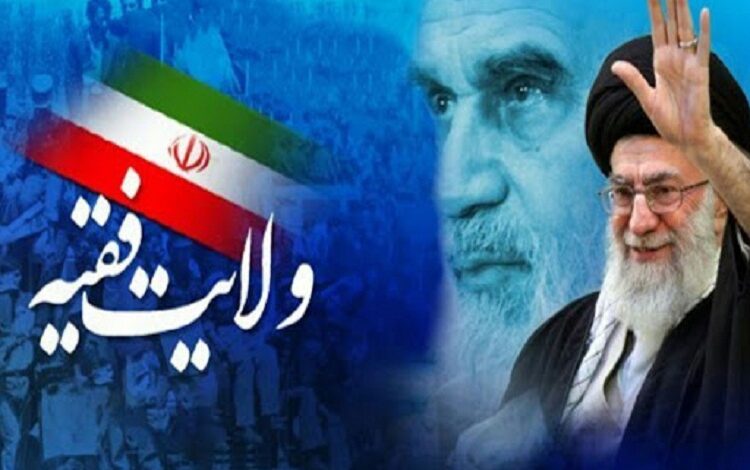
In the television program “Didban 8,” a teenager made explicit and candid remarks describing the structure of Iran’s Islamic Republic as “inherently unreformable,” claiming that the ideological foundation of this system is designed in such a way that any political opposition is defined as a confrontation with the sacred.
This discussion once again highlights the longstanding debate about the connection between political power and religious ideology in Iran. In his explanation, the teenager claimed that the theory of “Velayat-e Faqih” (Guardianship of the Jurist) in the structure of the Islamic Republic is not merely an administrative or legal mechanism, but rather an ideological foundation that places political power beyond the reach of political criticism.
Referring to the concept of Velayat-e Faqih, he argued that when governance is defined as “religious representation,” political opposition can automatically be interpreted as opposition to the sacred, and this very fact eliminates the possibility of gradual reforms.
In another part of this discussion, the teenager referred to the role of Ali Khamenei as the highest decision-making authority. The interviewee claims that the concentration of power at the leadership level has effectively transformed the separation of powers into a dependent structure and blocks the path of systemic internal reforms.
Continuing further, rejecting the possibility of structural reform, he emphasizes that any real type of change (from legislative reforms to fundamental changes) ultimately confronts the definition of governance as “opposition to the system.” From his perspective, this is what makes the option of “gradual reform” meaningless in practice.
The remarks presented in this program offer a very sharp picture of the political structure of the Islamic Republic; a picture in which political power and religious legitimacy are so intertwined that any serious criticism is defined within a security or ideological framework.
In such a narrative, the Islamic Republic is presented not as a reformable political system, but rather as a structure whose survival is tied to the preservation of an ideological definition of power—an interpretation that finds broad resonance in critical media spaces, particularly in Christian and opposition media.