“Volker Türk”: Islamic Republic Uses Executions to Create Fear and Suppress Opponents
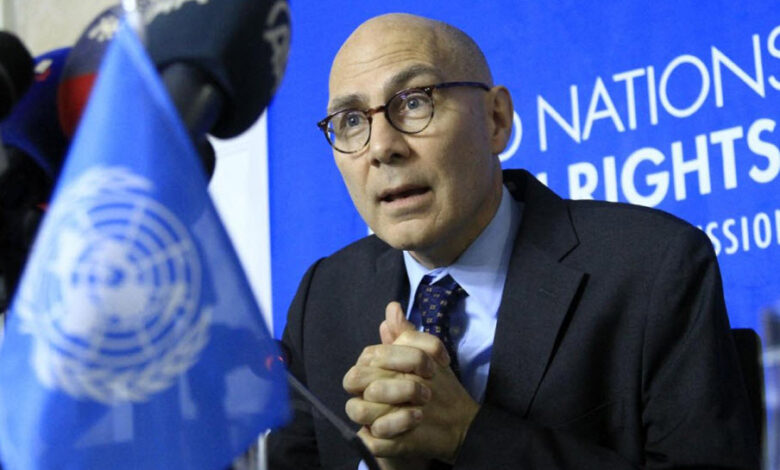
“Volker Türk,” the UN High Commissioner for Human Rights, expressed concern over the rising number of executions in Iran, stating that the Islamic Republic uses capital punishment to create fear and suppress opponents. He called on Tehran to halt the implementation of death sentences and move toward the complete abolition of this punishment.
Volker Türk, the UN High Commissioner for Human Rights, on Wednesday, August 5, issued a statement expressing concern over the increase in executions in Iran, warning that capital punishment continues to be used as a tool to intimidate citizens and suppress opponents.
Türk stated in the statement: “Since March 19, 2026, at least 56 people have been executed on charges related to national security, including 27 people in cases related to January protests.” He added: “Over 100 others face the same charges and are at risk of execution. Executions related to drug-related crimes also continue at an alarming pace.”
According to the report of the Office of the High Commissioner for Human Rights, the first official executions related to the nationwide January protests took place on March 19, when three people were executed on charges of killing police officers and cooperation with the United States and Israel.
The UN High Commissioner for Human Rights also expressed concern about the judicial proceedings in these cases, stating: “I am deeply concerned about the increase in executions and death sentences issued in Iran, and that capital punishment continues to be used to create fear among the people and suppress opponents. The persistent lack of fair trial and due process guarantees is deeply disturbing. It is reported that confessions were obtained under torture and other mistreatment.”
He further added: “Several executions have been carried out in public, some only weeks after arrest. According to reports, twelve defendants were sentenced to death following a three-hour closed session.”
The nationwide January protests (Dey 1404), which initially began with economic demands and protests against rising living costs, quickly transformed into widespread protests against the government. These protests were met with a harsh response from security forces, followed by a wave of arrests, trials, and death sentences.
Meanwhile, human rights organizations have repeatedly warned about the judicial process in security-related cases in Iran and criticized the lack of fair trial, denial of effective access to lawyers to defendants, and the use of forced confessions. Amnesty International also announced that Iran executed over 2,150 people last year, making it the second country in the world in terms of the number of executions after China.
Türk concluded by emphasizing the United Nations’ opposition to capital punishment, stating: “This punishment is incompatible with the right to life and human dignity,” and called on the Islamic Republic’s authorities to halt all executions and take steps toward the complete abolition of capital punishment. He concluded: “There is no place for such punishment in our world.”