Supreme Court Confirms Death Sentence of Arman Morafati
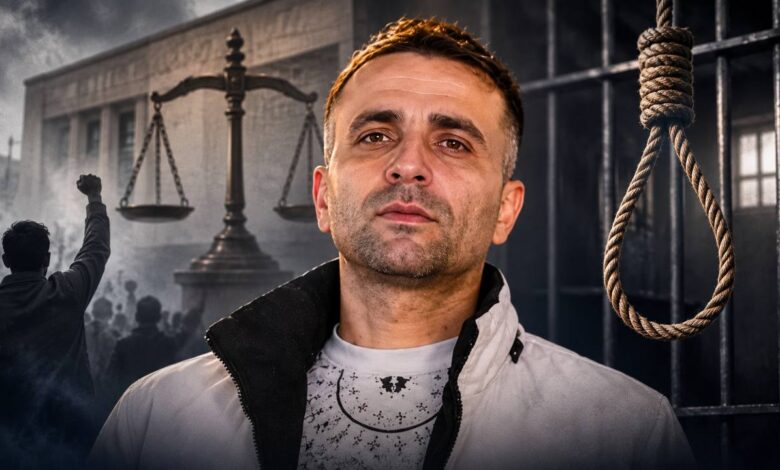
Iran’s Supreme Court has confirmed the death sentence of Arman Morafati, a 38-year-old Kurdish citizen from Saqqez who was among those arrested during December 2024 protests. He was tried in a joint case with Mehrdad Mohammadinia and Ashkan Maleki, two defendants whose death sentences were carried out in June 2025. With Morafati’s sentence now finalized, the life of the third defendant in this case faces serious execution risk.
According to human rights organizations, Iran’s Supreme Court has confirmed and finalized Arman Morafati’s death sentence exactly as issued. Morafati, originally from Saqqez and a resident of Tehran, is currently held in Ward 3, Hall 37 of Qazvin’s Qarchak Prison. His initial sentence was issued by Branch 15 of Tehran’s Revolutionary Court, presided over by Judge Abolqassem Salavati.
One of the most significant aspects of this case is how the charges against Morafati were altered during judicial proceedings. According to Hengaw, during his trial hearing in March 2025, the prosecutor’s representative initially charged him with “gathering and conspiracy to commit crimes against the country’s internal security through participation in protests.”
However, Judge Salavati, citing Article 280 of the Criminal Procedure Code, changed the charges and elevated them to “participation in armed operations against national security, entering religious sites with intent to destroy them, and participation in setting fire to a mosque and seminary.” According to Hengaw’s report, Morafati’s death sentence was issued based on these modified charges.
This change raises critical questions about the trial process: To what extent did the defendant have the opportunity to defend himself against the new charges? Was it possible to prepare an effective defense against charges that were altered during the trial? And were the evidence and documents in the case reviewed independently and transparently? In a case where the outcome could be death, clear answers to these questions are undeniably necessary.
Arman Morafati was tried alongside two other Kurdish citizens from Qorveh, Mehrdad Mohammadinia and Ashkan Maleki. Their death sentences were carried out on the morning of June 1, 2026, after being confirmed by the Supreme Court. State media had accused them of participating in setting fire to the Jafari Mosque and the Imam Hadi seminary in Tehran.
Now with Morafati’s sentence confirmed, a case in which two defendants have already lost their lives has reached a stage where the third defendant faces the imminent risk of execution. This process once again intensifies concerns about the use of capital punishment in cases related to December’s protests.
According to available information, Arman Morafati worked as a laborer at Tehran’s fruit and vegetable market to support his family, and is the father of two young children. Several years ago, he lost his father, mother, and sister in a gas poisoning accident in Saqqez, and has no surviving first-degree relatives.
These details are not merely fragments of a prisoner’s personal life; they are reminders of the human consequences of executing death sentences: two children may lose their father, and a family already devastated by the loss of close relatives faces the threat of losing one of its few remaining pillars of support.
Arman Morafati’s case did not emerge in a vacuum. In its July 28, 2026 report, Amnesty International warned of an increase in issuing and confirming death sentences against those arrested during January’s protests, stating that at least 15 death sentences had been issued in Revolutionary Courts and 13 had been confirmed by the Supreme Court. The organization warned that the actual number of cases is likely higher.
Human Rights Watch also described in its September 10, 2026 report the execution of protesters as part of an ongoing capital punishment campaign, and warned of expedited trials and serious violations of fair trial rights in cases related to December’s protests.
Under these circumstances, the confirmation of Arman Morafati’s death sentence is not merely the news of one prisoner’s sentence becoming final; it is another sign of the expansion of fatal cases against those arrested during the protests. When two defendants in a case have already been executed and the third defendant’s sentence is confirmed by the Supreme Court, the necessity of independent review of evidence, guarantees of the right to defense, and a halt to executions becomes ever more urgent.
Participation in protests, even if accompanied by criminal charges, should not be grounds for casting aside fundamental principles of due process and the right to life. In Arman Morafati’s case, the immediate question now is: Before a final sentence is carried out, will there be a genuine opportunity for fair review of the case and prevention of another execution?