Robert Howard: Islamic Republic Views Time as Advantage; Retreat Would Be an Existential Threat to the IRGC
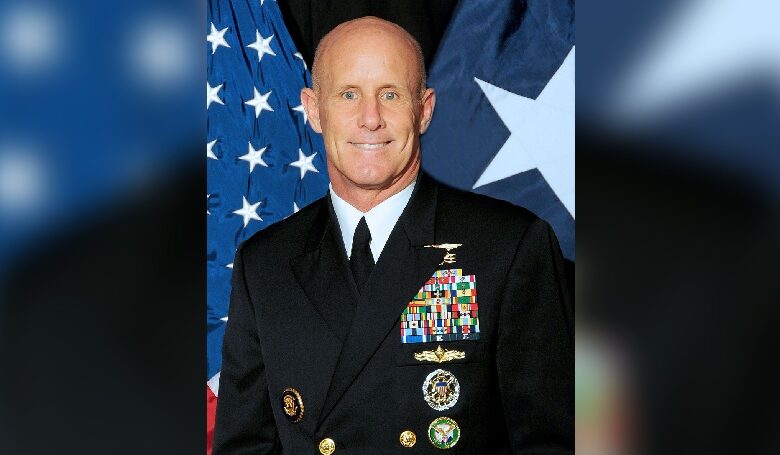
As Tehran and Washington continue negotiations, a retired U.S. admiral says the Islamic Republic, relying on the erosion of American political will, sees time as working in its favor. He warns that the Islamic Revolutionary Guard Corps (IRGC), to preserve its survival, is unwilling to make concessions, and any agreement without a change in the government’s behavior merely postpones the threat.
While the Donald Trump administration attempts to pursue both a path of maximum pressure and diplomacy toward the Islamic Republic, a former senior U.S. military official believes Iranian leaders view this opportunity as favorable and hope that prolonged negotiations will weaken Washington’s political will.
Robert Howard, former Deputy Commander of U.S. Central Command (CENTCOM), told Radio Free Europe/Radio Liberty that the Islamic Republic, particularly the IRGC, takes a long-term view of the current crisis and believes it can benefit from political changes in America. He stressed that the Iranian government has demonstrated for years that it uses time as a strategic tool in negotiations.
(It should be noted that Robert Howard was born into a military family (U.S. Navy) in Newport, Rhode Island. He grew up in Iran and received his high school diploma from the American School of Tehran in 1974. He is also fluent in Persian. After graduating from the Naval Academy Preparatory School in Newport, he received an appointment to the U.S. Naval Academy and graduated in 1979. He is also a graduate of the Naval War College and the Armed Forces Staff College. He holds a master’s degree in International Relations and Strategic Security Affairs and served as an executive fellow at RAND (one of the most prestigious U.S. think tanks in the fields of national security, foreign policy, defense, economics, technology, and public policy). He is also a graduate of the Foreign Policy Program at the Massachusetts Institute of Technology (MIT).)
Howard clarified in this interview that in his view, the IRGC is the primary decision-making center in the Islamic Republic and political officials cannot make major decisions without the approval of this institution. He said that IRGC leaders believe that if they can endure until the U.S. midterm elections or the end of Trump’s presidency, political circumstances might change in their favor.
The former military official also assessed that the U.S. government no longer relies solely on military options and is simultaneously using political, economic, and diplomatic tools to increase pressure on the Islamic Republic. According to him, efforts to build regional consensus, cooperation with Arab countries, and economic pressure are part of this new strategy.
However, Howard believes the main reason for the Islamic Republic’s resistance to making concessions is concern about the regime’s survival. He said that if the IRGC retreats from its core components of power, including its nuclear program, regional influence, or military capabilities, this would be viewed as a sign of weakness and could create grounds for Islamic Republic leaders to be held accountable to the Iranian people.
In part of this interview, he emphasizes that for Islamic Republic leaders, the issue is not merely the nuclear file or the Strait of Hormuz, but a “life and death” matter for the government; because they believe any retreat could pave the way for the system’s collapse.
Howard also expressed doubt about the effectiveness of any new agreement, referring to the experience of the Joint Comprehensive Plan of Action (JCPOA). He said that during the JCPOA period, the Islamic Republic, while maintaining apparent compliance with some obligations, simultaneously developed its technical infrastructure, missile program, and enrichment capacity, and after restrictions were lifted, was able to reach a level of enrichment where the distance to producing materials needed for nuclear weapons became very short.
He also argued that previous agreements never fully covered the Islamic Republic’s missile and drone programs, which allowed Tehran to expand its military capabilities in recent years.
The retired U.S. admiral addressed Iran’s domestic situation in another part of the interview, saying that many Iranians with whom he is in contact believe the Islamic Republic is the greatest obstacle to the country’s progress. According to him, these individuals believe that Iran’s economic resources have been spent on ideological and regional projects rather than improving the lives of citizens.
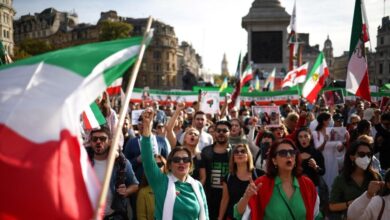
These remarks come as the Islamic Republic continues to face a wave of domestic discontent, increased detention of civil activists, death sentences for protesters, and pressure on dissidents. Government critics say that while Tehran negotiates on the nuclear issue internationally, it has not stopped its suppression policy domestically and continues to detain, execute, and restrict civil liberties to contain any protests.
Many human rights analysts also believe that any agreement focusing solely on the nuclear program or regional tensions, without addressing the human rights situation and widespread suppression of citizens, cannot lead to lasting change in the Islamic Republic’s behavior; because experience in recent years has shown that the Iranian government has not only failed to reduce pressure on domestic opponents during foreign negotiations, but has in many instances increased it.