At Least 9 Religious Activists Arrested in Overnight Raid in Ahvaz
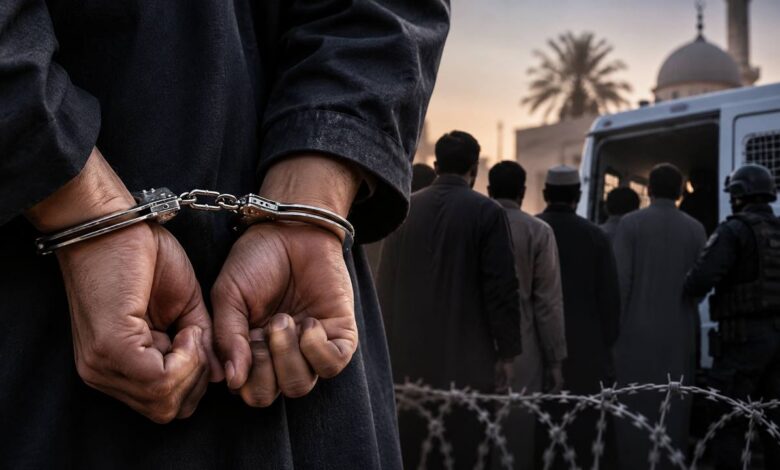
Government forces conducted a raid on the Qaleh Changan area in the outskirts of Ahvaz on the evening of November 25, arresting at least 9 Sunni citizens and religious activists and transferring them to an unknown location. Families say that despite following up with security and judicial authorities, they have yet to receive any information about the detainees’ whereabouts or condition.
According to a report by the human rights organization Hengaw, government forces conducted an overnight raid on the Qaleh Changan area in the outskirts of Ahvaz on Monday evening, November 25, and arrested at least 9 Sunni citizens.
The names of the detainees announced are: “Fuad Salami” known as “Abu Ammar,” “Alwan Salami” known as “Abu Farouk,” “Majid Amouri” known as “Abu Abdulrahman,” “Fuad Amouri,” “Emad Amouri,” “Taleb Khonfari,” “Abbas Kaabi,” “Jafar Marai,” and “Akbar Salami” known as “Abu Taha.”
The Telegram channel “Moj” has also cited religious activities as the reason for these arrests. However, to date, no clear information has been released regarding possible charges, the responsible authority for the detention, or the whereabouts of these individuals.
Reports about the number of detainees also vary. Hengaw has identified 9 individuals, but Iran Wire, citing the Karun Human Rights Organization, reported the arrest of at least 10 religious activists and stated that the identities of 9 of them have been confirmed.
Families of the detainees have visited security and judicial authorities in Ahvaz in an effort to obtain information about the condition of their loved ones, but these efforts have so far been fruitless. Lack of information about the detention location of arrested individuals, particularly in the initial days of detention, raises serious concerns about their access to family, legal counsel, and their legal rights.
This raid comes at a time when reports of arrests of Sunni citizens in Ahvaz and surrounding areas have been released in recent weeks. Hengaw had previously reported the arrest of seven religious activists in Ahvaz and Shaviur on November 4 and 7. Iran Wire also reported other arrests in the same areas, citing the Karun Human Rights Organization.
The repetition of such arrests, particularly when responsible authorities do not provide information about the reasons, charges, and detention locations, increases concerns about security measures against religious activities.
Freedom of religion and belief is a fundamental human right. Article 18 of the Universal Declaration of Human Rights and Article 18 of the International Covenant on Civil and Political Rights recognize the right to have or adopt a religion or belief, to change it, and to practice religious rites. Governments cannot deprive citizens of their basic rights solely on the grounds of belief or peaceful religious activity.
In the case of the Qaleh Changan detainees, it remains unclear what charges the government authorities have levied against these individuals and whether a court order for their arrest has been issued at all. Until official and verifiable information is released, the presumption of innocence should be respected for all of them.
Families have the right to be informed about the detention location and health status of the detainees, and they should have immediate access to legal counsel and the ability to contact their families. Keeping the fate of detainees unknown is neither a substitute for legal process nor can it address concerns about violations of their rights.