Prisoners, Civil and Political Activists, and Social Media Users: We Are Boycotting the Elections
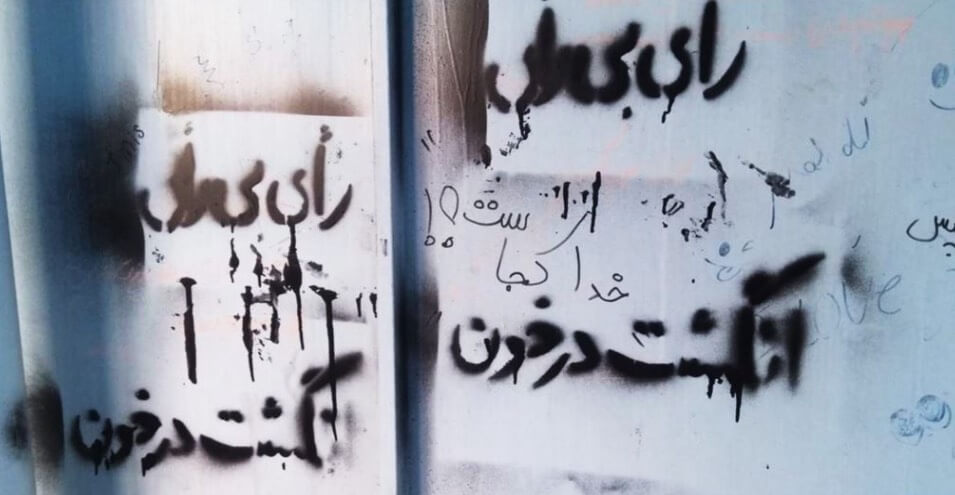
On the eve of the eleventh parliamentary elections of the Islamic Consultative Assembly, some prisoners and a group of civil and political activists have called for boycotting the elections and asked the people not to participate in them.
In this regard, Shirin Ebadi, Iranian human rights lawyer and Nobel Peace Prize winner, has stated in recent days through the publication of a statement, referring to embezzlement, corruption, oppression, inflation and the poor economic situation of the people: “There is no hope for reform of the Islamic Republic government, and… if a ballot box is to lead us towards democracy, it is the ballot box that changes the political structure of the government and transcends the current constitution, and nothing else.”
12 female prisoners held in Evin, including Neda Naji, Yasmin Aryani, Rahele Ahmadi, Atena Daemi, and Saba Kord Afshari, have issued a statement referring to the massacres committed by the Islamic Republic of Iran since the early months of the 1979 revolution and describing the Islamic Consultative Assembly as anti-people, stating that “anyone who approaches the ballot boxes will have their fingerprint recorded on the trigger of the gun being fired at revolutionary youth.”
Likewise, Narges Mohammadi, deputy head and spokesperson of the Center for Defenders of Human Rights and a civil activist imprisoned in Zanjan Prison, has also issued a statement regarding the boycott of the eleventh parliamentary elections. Referring to “street massacres and the government’s ruthless response” to the protests of the Iranian people and stating that the government does not tolerate any legal and peaceful forms of public protest, she called for “boycotting the elections” as the most civil form of protest against the government’s narrow-minded and suppressive policies, writing: “Out of respect for the blood of the wrongfully killed, let us not be present at the ballot boxes.”
Zeinab Jalalian, Siamak Ashrafi, and 15 other Kurdish political prisoners held in Urmia prisons have also, in recent days, called for boycotting the elections, saying: “They want us to forget the executions and not ask about where our unburied dead are buried. We should hide the marks of our torture and smile while standing at the ballot boxes. We should forget the blood shed in December 2017 and November 2019 and forget the names of hundreds of kolbars whose lives were taken for bread.”
On the other hand, Mohammad Hossein Sepahri, one of the signatories of a letter requesting Ayatollah Khamenei’s resignation, also released an audio file from inside Vakil Abad Prison in Mashhad and, on behalf of “Group 14”, announced the boycott of these elections: “If we cannot demand our rights, at least with the black boycott of the elections on the second of Esfand, let us not be unpaid laborers of these oppressors; he also said this is the last opportunity for reformists to separate their line from that of the criminals and join the patriots.”
Arash Sadeghi, Saeid Masouri, and Payam Shakiba, along with five other political prisoners from Rajaei Shahr Prison in Karaj, have also described participation in the elections and voting as the continuation and confirmation of poverty, discrimination, corruption, imprisonment, suppression, the flourishing of gallows, executions, and the promotion of terrorism, and declared that no free-spirited Iranian with a conscience will ignore the blood unjustly shed by participating in these show elections and will not approve of the usurpation of their human rights.
Soheil Arabi, photographer, blogger, and imprisoned civil activist in Iran, has also issued a statement and, while not recognizing the Islamic Republic, boycotted the upcoming parliamentary elections; elections that, according to him, should warrant a reaction beyond boycott following the recent crimes of the Islamic Republic government on earth and in the heavens.
Among opposition parties to the Islamic Republic government, the Democratic Front of Iran also issued a statement calling for a boycott of the parliamentary elections and asked people to stay home on the second of Esfand, when the parliamentary elections are scheduled to be held, and boycott the show elections.
The statement said: “This national boycott is a sign of solidarity and national will and in response to the massacre of 1,500 people in November and the downing of the Ukrainian passenger plane by the Islamic Revolutionary Guards Corps.”
Masih Alinejad, journalist, has also launched a campaign calling for a boycott of these elections and wrote on her Twitter page: “The election week should be turned into a week of shame and the election day into a Friday of shame.”
The boycott of this parliamentary election session is not limited only to activists or political and civil prisoners; rather, it has become extremely popular on social media, and many users have expressed support for boycotting the eleventh parliamentary elections of the Islamic Consultative Assembly.
One user considered participation in the elections as granting legitimacy and acceptability to the regime, complicity in the massacre of defenseless and protesting people, approving theft, corruption and government bribes, accepting the continuation of the current economic situation, and approving aid to Hamas terrorists from the people’s pocket.