Mother of Narges Mohammadi: We Are Concerned About Our Daughter’s Life But We Are Being Threatened
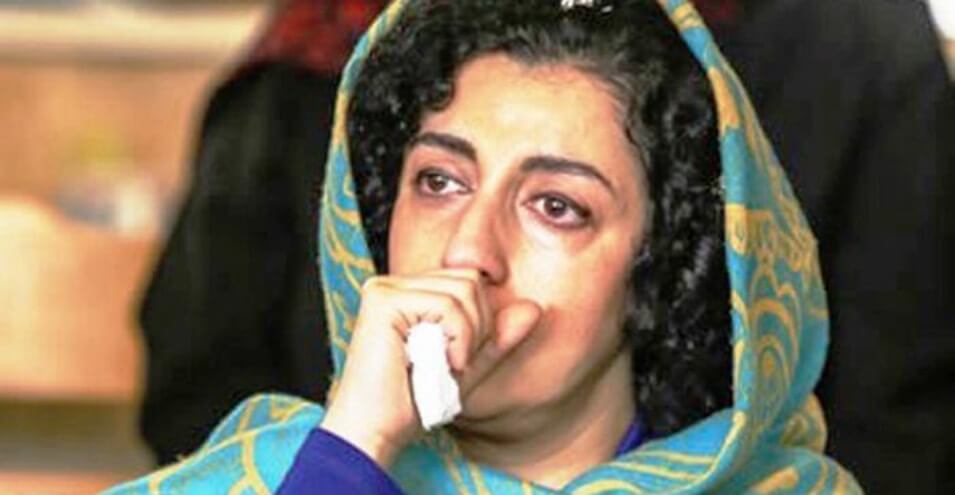
Narges Mohammadi, deputy director of the Human Rights Defenders Center, suffers from a lung disease and is being held in Zanjan Prison in a cell without ventilation and windows. Her mother says that the family’s expression of concern about the non-standard conditions in the prison has been met with threats.
The mother of Narges Mohammadi, spokesperson for the Human Rights Defenders Center and civil activist, has written a letter to the head of the judiciary informing of her daughter’s deteriorating conditions. Ms. Azra Bazargan has referred to her daughter’s severe coughs, throat burning and chest pain, and writes: “In the past 15 days, due to the presence of insects, the women’s ward has been heavily sprayed with pesticide 4 times and prisoners have been kept in the cold air in the yard for hours a day…”
Ms. Bazargan says that a 20-square-meter room where Narges and her cellmates sleep and live has no ventilation or windows: “My daughter suffered severe lung damage after a pulmonary embolism and was under the supervision of a pulmonary specialist using respiratory spray, and it is natural that she would have breathing problems in the current conditions.”
Azra Bazargan has written that instead of responding to her and Narges’ father’s concerns about the non-standard conditions in Zanjan Prison, the authorities have threatened them: “My daughter contracted multiple illnesses in solitary cells and in the past 5 years in prison has undergone three major surgeries and has only been on a three-day furlough once in these years.”
Narges Mohammadi’s mother concluded by noting that the treatment of her daughter is cruel and inhumane.
This is Ms. Bazargan’s third open letter to Ibrahim Raisi in the past two months. Three weeks earlier, she had also expressed concerns in a letter about keeping her sick daughter among those accused of ordinary crimes, the unhygienic conditions of the prison, and the dangers to her physical and mental health. In that letter, she had stated that a prisoner accused of murder and robbery had made sexual and death threats to her daughter, and had said: “My 90-year-old father and I are concerned for our daughter’s physical and mental health and declare this as a warning, and hold the judiciary responsible for any occurrence.”
Narges Mohammadi is now serving her 16-year sentence. Six years of this sentence was issued due to propaganda against the system and 10 more years for her activities in the “Step by Step to Abolish the Death Penalty” campaign. She had been imprisoned in Evin Prison since Ordibehesht 1394 and was transferred to Zanjan Prison in Dey 1398, with her transfer to this prison accompanied by physical violence by the Evin Prison director.
Her mother had written in a previous letter to the head of the judiciary that Zanjan Prison is at the lowest level in terms of hygiene: “Dishes are washed in a dirty old concrete pit inside the bathroom, and they do not agree even to the purchase of disinfectants or with the daughter’s expenses.”
Shirin Ebadi, a lawyer and Nobel Peace Prize laureate, has accused the Ministry of Intelligence of intending to kill Narges Mohammadi. In a note, she wrote, among other things: “…Because Narges expressed sympathy with those killed in November, she was again transferred from Evin Prison to Zanjan Prison. Healthcare and medical facilities are being withheld from her. A security officer who introduces himself as ‘Mahmudi’ and, contrary to law, makes all decisions related to Narges’ case (not the prosecutor, judge or court), had told Narges that if she does not write a confession letter and resign from the Human Rights Defenders Center, her body will be taken out of prison. And this same officer was present and supervising the scene when Narges was deceptively sent to Zanjan while in Evin Prison.”
Narges Mohammadi was transferred to Zanjan Prison after a sit-in at Evin Prison in solidarity with the victims of the November protests. Security authorities opened two new cases for her during this period and cited events during her detention as the reason. The Zanjan Prosecutor’s Office introduces “publishing political statements, conducting educational classes and protest sit-in in the women’s ward” as evidence of the new charges. She has been asked to write a confession letter in order to be released alive from prison.