Vienna talks; Araqchi: List of sanctions and Iran's actions must be specified
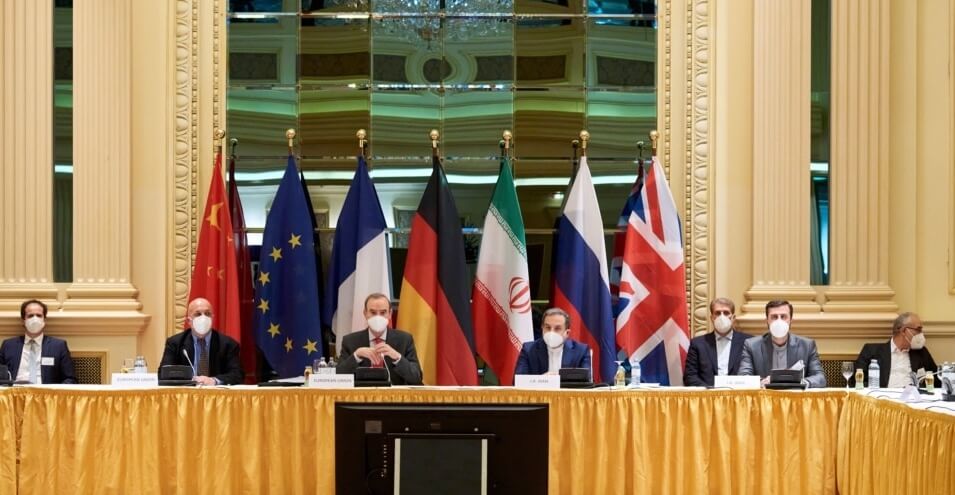
At the end of the first day of the second round of negotiations of the Joint Commission on the JCPOA in the Austrian capital of Vienna, Iranian Deputy Foreign Minister Abbas Araghchi said that at this stage of the negotiations, it is essential to determine the list of sanctions that the United States must lift and the measures that Iran must take.
The second round of the Joint Commission meeting of the nuclear agreement, known as the JCPOA, was held on Thursday, April 16, with the presence of representatives of Iran, Russia, China, France, Germany, and Britain.
The chief American negotiator then held an informal meeting with representatives of the JCPOA member states (other than Iran) for the first time.
Abbas Araqchi told Press TV, "If America has a real intention, good faith and seriousness, the path is clear, they should lift the sanctions. We need a sanctions list and our job in this round of negotiations should be to (produce) a sanctions list. Without such a list, we cannot progress."
Iran's top negotiator in Vienna stated that at the same time, we are ready to prepare a similar list of nuclear sites and measures that Iran must take.
Abbas Araqchi also said that with such an agenda, the joint commission decided to specify the task of the two working groups on lifting sanctions and nuclear issues, which will resume their work this evening and prepare two lists of nuclear measures and sanctions that must be lifted as soon as possible.
Regarding the atmosphere of this round of negotiations, Iran's chief negotiator clarified, "I can't say I'm optimistic, but I think we're on a good path. Although we've had the negative effects of the developments of the past few days and we have to manage them somehow."
Abbas Araqchi further added that the sanctions list should include third parties that have been sanctioned for cooperating with Iran.
Last week, a new round of the Joint Commission meeting on the JCPOA was held in Vienna to revive the agreement. However, according to an American diplomat, no list of sanctions or nuclear measures was exchanged during the talks, but rather the parties exchanged views on "principles."
Mikhail Ulyanov, Russia's representative in the negotiations, also said after the end of the JCPOA Joint Commission meeting on Thursday that the "public space" assesses the first day of the negotiations positively.
Senior Western diplomats have also told the Wall Street Journal that they see signs of movement in this round of closed-door talks. There is now a willingness to get into the details, and Iran is becoming more realistic about sanctions.
"American Proposal"
Meanwhile, Foreign Policy reported on Thursday that Robert Malley, the US special representative for Iran and the chief US negotiator in Vienna, is developing a proposed roadmap for revitalizing the JCPOA and for the United States and Iran to return to their commitments under the JCPOA.
Sources close to American and European negotiators told this publication that Robert Malley is expected to present Tehran with a package of proposals under which Iran would return to its commitments under the JCPOA in exchange for partial sanctions relief, but the sanctions relief would not be enough to cause extremist politicians inside the United States, including Democrats, to attack the Joe Biden administration.
This round of negotiations to revive the JCPOA is being held in Vienna with the aim of returning the United States and Iran to their commitments under the agreement.
Despite the Biden administration's expressed desire to return to the JCPOA, disagreements remain over how to return to commitments.
Iran says the United States should lift "1,500 sanctions" from the Donald Trump era, but the US has said it is ready to lift sanctions that are inconsistent with the JCPOA.
The United States is indirectly involved in the negotiations to revive the JCPOA in Vienna. In this regard, European diplomats are conveying the content of these negotiations to them.
A senior American official last week criticized the lack of direct dialogue between US and Iranian representatives in these negotiations, saying that Iran's unwillingness to talk directly with American officials makes the job more difficult for diplomats, but Washington will not "pay" to sit at the table for direct talks with Tehran.
Under the nuclear agreement between Iran and six world powers, known as the Joint Comprehensive Plan of Action (JCPOA) in 2015, Iran agreed to halt many of its nuclear activities in exchange for the lifting or suspension of international sanctions against it.
Former US President Donald Trump, upon withdrawing from the JCPOA in May 2018, called for a broader agreement with Iran that could, in addition to amending the agreement, also include Iran's regional activities and missile program.
In this regard, the Donald Trump administration has imposed extensive sanctions against Tehran since 2017 under a policy of "maximum pressure" in order to bring Iran to the negotiating table.
In contrast, the Islamic Republic of Iran refused to negotiate with the Trump administration and, in response to US sanctions, has been reneging on its commitments under the JCPOA in various stages since mid-May 2019, coinciding with the anniversary of the Donald Trump administration's withdrawal from the deal.
Source: Radio Farda