The Dead Return • Recurrence of Violence in the Destruction of the Graves of the Executioners of the 1960s
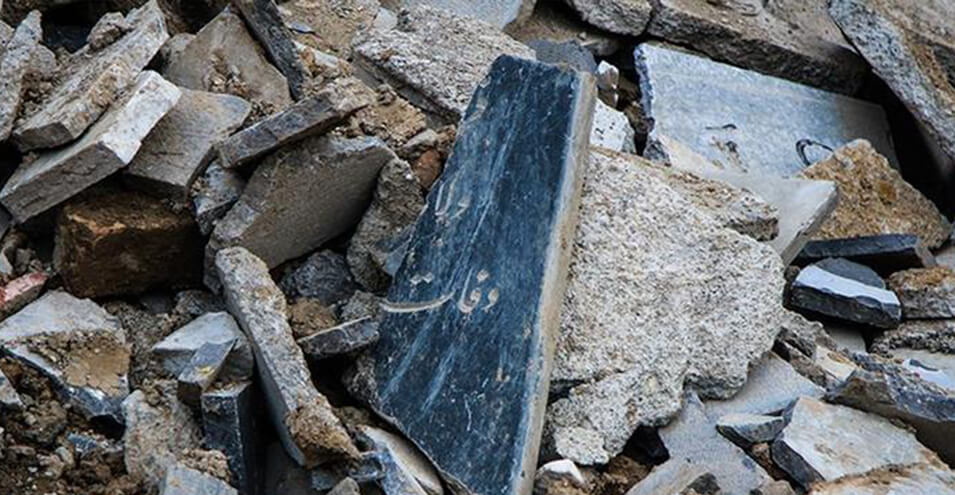
The Iranian government is reportedly deliberately erasing the remains of victims of executions in the 1960s. The destruction of the graves of the executed is not only a removal of the traces of the massacre, but also a repeated crime against the souls of the survivors.
Apart from distorting history, the destruction of these mass graves destroys the memory of the dead and the minds of the living, and deprives the survivors and the departed of the opportunity to hold death and mourning rituals, which are as fundamental and obvious as the right to life, with violence as severe as the massacres themselves.
In the play Antigone by Sophocles, the famous Greek tragedian of BC, Antigone's brother is killed in a rebellion. Antigone wants to be buried. But the ruler forbids it. The woman protests and tries to bury her brother, but on the ruler's orders, he is buried alive in a cave. A prophetess goes to the ruler and warns him, asking him to put the dead in the grave and take the living out of it. He reluctantly does so, but when they arrive in time for Antigone, they find that she has hanged herself.
In a more contemporary play, Hamlet, William Shakespeare's famous tragedy, another element comes into focus. The ghost of the father appears to the Danish prince Hamlet, informs him of his cowardly murder and betrayal, and urges him to avenge his father. The ghost will not rest until justice is served.
The interpretation of these two latter plays by Jacques Lacan, a French psychoanalyst and philosopher, is very illuminating. In response to the question of why the dead return, he answers simply and clearly that it is because they have not been properly buried. In the case of Hamlet's father, although his body is buried but the truth of his death remains hidden, he is a victim.
But from a theoretical perspective, why are mourning and funeral rituals so important? Let us return to Lacan. “Not being properly buried” in the words of the French philosopher is a key phrase and does not only include the deceased but also the survivors. Instead of bringing about the desired, the mourning and death ritual has several functions: it allows the fear and pain of loss to be vented, it distracts the survivors from paying their respects to the dead, and through these two, the acceptance of loss is made possible. Thus, the mourning and death ritual still has its ancient characteristic in the symbolic system of human relations: the role of a mediator for the transfer of the deceased from the world of the living to the world of the dead.
In Antigone, when the burial is delayed, we encounter a transference of another kind. In fact, death is symbolically transferred from the deceased brother to the living sister, because by preventing the burial, she dies of extreme grief and anger.
In the families or relatives of the victims of the executions of the 1960s, the tragedies of Antigone and Hamlet seem to have come together. They have been prevented from achieving two rights: they have not had a proper mourning and burial ceremony for their deceased - the most obvious right, namely, knowledge of the deceased's grave, has been denied them - nor have they had the possibility of justice in its criminal and legal sense to address the deaths of the murdered.
Based on this approach, it can be said that the survivors of the executions of the early decades of the revolution, and of course any other bereaved person of this kind, experience the weight of death while they are alive. They constantly live the death of their loved ones.
Slavoj Žižek, a Slovenian philosopher, emphasizes the importance of the symbolic aspect of funerals as “the collective memory of the departed because they remain in memory.” Instead of bringing burial rites, he realizes the possibility of the continued life of the dead through the memories of the living. While the return of the deceased (for example, the spirit of Hamlet’s father) means that they have not been able to find their place in the context of tradition and human relations. Žižek writes that two very traumatic events of the twentieth century, the Holocaust and the Gulag, are undoubtedly examples of the return of the dead in our time. “The ghosts of the victims of those two events, like the ‘living dead,’ will not leave us until we properly and appropriately perform their burial rites, until we incorporate the trauma of their deaths into our historical memory.” (p. 51, Looking Awkwardly)
Another horrific example of the forced incompleteness of the death ritual is seen in the famous documentary Nostalgia for Light (2011). In this film, about the unburied victims of the Pinochet dictatorship and their survivors, Chilean filmmaker Patricio Guzmán weaves two narratives simultaneously in the Atacama Desert in Chile. In one, he depicts the efforts of astronomers in the vast observatories of this high-altitude region to search for the lights of celestial bodies that died millions of years ago. In the other, he recounts the efforts of Chilean women to find even the slightest remains, a fingernail, a hair, a piece of bone, of the bodies of their loved ones who disappeared decades ago in this driest desert in the world. They do not know what happened to the victims, where exactly their remains are, and therefore are deprived of even the slightest conditions of mourning. They live in the past and in the past.
French philosopher Paul Ricoeur, in dealing with the wound of memory and historical wounds, deals with the two concepts of memory and forgetting. He considers it a duty to preserve the memory of the suffering of the victims. But he also emphasizes a kind of forgetting (in the sense of acceptance) that is predicated on the ritual of mourning. According to Ricoeur, if mourning is not done properly, the grieving person cannot distance himself from what he has lost, between himself and his wound, he will become one with it and will constantly repeat it.
Furthermore, the memory of the deceased and the survivor must become part of the collective memory. If this injury is deemed invalid by the group or a significant part of them, the injured person will not fully leave the experience of mourning behind.
Thus, the destruction of the graves of the executed is not only the removal of the traces of the massacre, but also a repeated crime against the souls of the survivors. If in those executions the bodies were deprived of life, in this one the souls are sacrificed under the pressure of the presence of the dead who are still alive, who have not found their desired place in the minds and memories of the living, who have not been properly buried. At the same time, they try to prevent the wounds of individual memory from becoming wounds of collective memory with these measures. The same method of de-naming and de-marking is used against the wounded memories and memories of the victims in order to, in the sense of recovery, erase the history of the victims and formalize the narrative of the executioners.
Roozbeh Moairi
• References
– Memory, History, Forgetting: Paul Ricoeur's Lecture in Tehran at the Research Center for Wisdom and Religions, 1994, on the website http://ohwm.ir, and also the quarterly journal "Gogu", issue 8, pages 48-59.
– Kjengeristen, Slavoj Žižek, translated by Maziar Eslami, Saleh Najafi, New Event, third edition, Tehran, 2013
Source: DW