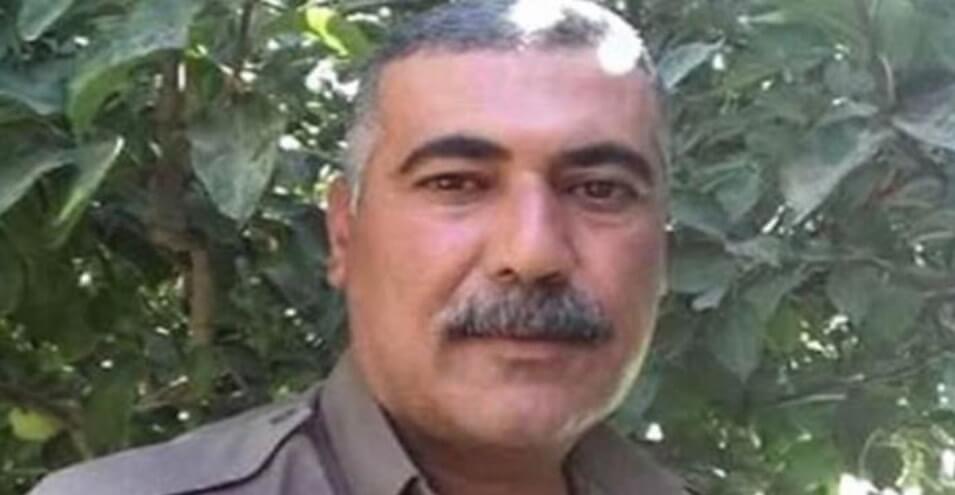
Christian citizen Mina Khajoui released after 22 months in prison
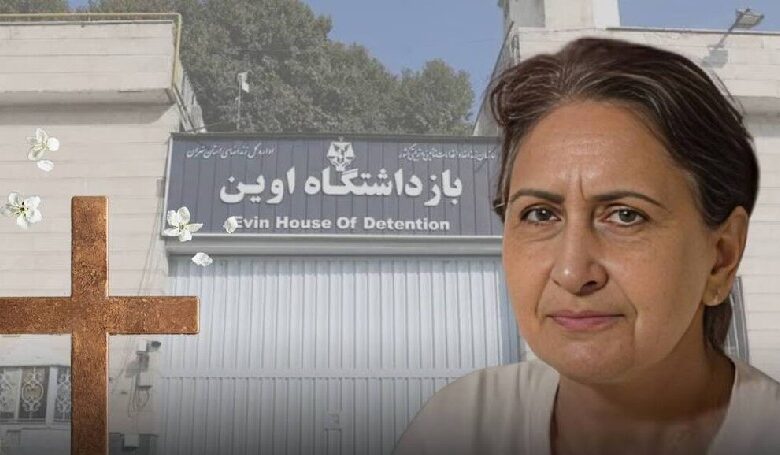
Mina Khajoui, a Christian citizen, was released from Evin Prison yesterday after serving about 22 months in prison.
Mina Khajou, a Christian citizen, was released on Tuesday, October 21, after serving nearly 22 months in Evin Prison. This release came following the issuance of a circular in the form of an "amnesty."
Khajou had previously been forced to abandon his treatment course and enter prison by order of the judiciary in January 1402. Before that, his entry into prison had been delayed several times due to a serious car accident and an ankle injury. According to news sources, he then had to have a platinum implant installed to stabilize the fractured ankle.
Some reports also state that the doctor's request and correspondence were also raised to delay the execution of the sentence, but ultimately these delays had no effect on the execution of the sentence.
Mina Khajoui was arrested in July 2020, along with a number of other local Christians, while holding a prayer service at the home of a Christian citizen in the Yaftabad area of Tehran. During the interrogations at that time, she was subjected to numerous pressures.
In June 2022, he was sentenced to six years in prison by Branch 26 of the Tehran Revolutionary Court on charges of “acting against national security by preaching missionary Christianity and establishing a house church.” After his appeal was rejected, his sentence was eventually reduced to two years late last year.
Despite delays due to his physical condition, Khajoui entered Evin Prison to serve his sentence on January 18, 2024. During his imprisonment, he was sometimes held in solitary confinement, particularly in cell 209, and interrogated.
During the 12-day war between Israel and Iran, it was reported that some prisoners of conscience were transferred from Evin Prison to Qarchak Prison, and Mina is said to have been among those transferred. The sanitary conditions in prisons, especially in Qarchak Prison, have been heavily criticized by human rights organizations over the years.
During his time in prison, there have been numerous reports of Khajoui's deteriorating physical condition. He suffered from arthritis and at times had to live with severe pain, while his access to specialized medical care was severely limited.
One of his hardships was that he had to put pressure on his ankle to get to the upper bunks in his cell, which would have been problematic for someone with an ankle injury. It is also reported that at times, he was only given simple painkillers and was not given full treatment or physiotherapy.
Relatives and human rights activists claim that security agencies are using depriving prisoners of conscience of treatment or leave as a lever for pressure and "repentance."
Mina Khajoui's release came after nearly two years in prison, despite having served a heavy sentence, but she was released after her sentence was reduced and she took advantage of an amnesty. This incident could become a symbol of the efforts of groups defending religious freedom inside and outside Iran.
However, limited transparency in the judicial process, widespread uncertainty about the veracity of charges, and the poor conditions of prisoners of conscience remain fundamental problems. Khajou’s release offers hope for reform or international pressure, but until the overall situation for prisoners of conscience changes, these cases will be seen as exceptions.
Internationally, cases like Mina Khajou reflect the pressure on religious freedom in Iran. Human rights organizations and Christian associations around the world often see these cases as a sign of the suppression of peaceful religious activities and call for global intervention to guarantee the right to freedom of belief.