Ignoring radical Islamism, the blind spot of the Albanian government after the Bundi terrorist attack
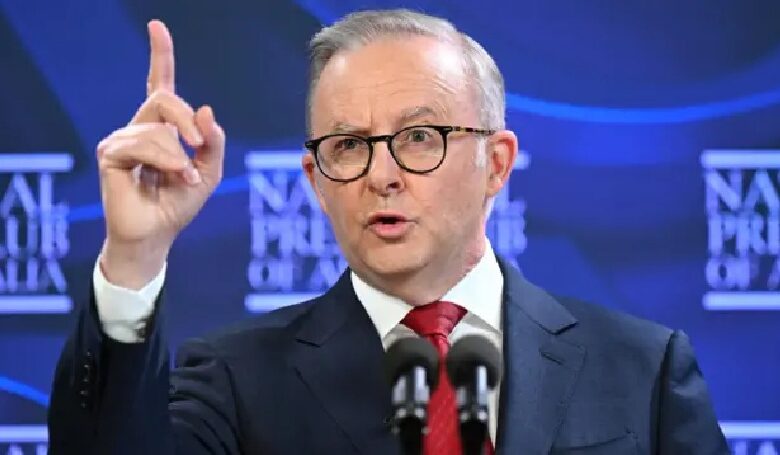
Critics say that ignoring radical Islamism in the Bondi attack has put the Albanian government's security policy in serious crisis.
In the wake of the deadly terrorist attack on Australia's Bondi Beach, Prime Minister Anthony Albanese's approach has faced a wave of domestic and international criticism, with criticism centered on the fact that his government has refocused on gun control rather than explicitly addressing radical Islamism as the ideological motivation for the attack.
The attack, which reportedly killed at least 15 people at a Jewish Hanukkah celebration, has been described by some sources and analysts as an ideologically motivated act linked to extremist Islamist movements including ISIS. However, the Albanian government has refrained from directly using the term “radical Islamism” in its official statements, focusing on general concepts such as “hatred,” “anti-Semitism,” and “armed violence.”
Critics argue that this approach, while reflecting some of the reality, avoids addressing the deeper roots of this type of violence. In their view, ignoring the religious-ideological dimension of Islamic extremism prevents the development of an effective strategy to prevent the recurrence of such attacks.
In this regard, former Australian Treasurer Josh Frydenberg made blunt statements to the Prime Minister, saying: "Mr. Prime Minister, although a gun took the lives of 15 innocent civilians, it was radical Islamic ideology that pulled the trigger." He continued: "If you, as Prime Minister, cannot utter the word Islamic ideology, how can you solve this problem?"
Criticism has not been limited to domestic politics. Former US Director of National Intelligence Tulsi Gabbard has attacked Australia's immigration policies, calling the Bundy attack a direct result of what she called "a massive Islamist onslaught on Australia," a controversial comment that has once again brought the debate over the links between immigration, religious extremism and national security back to the forefront of the media.
On the other hand, Israeli Prime Minister Benjamin Netanyahu has also accused the Albanian government of failing to curb the growing wave of anti-Semitism and claimed that the Australian government's policies and positions have indirectly contributed to promoting a hostile atmosphere against the Jewish community.
Inside Australia, senior political figures have also reacted. Former Prime Minister John Howard accused Albanese of lacking decisive leadership in confronting anti-Semitism and extremist ideologies, and warned that glossing over the true roots of terrorism undermines social security.
For many Christian observers, the crisis is not just a security issue, but a symptom of a crisis of moral courage in Western policymaking, where governments are reluctant to speak the truth about religious extremism for fear of being labeled. Church leaders and Christian institutions have repeatedly stressed that true peace is not possible without truth-telling and a proper identification of the source of violence.
The sum of these reactions shows that the Albanian government is facing increasing pressure to reconsider its approach to terrorism, radical Islamism and the protection of religious minorities, particularly Jews; ignoring this pressure could have serious consequences for security and religious coexistence in Australia.