Rouhani's letter to Pakistani Prime Minister protesting the killing of ten border guards
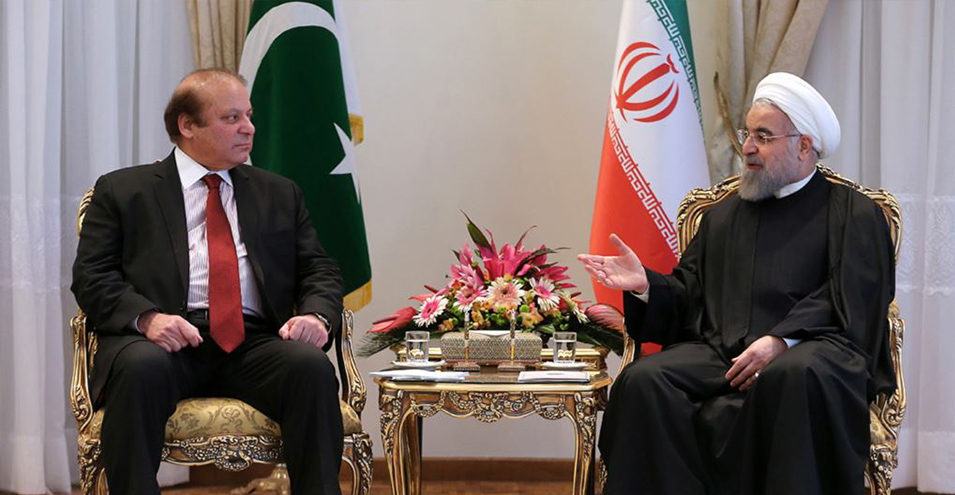
Following the death of ten Iranian border guards in Sistan and Baluchestan, the Ministry of Foreign Affairs summoned the Pakistani ambassador to protest the attack being carried out "from Pakistan's soil," and Hassan Rouhani, in a letter to the country's Prime Minister, called for "legal prosecution" and trial of the perpetrators of the attack.
According to the state-run IRNA news agency, Bahram Qasemi, spokesman for the Iranian Foreign Ministry, announced on Friday, May 28, that the Pakistani ambassador to Tehran has been summoned to the ministry.
According to this report, the Director General of the West Asia Department of the Ministry of Foreign Affairs conveyed the Islamic Republic's protest to the Pakistani ambassador during the meeting and said: "We strongly expect the Pakistani side to take serious and fundamental measures to arrest the terrorists and punish them."
Mr. Qasemi also said that the Islamic Republic expects Pakistan to "fulfill its previous promises" and not allow these incidents to be repeated on the country's "borders and soil" in the future.
In this regard, on Thursday, the Consul General of Pakistan in the city of Zahedan was summoned to the Sistan and Baluchestan governorate, and the governor protested the government's actions and called for greater cooperation from Islamabad in confronting the "evildoers."
Border guards from the "Mil 100 Outpost" of the Chahindu Company (Mirjaveh Border Regiment) were attacked by armed men last Wednesday, and ten border guards were killed during the attack.
The Jaish al-Adl group has claimed responsibility for the attack.
Maulvi Abdul Hamid, the Sunni Friday prayer leader of Zahedan, also called the attack "cowardly" and condemned it.
Earlier, on Thursday, the Iranian Foreign Ministry spokesman had called on the Pakistani government to be held accountable for, in his words, "the presence and operation of evil groups" on its soil.
Meanwhile, Iranian President Hassan Rouhani expressed "deep concern and extreme regret" in a letter to the Pakistani Prime Minister over the "repeated terrorist attacks from Pakistani soil" against Iran.
In his letter to Nawaz Sharif, Mr. Rouhani demanded that "the perpetrators of this terrorist act be prosecuted and brought to justice."
He emphasized that "despite promises" from Pakistani authorities, "similar attacks have been carried out against Iran for the umpteenth time by evildoers and terrorist groups from the country's soil."
Iranian military and security officials have criticized Pakistan in recent years for what they call "delays" in securing their shared borders.
President Hassan Rouhani, during a visit to Pakistan in April 2016, emphasized that the security agreement previously signed between the two countries "must be operational and implemented" so that Iran can "better" secure its borders in Sistan and Baluchestan province.
During his visit to Tehran in 2015 and meeting with the Iranian President, the Prime Minister of Pakistan spoke of his country's "determination" to cooperate with Iran in confronting the Jaish al-Adl group, an armed group opposed to the Islamic Republic.
In his letter, the Iranian president also accused, without naming names, some countries in the region of "targeting the unity of the Islamic world with their proxy wars and trying to replace the growth, prosperity, dignity, and well-being of the people of the region with violence, insecurity, poverty, and backwardness by supporting terrorist acts."
Previously, a number of senior officials of the Islamic Republic, including Ali Shamkhani, Chairman of the Supreme National Security Council, had accused Saudi Arabia of trying to create insecurity in eastern and western Iran and of "sending weapons" and supporting "terrorist groups" in the region.
In this context, Mohsen Rezaei, former commander-in-chief of the Revolutionary Guards and secretary of Iran's Expediency Discernment Council, accused Saudi Arabia in late July 2016 of establishing "a base in Balochistan, Pakistan" and "a base in the Kurdistan Region of Iraq" in order to "destabilize" Iran.
In recent years, the Sistan and Baluchestan province in southeastern Iran has been the scene of numerous clashes between the Islamic Republic's military and law enforcement forces and armed groups that Iranian officials refer to as "terrorists," "smugglers," and "villains."
Armed groups opposing the Islamic Republic in Sistan and Baluchestan province, however, call themselves "defenders of Sunni rights."
Source: Radio Farda