Letter from Imprisoned Zoroastrian Citizen: Don’t Expect Your Civil Rights to Be Respected
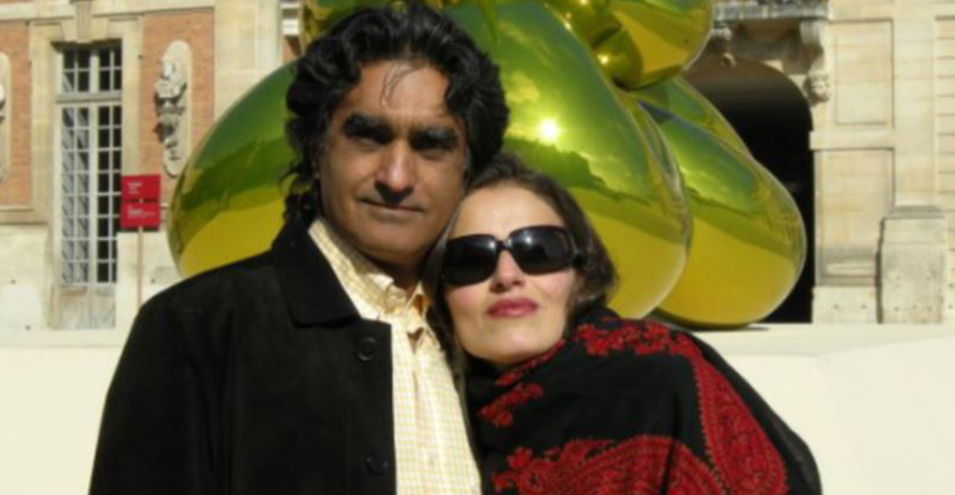
«Karen Vafadari», an Iranian-American Zoroastrian citizen who was detained along with his wife in Iran and sentenced to a lengthy prison term, has written a letter to his co-religionists stating that they should not expect their civil rights to be respected by the Islamic Republic of Iran’s government.
In the letter of this Zoroastrian citizen, released on Tuesday, 10 Bahman by the Human Rights Defenders Center, Mr. Vafadari described the process of his and his wife’s detention and conviction, and addressed his co-religionists, writing that they should not think that in the Islamic Republic, being non-Muslim permits them to keep wine and hold mixed-gender gatherings.
Karen Vafadari is the son of one of the wealthy Zoroastrian families, and Firoozgar Hospital is considered one of the Vafadari family’s assets, which has been endowed to the Iranian Zoroastrian community. Prior to his detention, he had filed numerous complaints and pursued many appeals to recover part of his family’s inherited properties, which in Mordad of 1395 (August 2016) led to his and his wife Afarin Nisari’s detention.
Mr. Vafadari was ultimately, following a trial held in Azar of this year under the presidency of Judge Selavati, sentenced to 27 years imprisonment, confiscation of all assets, and endurance of lashing, while his wife was sentenced to 16 years in prison.
In his letter, he wrote that due to his wife’s work connections in an art gallery with entities outside Iran, the Revolutionary Guards’ intelligence arrested them on security charges, but this accusation was dropped after gallery permits from the Ministry of Culture and Islamic Guidance were presented. However, «sealing, confiscation and inspection of the residence, work offices, gallery, warehouses, automobiles, computers, documents and records and other matters were the preamble to further and more extensive investigations, which indicated a more complex program.»
He then wrote to his co-religionists several recommendations to avoid his fate.
He wrote: «First, I do not recommend producing wine in your home. Although I thought this was permissible for Zoroastrian minorities whose culture has included wine for more than 5,000 years, I was sentenced to one and a half years imprisonment, 74 lashes, and a fine of 140 million tomans.»
This Zoroastrian continued in his letter: «Second, do not accept alcoholic beverages from foreign friends and diplomats as gifts, even if they have imported alcoholic beverages through legal and official customs channels. Because like me, it could result in three years imprisonment and a fine of 6 billion rials for you.»
He also referenced mixed-gender parties that the Zoroastrian community in Iran has permission from the Ministry of Culture and Islamic Guidance to hold on various cultural and religious occasions, and wrote: «Third, I earnestly request my dear co-religionists to be cautious for yourselves and your families during the pleasant days near the new year, because holding mixed gatherings (which for us is a simple and obvious matter) even for national celebrations and events such as Chaharshanbe Suri, Sadeh Festival, and even birthday parties are considered by the country’s judicial system as promoting debauchery, and like me, you will face 15 years imprisonment under the charge of «spreading corruption and obscenity.»»
He also wrote later in his letter: «Furthermore, I have been honored by the esteemed court to be the first Iranian to whom Article 989 of the Civil Code approved in 1303 has been applied.»
Karen Vafadari explained: «For the first time in Iran’s judicial history, I have been convicted under Article 989 of the Civil Code, which was enacted in 1303 (1924). Unfortunately, no one, including myself and my lawyers, was ever informed of such a charge, and we were unaware of such a law.»
He continued in his letter: «This means that whether for me, my wife, or each of you dear dual-national Zoroastrians who have returned to the country out of love for the homeland or with the goal of investment, there is always the risk of losing property and assets and being forced to leave the country. Consequently, having dual nationality is not only not considered an advantage for you co-religionists, but also carries the risk of enforcing the abolished Article 989.»
According to Article 989 of the Civil Code, if any Iranian national acquires foreign citizenship after the date of 1280 solar Hijri without observing legal regulations, their foreign citizenship is considered non-existent and they are recognized as an Iranian citizen, yet at the same time all their immovable property is sold under the supervision of the local attorney general, and after deduction of sales costs, the price is given to them.
This Zoroastrian citizen also wrote that a judicial official regarding the severe sentence issued said that this ruling was to make an example of others. He advised his co-religionists that if they have received a severe sentence for making an example of others, they should not expect help from the Zoroastrian representative in parliament.
Last year, Kathe Vafadari, Karen Vafadari’s sister, announced his and his sister-in-law’s detention by publishing a letter to the leader of the Islamic Republic.
In her letter, she wrote that the detention of these two was accompanied by «fabrication of charges for extortion, appropriation of property, and security threats». She also complained about the actions of «unknown» individuals attempting «extortion» from the family of these two prisoners in exchange for their release.
Violation of the rights of religious minorities by the government is considered one of the human rights violations in the Islamic Republic.
The UN Special Rapporteur on Human Rights in Iran and the U.S. State Department have, in numerous reports in recent years, pointed to violations of the rights of religious minorities such as Baha’is, Christians, Sunnis, and other minorities. Until now, few reports on harassment and violation of the rights of Zoroastrians had been published, but it appears that Mr. Vafadari’s detention and severe sentence were more related to his pursuit to recover his family’s property.
Source: Voice of America