Nasrin Sotoudeh protested the "cruel conditions" in Iranian prisons by going on a hunger strike in prison.
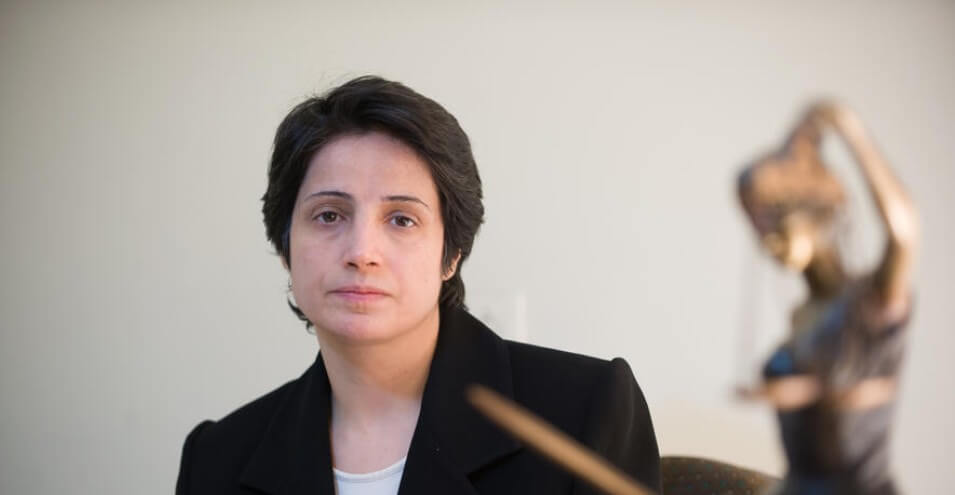
Nasrin Sotoudeh, a lawyer and imprisoned civil activist, went on a hunger strike in Evin Prison after publishing a letter protesting the failure to release political prisoners amid the coronavirus crisis and the "cruel conditions" in the Islamic Republic's prisons.
Reza Khandan, a human rights activist and husband of Nasrin Sotoudeh, told Voice of America on Tuesday, August 11, that Ms. Sotoudeh had initiated correspondence over the past weeks and months regarding the rights of prisoners, the living conditions of prisoners inside the prison, in-person visits, the release of prisoners, and the issuance of long-term prison sentences for political prisoners with prison officials, the Prisons Organization, and also officials of the Judiciary. Today, she began a hunger strike in prison in protest of the unanswered nature of all her correspondence and the failure to release political prisoners.
Referring to Ms. Sotoudeh's demands from judicial authorities, Mr. Khandan told VOA that the imprisoned civil activist has not announced an exact time for the end of her hunger strike, but she may end her strike if all or even part of her stated demands are met.
In a letter, a copy of which was sent to Voice of America by Mr. Khandan, Ms. Nasrin Sotoudeh addressed human rights activists and stated that, “In the midst of the Corona crisis that has engulfed Iran and the world, the conditions of political prisoners have become so difficult and difficult that it has become impossible to continue their imprisonment under these cruel conditions.”
According to this imprisoned lawyer and civil activist, "Many prisoners are currently eligible for conditional release, and many of them will be released with the implementation of the new law, but the prisoners are treated as if there is no law and none of them have the right to any legal recourse. The prisoners' correspondence to find legal avenues of escape has gone unanswered."
Referring to Nasrin Sotoudeh's letter and the demands of this imprisoned lawyer and civil activist, human rights activist Reza Khandan told Voice of America: "There is currently a lot of pressure on political prisoners in prison. They have prevented the conditional release of prisoners who are eligible for various reasons, they have imposed telephone restrictions, and even the sentences issued to political prisoners are very cruel."
Mr. Khandan says: "My wife and many other women and men who are in prisons as political prisoners and have expressed their criticisms solely because of criticism on social media and interviews with various networks. Are they more guilty than the person who, according to the judiciary, spied for Mossad, who was sentenced to more than 10 years? Issuing such sentences narrowing the field for the prisoner and making him use the means he has to protest, including a hunger strike, and making his protest heard by everyone?"
The human rights activist also referred to the freezing of Nasrin Sotoudeh's bank accounts in recent months by order of the Tehran prosecutor and without prior notice, saying: "This ruling was issued and implemented while we repeatedly referred to various judicial institutions and asked why Ms. Sotoudeh's accounts were frozen, but the question is: how does the prosecutor invade individuals' privacy and allow himself to unjustly freeze the accounts of a person who was convicted by a judicial order?"
Mr. Khandan expressed concern that "this ruling may be implemented for many people, and that the same restrictions and confiscation of bank accounts may extend to activists' properties and assets, and they may be seized, which is a serious danger for all prisoners, civil activists, and human rights activists in Iran."
This is not the first time that Nasrin Sotoudeh, a prominent lawyer and women's rights activist serving her sentence in Evin Prison, has gone on a hunger strike. She was previously among the political prisoners who announced her hunger strike on Monday, March 16, in response to the prevention of the release of political prisoners amid the coronavirus outbreak and its spread in Iranian prisons.
Ms. Sotoudeh, who has been in detention since June 13, has been sentenced by Branch 28 of the Islamic Revolutionary Court to a total of 38 years in prison and 148 lashes on charges of "gathering and colluding against national security", "propaganda activity against the system", "effective membership in the illegal and anti-security group Human Rights Defenders Center, Legam (Abolition of Execution) and the National Peace Council", "encouraging people to corruption and prostitution and providing the conditions for it and appearing without a religious veil at the interrogation branch", "disturbing public order and peace", and "spreading lies with the intention of disturbing public opinion". According to the Islamic Penal Code, she will serve 12 years of this sentence.
US Secretary of State Mike Pompeo recently said in a press conference: "We have asked not only Syria, but also the Islamic Republic of Iran to release not only American citizens, but all those who have been unjustly imprisoned in these circumstances. This is a humanitarian act, and apart from the fact that these people have been illegally imprisoned, in these circumstances the principle of humanitarianism dictates that they be released from prison."