Nasrin Sotoudeh: In Iran, we are imprisoned inside or outside prison.
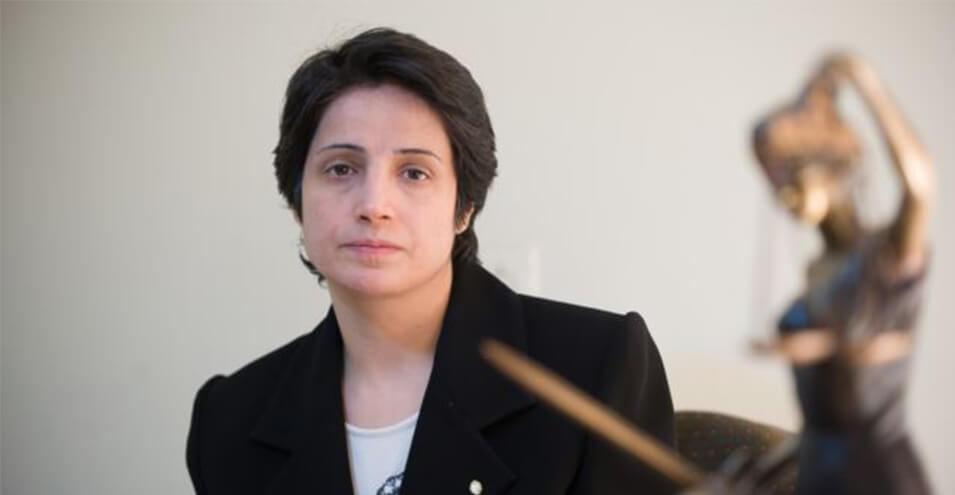
Nasrin Sotoudeh, a lawyer and human rights activist, said in a written interview with a French publication about the current situation in Iran that in a time of injustice, being a prisoner or not "doesn't matter."
In this interview, which was published in the latest issue of the weekly magazine Lobes, published in Paris on Thursday, Nasrin Sotoudeh said about her 17-month prison sentence: "In Iran, whether we live inside a prison or outside it, we are always imprisoned [...] You may think I am exaggerating, but when our concern is the lack of justice in society, being inside or outside of prison does not matter."
According to the weekly Lobes, the interview with the imprisoned human rights lawyer in Iran was conducted in writing.
Nasrin Sotoudeh has been sentenced to a total of 33 years in prison and 148 lashes on charges of “gathering and colluding against national security, propaganda activities against the system, effective membership in the illegal and anti-security group Human Rights Defenders Center, Legam (Abolition of Execution) and the National Peace Council, encouraging people to engage in corruption and prostitution and providing the conditions for it, appearing without a religious veil at the interrogation branch, disturbing public order and peace, and spreading lies with the intention of disturbing public opinion.” However, according to Article 134 of the Islamic Penal Code in Iran, 12 of this period is “executable.”
Nasrin Sotoudeh continued in the interview: "I cannot miss my freedom, because Iranian society does not experience such freedom. Enduring working as a female lawyer in unfair courts is more painful than enduring prison."
Emphasizing that the current political atmosphere in Iran has become "radical" and that punishments have become "heavier" than before, Nasrin Sotoudeh added: "In the women's political prison, a number of them are accused of espionage, which is something new."
Reasons for arrest
In another part of the interview, this human rights activist also refers to signing a "petition to call for a referendum on the government of the Islamic Republic, alongside other activists inside and outside the country," in response to the question of what the main reason for his latest arrest was.
Nasrin Sotoudeh added that she “as a lawyer, accepted the defense of several girls on Enghelab Street” who were protesting the compulsory hijab in the Islamic Republic of Iran. Membership in the Legam (Step by Step Abolition of Executions) campaign is also one of the activities that Ms. Sotoudeh cited as a reason for her arrest, but she emphasized that it was her “right” to talk to the media about these activities.
The prisoner's lawyer emphasized: "Under the law, none of these activities are crimes, but the authorities in Iran do not tolerate them, and allow themselves to illegally prosecute those who engage in such activities."
He said: “I really don’t know which of these ‘subversive’ activities led them [Iranian judicial authorities] to conclude that they should arrest me. I can’t even guess.”
In response to the question of why the issue of the hijab is so fundamental to the Iranian government, Nasrin Sotoudeh said that the question that must be asked of the Islamic Republic is "why it has based its survival on such a principle with such persistence."
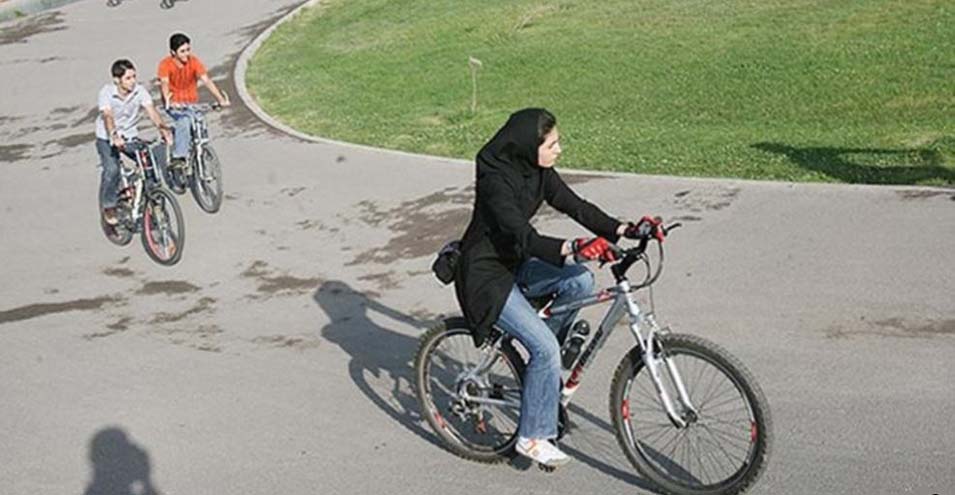
The prisoner's lawyer emphasized that "as a woman and mother" she "feels insulted" by the mandatory hijab and at the same time is "concerned about her daughter's future."
Nasrin Sotoudeh said, "The freedom to choose how to dress is fundamental to me."
"44 female prisoners"
He then said about his fellow prisoners that he is in the same cell with Giti Pourfazel, another lawyer who is 75 years old and was imprisoned for defending victims of human rights violations.
Nasrin Sotoudeh added that many of her fellow inmates are women who were imprisoned for their struggle against the compulsory hijab: "We now have 44 female prisoners in one ward. An unprecedented number since this ward was built eight years ago."
The lawyer then went on to discuss his professional background, including his collaboration with people of all national and religious backgrounds in the 1990s. He said that since he received his law license in 2003, he has focused on “fair administration of justice” since the beginning of his career.
In another part of this interview, Nasrin Sotoudeh said about her parents' family circumstances and level of education that they were "economically middle class."
In response to another question about what he thinks about in prison, he said: "Of course, I think a lot about the justice system and its reform, but especially about the future, about the afterlife. This is what I am most concerned about these days. If the regime changes, how can we avoid violence or at least limit it as much as possible? How can we prevent the emergence of a cycle of revenge and retaliation?"
He continued, referring to the experience of other countries such as South Africa, Argentina, and Chile, that this issue is one of the topics discussed in prison.
Sotoudeh also mentioned the books that are read in prison on this subject, and specifically mentioned the play "Death and the Maiden" by Chilean writer Ariel Dorfman, which is about the post-dictatorship era.
He concludes by saying that he is “deeply optimistic,” otherwise he could not continue: “But more than optimism, I believe in life […] Sometimes I get frustrated, but I always return to my work, to life.”
The prison sentence for Nasrin Sotoudeh was met with widespread criticism from human rights organizations, the United States, and the European Union. International organizations called on Tehran to immediately release Ms. Sotoudeh.
In this context, Philip Luther, Director of the Middle East and North Africa Division of Amnesty International's Research and Advocacy Division, issued a statement regarding the situation of Nasrin Sotoudeh, saying that the arrest of the Iranian lawyer "has exposed the depth of repression by the Iranian authorities on the global stage."
Source: Radio Farda